
Home / The saints / St. Agnes
Rome, the Via Nomentana, early 4th century
On the road out of Rome called the Via Nomentana lies the grave of a girl the whole city will remember.1
St. Ambrose gives her age as twelve, St. Augustine as thirteen.1
We know almost nothing else for certain. And still, for seventeen centuries, the Church has said her name at Mass.
Patron of girls2
01St. Agnes
What the Fathers remembered
Of all the young women martyred in Rome, none was honored by the early Church more than Agnes.1
Pope Damasus pictured her hastening to martyrdom from the lap of her mother or nurse.1
The Catholic Encyclopedia notes that the details of her martyrdom were not reliably recorded, but the tradition of her youth is agreed on all sides.1
02St. Agnes
Her basilica
Her feast has been kept on 21 January since at least the fourth century.1
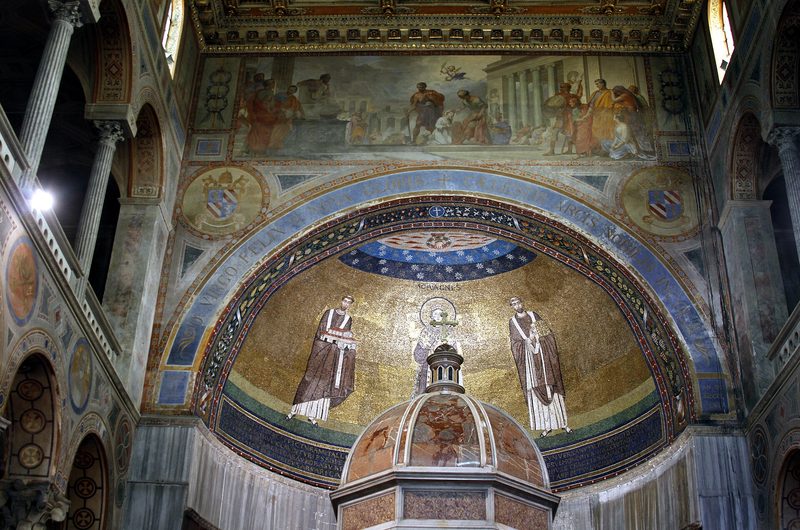
The empire that killed her has gone. Her name is still in the Roman Canon.
Live it this week
Hold one line under pressure
Agnes was a young teenager and would not budge on Christ. Name one thing you know is right that you tend to fold on when friends push (a joke you don’t laugh at, a party you skip). This week, hold that line once, kindly and without a speech.
Notes
How we know · 2 sources for this page
- Catholic Encyclopedia (1913), “St. Agnes of Rome”. New Advent edition. newadvent.org
- Franciscan Media, Saint of the Day: “Saint Agnes”. franciscanmedia.org. franciscanmedia.org
The Catholic Encyclopedia (1913) is in the public domain; we quote the New Advent edition. Texts of the Holy See are quoted briefly from vatican.va. Scripture: World English Bible, Catholic edition (public domain); Verse numbers are modern, with Douay-Rheims numbers in brackets where they differ. Photographs: Wikimedia Commons, credited under each image; full list on the photo credits page.
Lines in the narrator’s voice, without a note, are our reflection, not a historical claim. Stone & Incense restates Church teaching in plain words; our wording is not an official Church text. Report an errorCorrections.