
Home / The saints / St. Cecilia
Rome, the Catacomb of Callistus
In the Catacomb of Callistus on the Appian Way, right beside the crypt of the popes, the archaeologist De Rossi located the grave of a martyr.1
Her name was Cecilia, and her feast was already kept in Rome in the fourth century.1
Her story would fill the Church with music.
Patron of church music1; musicians and singers2
01St. Cecilia
Venerated from the start
Few martyrs of the early Church have been loved as widely as she has.1
Her feast on 22 November was kept in her church in the Trastevere quarter of Rome.1
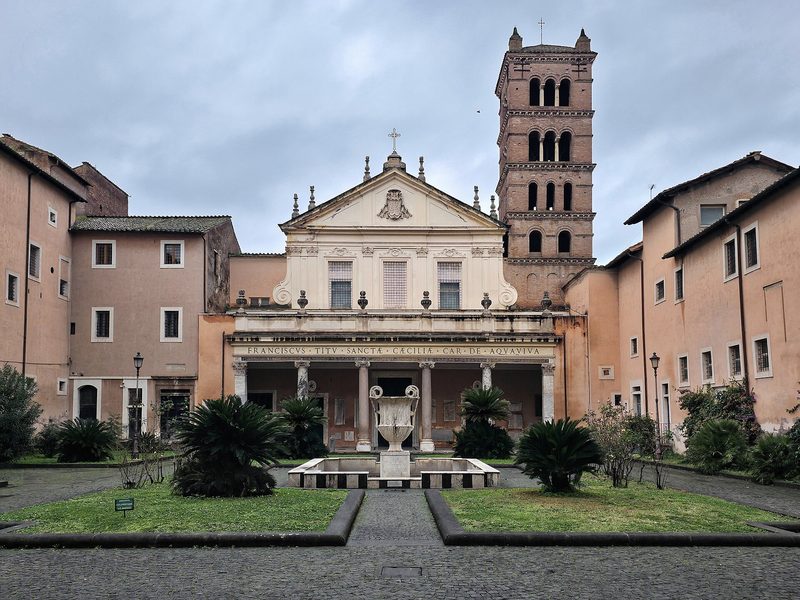
02St. Cecilia
Patroness of church music
The Catholic Encyclopedia names her the patroness of church music.1
Every choir that sings at Mass on her feast is singing in her honor.
Live it this week
Sing at Mass
Cecilia is remembered with music because she gave God her whole heart. This Sunday, actually sing at Mass, out loud, even if you think you can’t sing. Read the words of one hymn beforehand so you mean them.
Notes
How we know · 2 sources for this page
- Catholic Encyclopedia (1913), “St. Cecilia”. New Advent edition. newadvent.org
- Vatican News, Saint of the day: “St. Cecilia”. Dicastery for Communication, Holy See. vaticannews.va
The Catholic Encyclopedia (1913) is in the public domain; we quote the New Advent edition. Texts of the Holy See are quoted briefly from vatican.va. Scripture: World English Bible, Catholic edition (public domain); Verse numbers are modern, with Douay-Rheims numbers in brackets where they differ. Photographs: Wikimedia Commons, credited under each image; full list on the photo credits page.
Lines in the narrator’s voice, without a note, are our reflection, not a historical claim. Stone & Incense restates Church teaching in plain words; our wording is not an official Church text. Report an errorCorrections.