
Home / The saints / St. Faustina Kowalska
A convent in Kraków, the 1930s
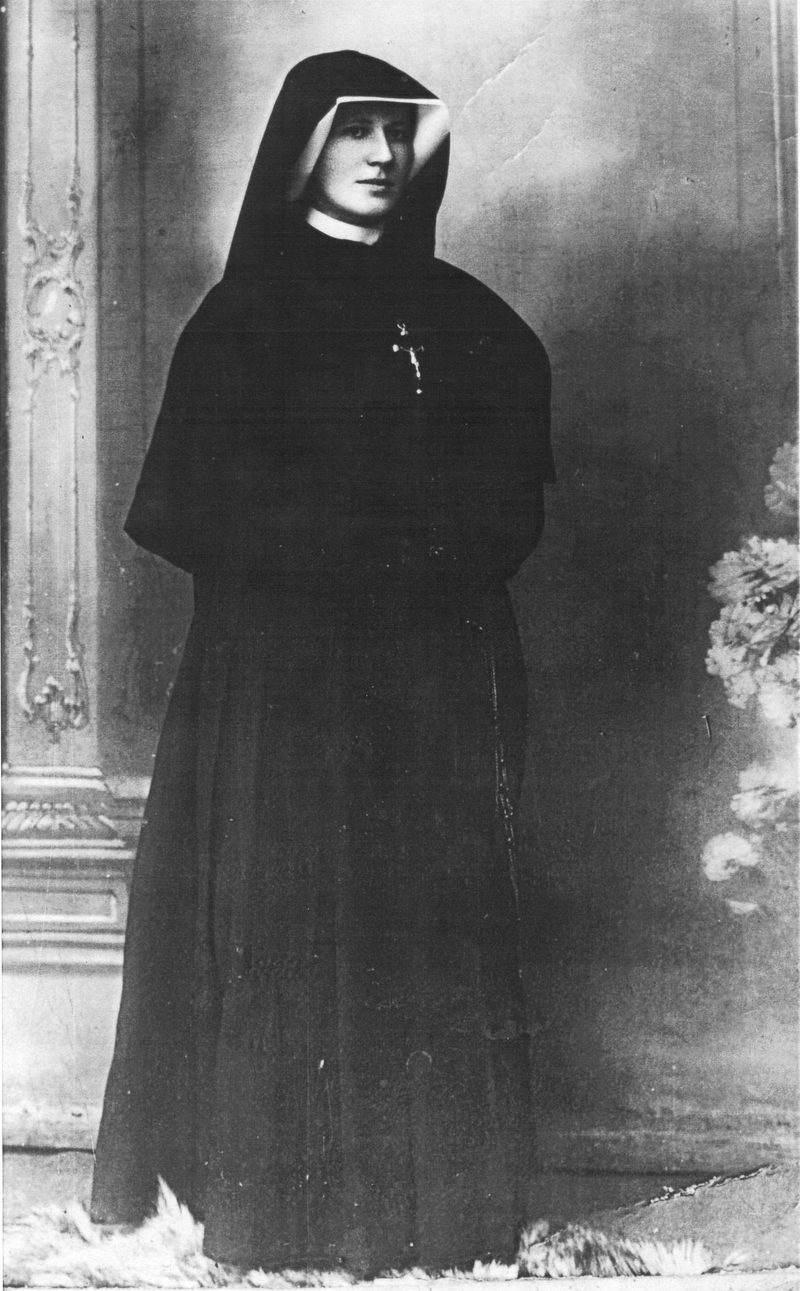
Hidden in a convent in Kraków, a young nun writes down what Jesus has told her.1
She sees two rays of light shining from his heart, and he explains that they represent blood and water.1
Sixty years later a pope would put her prayer on the lips of the whole Church.
Patronage No official patronage we can cite yet. The Church remembers her as the messenger of Divine Mercy.
01St. Faustina Kowalska
Jesus, I trust in you
“Jesus, I trust in you”
St. John Paul II canonized her on 30 April 2000 and declared that the Second Sunday of Easter would be called Divine Mercy Sunday throughout the Church.1
02St. Faustina Kowalska
On the calendar
In 2020 her memorial on 5 October was added to the General Roman Calendar.2
Live it this week
Five words, every hour
Faustina’s whole message fits in five words: Jesus, I trust in you. Set a quiet hourly reminder for one day this week, and every time it buzzes, say those five words and mean them about whatever you’re worried about right then.
Notes
How we know · 2 sources for this page
- Pope St. John Paul II, Homily for the canonization of Faustina Kowalska, 30 April 2000. Holy See, official English text. vatican.va
- Congregation for Divine Worship, Decree on the inscription of St. Faustina Kowalska in the General Roman Calendar, 18 May 2020. Holy See, official English text. vatican.va
The Catholic Encyclopedia (1913) is in the public domain; we quote the New Advent edition. Texts of the Holy See are quoted briefly from vatican.va. Scripture: World English Bible, Catholic edition (public domain); Verse numbers are modern, with Douay-Rheims numbers in brackets where they differ. Photographs: Wikimedia Commons, credited under each image; full list on the photo credits page.
Lines in the narrator’s voice, without a note, are our reflection, not a historical claim. Stone & Incense restates Church teaching in plain words; our wording is not an official Church text. Report an errorCorrections.