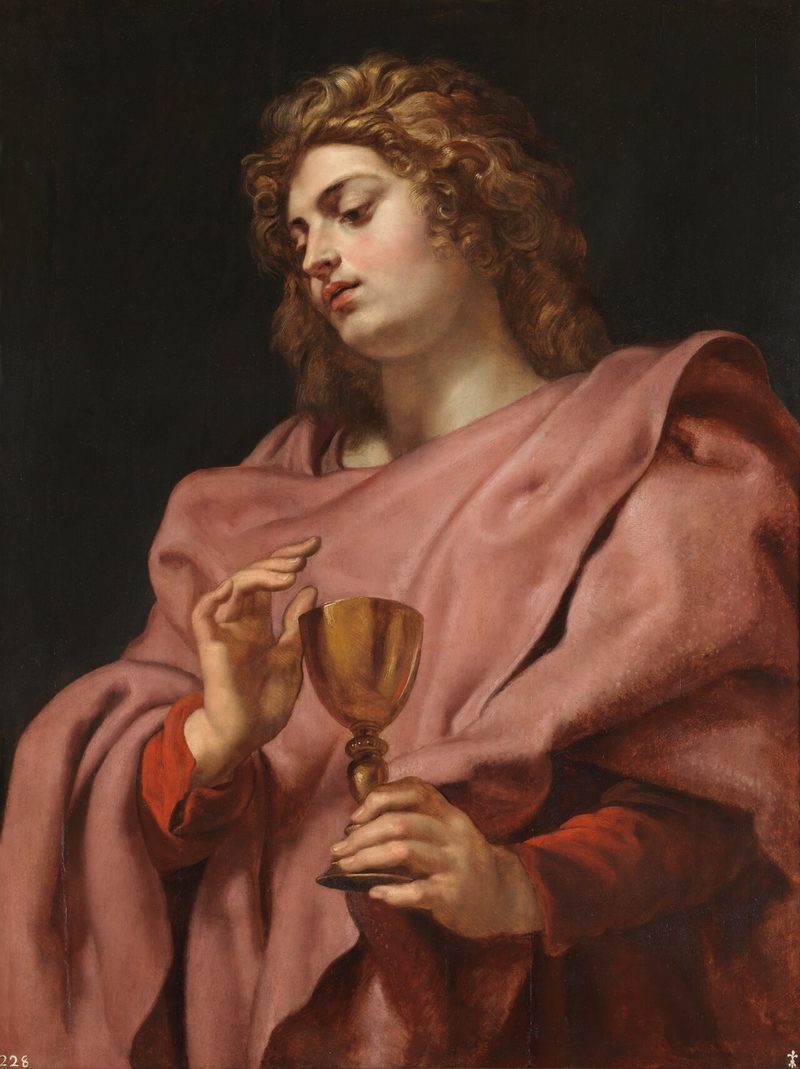

Home / The saints / St. John the Apostle
At the foot of the cross
At the Last Supper, one disciple leaned back against Jesus’ chest to ask a question.1
His Gospel calls him the disciple whom Jesus loved.2
When the others ran, he stood at the cross, and Jesus gave him His mother.
Patron of Turkey2
01St. John the Apostle
The beloved disciple
John was a fisherman, the brother of James, and one of the three closest to Jesus.2
On Easter morning he outran Peter to the empty tomb, saw, and believed.3
02St. John the Apostle
God is love
Tradition gives him the Fourth Gospel, three letters and the Book of Revelation, written in exile on Patmos.4
His first letter sums it all up in three words: God is love.5
He is said to have died of old age at Ephesus, the only apostle not martyred.2
Live it this week
Take someone into your home
Jesus gave His mother to John, and John took her into his home. This week, have someone over who doesn’t get invited much: an elderly neighbor, a new family, a lonely coworker. Feed them.
Notes
How we know · 5 sources for this page
- John 13:25, World English Bible. read the chapter
- Franciscan Media, Saint of the Day: “Saint John the Evangelist”. franciscanmedia.org. franciscanmedia.org
- John 20:8, World English Bible. read the chapter
- Revelation 1:9 [Douay Apocalypse 1:9], World English Bible. read the chapter
- 1 John 4:8 [Douay 5:2], World English Bible. read the chapter
The Catholic Encyclopedia (1913) is in the public domain; we quote the New Advent edition. Texts of the Holy See are quoted briefly from vatican.va. Scripture: World English Bible, Catholic edition (public domain); Verse numbers are modern, with Douay-Rheims numbers in brackets where they differ. Photographs: Wikimedia Commons, credited under each image; full list on the photo credits page.
Lines in the narrator’s voice, without a note, are our reflection, not a historical claim. Stone & Incense restates Church teaching in plain words; our wording is not an official Church text. Report an errorCorrections.