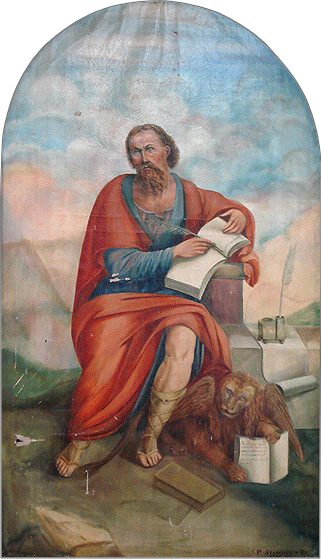

Home / The saints / St. Mark
Jerusalem, then Rome
Mark set out with Paul and Barnabas on their first mission and went home partway through.1
Paul refused to take him the next time, and Paul and Barnabas split over it.2
Years later Paul asked for Mark by name, because he was useful in ministry.
01St. Mark
Peter’s interpreter
Early tradition says Mark wrote down Peter’s preaching in Rome, and the result is the shortest and fastest Gospel.3
Some think he is the young man who ran away naked when Jesus was arrested.4
02St. Mark
The lion of Venice
Tradition makes him the founder of the Church in Alexandria, and his relics were later taken to Venice.3
Live it this week
Give someone a second chance
Barnabas gave Mark a second chance and Paul eventually did too. This week, reach out to someone you wrote off, and give them one real opportunity to show you they’ve changed.
Notes
How we know · 4 sources for this page
- Acts 13:13, World English Bible. read the chapter
- Acts 15:39, World English Bible. read the chapter
- Franciscan Media, Saint of the Day: “Saint Mark”. franciscanmedia.org. franciscanmedia.org
- Mark 14:52, World English Bible. read the chapter
The Catholic Encyclopedia (1913) is in the public domain; we quote the New Advent edition. Texts of the Holy See are quoted briefly from vatican.va. Scripture: World English Bible, Catholic edition (public domain); Verse numbers are modern, with Douay-Rheims numbers in brackets where they differ. Photographs: Wikimedia Commons, credited under each image; full list on the photo credits page.
Lines in the narrator’s voice, without a note, are our reflection, not a historical claim. Stone & Incense restates Church teaching in plain words; our wording is not an official Church text. Report an errorCorrections.