
Home / The saints / St. Vincent de Paul
The Mediterranean, 1605
A young French priest is sailing home from Marseilles.1
Turkish pirates capture the ship and carry him to Tunis, where he is sold as a slave.1
He escaped two years later, with his master, a renegade whom he brought back to the faith.
Patron of all associations of charity2
01St. Vincent de Paul
Charity, organized
As a country parish priest he founded the first conference of charity for the assistance of the poor.1
He turned to the convicts in the galleys, chained in damp dungeons on black bread and water.1
He established the Daughters of Charity to serve the poor.1
02St. Vincent de Paul
Paris
He died at Paris on 27 September 1660.1
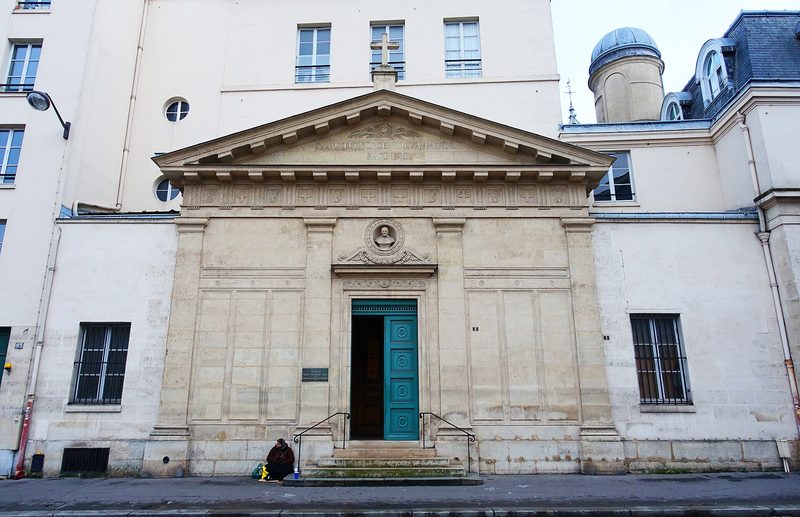
He did not just feel sorry for the poor. He built a system that still feeds them.
Live it this week
Organize one act of help
Vincent didn’t just give; he organized people so help kept coming. This week, get two other people to join you in one concrete act: a meal for a new mom, a ride schedule for someone sick, a collection for a family in need.
Notes
How we know · 2 sources for this page
- Catholic Encyclopedia (1913), “St. Vincent de Paul”. New Advent edition. newadvent.org
- Vatican News, Saint of the day: “St. Vincent de Paul (saints of 27 September)”. Dicastery for Communication, Holy See. vaticannews.va
The Catholic Encyclopedia (1913) is in the public domain; we quote the New Advent edition. Texts of the Holy See are quoted briefly from vatican.va. Scripture: World English Bible, Catholic edition (public domain); Verse numbers are modern, with Douay-Rheims numbers in brackets where they differ. Photographs: Wikimedia Commons, credited under each image; full list on the photo credits page.
Lines in the narrator’s voice, without a note, are our reflection, not a historical claim. Stone & Incense restates Church teaching in plain words; our wording is not an official Church text. Report an errorCorrections.