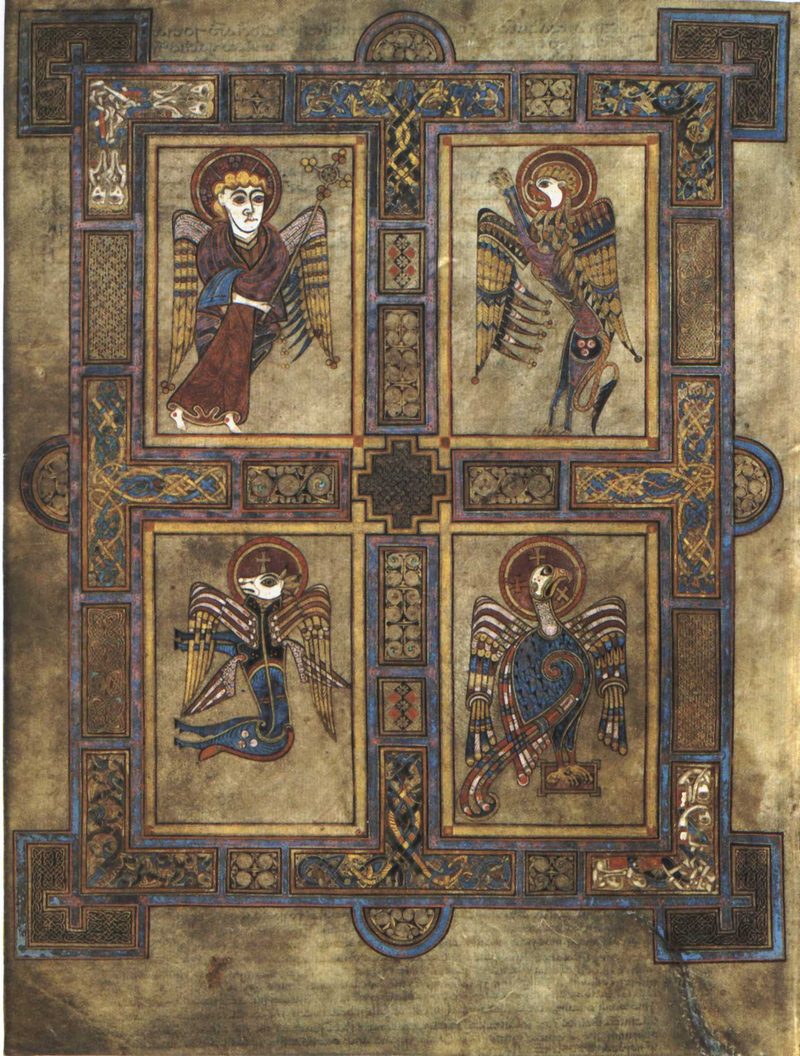

Solomon’s porch, at the feast of the dedication
It’s winter in Jerusalem, at “the feast of the dedication.”7 Jesus is walking in the Temple, in Solomon’s porch.8
The founding of a feast of dedication is told in 1 Maccabees: Judas and his brothers decreed that the dedication of the altar be kept every year, for eight days.9
Whether that book is Scripture is a real disagreement between us. Here’s your side first.
01Your verse first
“The words of God were committed to them”
“Much in every way! Because first of all, they were entrusted with the revelations of God.”
Read fairly: God entrusted His word to Israel, and the Hebrew Bible used by Jews today does not include these books. So why should Christians add them? Many Protestants call them the Apocrypha: worth reading, perhaps, but not Scripture.
Catholics agree with Romans 3:2. The question is who recognizes the list, and how.
02The Catholic reading
A list discerned, not invented
The Catechism teaches that it was by the apostolic Tradition that the Church discerned which writings belong in the list of sacred books.2 That list has 46 books in the Old Testament and 27 in the New.210
In 419 the Council of Carthage listed Tobit, Judith and two books of Maccabees among the Old Testament books.3 In 1442 the Council of Florence set out the same list.4 In 1546 the Council of Trent defined it, receiving the books “entire with all their parts.”5
Was that list always undisputed? No, and we should say so.
03Honest history
What was disputed
St. Jerome doubted these books. He wrote that the Church reads Judith, Tobit and Maccabees “but does not admit them among the canonical Scriptures.” Such books, he said, should be read “for the edification of the people, not to give authority to doctrines of the Church.”6
That was a real view, held by a great scholar, and it is honest to admit it. But the question was not left to any one scholar.
African bishops meeting at Hippo and Carthage accepted the books, and asked that their list be sent to the Bishop of Rome and others “that they may confirm this canon.”113
So the real question isn’t about Jerome. It’s about authority.
04The real disagreement
Where we think it lies
Not whether Israel received God’s word. The question is who has the authority to recognize which books are Scripture.
Every Christian who accepts the 27 books of the New Testament already relies on the Church’s discernment for that part of the list.211 The Catholic Church holds that the same discernment received the 46 books of the Old Testament.10
Our page on the canon sets out the full history. And you can read Tobit or Wisdom for yourself and judge what kind of book it is.
Jesus was in the Temple for a feast that Maccabees records. Catholics keep the book too.
Careful with the facts
Christian to Christian
Catholics and Protestants share sixty-six books and receive every word of them as the word of God. That’s most of the Bible, and a great deal to stand on together.
Only one thing to do
Your one next step
Read Wisdom 3:1-9, about the souls of the just in the hand of God. Then read our canon page for the full history.
Read Wisdom 3Keep going
Notes
How we know · 11 sources for this page
- Romans 3:2, World English Bible. read the chapter
- Catechism of the Catholic Church, paragraph 120. vatican.va
- Council of Carthage (419), canon 24, in the Code of Canons of the African Church. Nicene and Post-Nicene Fathers, 2nd series, vol. 14 (1900). newadvent.org
- Council of Florence, Bull of Union with the Copts, Cantate Domino (4 February 1442), Latin text. vatican.va (Latin). vatican.va
- Council of Trent, Session IV (8 April 1546), Decree concerning the canonical Scriptures. trans. J. Waterworth (1848), Hanover Historical Texts Project. history.hanover.edu
- St. Jerome, Preface to the Books of Solomon (c. 398). Nicene and Post-Nicene Fathers, 2nd series, vol. 6 (1893), CCEL. ccel.org
- John 10:22, World English Bible. read the chapter
- John 10:23, World English Bible. read the chapter
- 1 Maccabees 4:59 [Douay 1 Machabees 4:59], World English Bible. read the chapter
- Catechism of the Catholic Church, paragraph 138. vatican.va
- Bruce M. Metzger, The Canon of the New Testament: Its Origin, Development, and Significance (Oxford: Clarendon Press, 1987). scholarly study
Translations of the Fathers and councils are public-domain 19th-century editions. Catechism links open vatican.va. Scripture: World English Bible, Catholic edition, modern verse numbers (Douay-Rheims numbers in brackets where they differ). Stone & Incense restates Church teaching and history in plain words; our wording is not an official Church text. Report an errorCorrections.