Journeys / Evangelical, Pentecostal or Protestant / Step 1 of 8
On this page
Quick answers to related questions
All 8 steps in Evangelical, Pentecostal or Protestant You’re on step 1
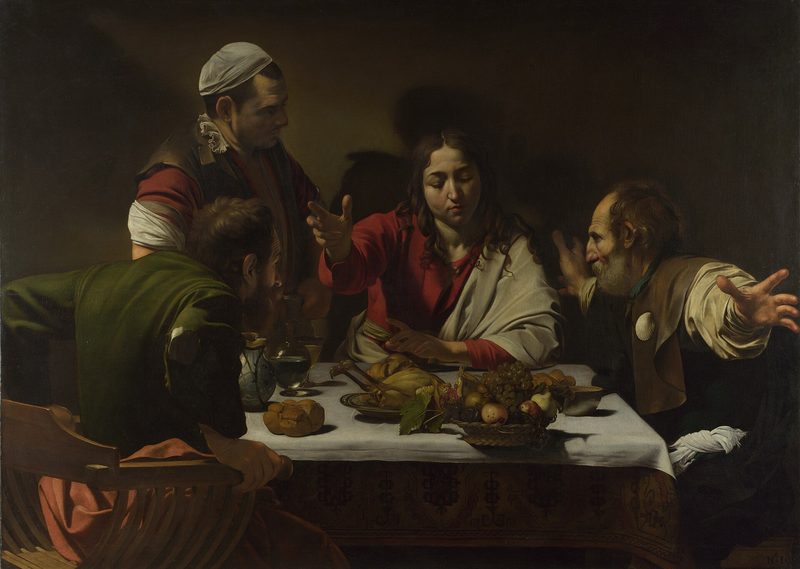
Jerusalem, the hour of the Passion
It’s the night before the cross, and Jesus is praying to His Father for His friends.3 Then the prayer gets bigger: “Not for these only do I pray, but for those also who will believe in me through their word.”4
That’s everyone who’s ever believed because of the apostles’ preaching.4 And He asks one thing for all of them: “That they may all be one.”5
If you love Jesus and read your Bible, that prayer was about you. And about your Catholic neighbor. Same prayer, same night.
01Where we start
Brothers and sisters already
This path is for Christians from other churches who want to understand Catholics. We’re starting with what’s already true between us, and there’s a lot of it, before we get to the differences.
Here’s what the Catholic Church says about you: if you’ve been justified by faith in Baptism, you’re in Christ, and you have every right to be called a Christian.16 In its words, you’re “accepted as brothers in the Lord by the children of the Catholic Church.”1
It also says the Bible, the life of grace, and faith, hope and love are really alive outside the Catholic Church’s visible walls. We’re not pretending otherwise.7
So what do we actually share? More than most people think.
02The list
What we hold in common
One Lord: we confess Jesus Christ as Lord.1011
The Trinity: one God, Father, Son and Holy Spirit, is the central mystery of Christian faith.12
Scripture: the Bible is inspired, and God is its author.1314
Grace: we’re made right with God by His grace, His free, undeserved help, which you can’t earn.1516
Baptism: it’s the foundation that joins all Christians, including those not yet in full communion with the Catholic Church.2
“There is one body and one Spirit, even as you also were called in one hope of your calling, one Lord, one faith, one baptism, one God and Father of all, who is over all and through all and in us all.”
That’s a lot of common ground. So why not just stop there and get lunch?
03The honest part
Honest about the differences
Because pretending the differences are tiny wouldn’t be honest, and the Church says fake peace is the opposite of real unity.17 Christ wants us to be one, so we keep praying and working for it.3
And the Church admits that full reconciliation “transcends human powers and gifts.” We can’t fix this ourselves; the hope is Christ’s prayer, the Father’s love and the Holy Spirit’s power.18
The next steps take the big questions one at a time, Bible first: Mary, the saints, and more. You’re welcome to disagree. Just hear what Catholics actually believe, in the Church’s own words, not in a rumor’s.
He prayed that we’d be one. The least we can do is actually understand each other.
Your move
Try this, this week
- Read John 17:20-23. This is the prayer of Jesus for all who would believe in Him.
- List what you already share. Use the five points in this lesson as a start.
- Write down one honest question. The next steps take them one at a time.
- Pray for a Catholic you know. And, if you like, ask them to pray for you.
You’ll need
- Your own Bible, whatever translation you love.
- A Catholic friend to talk with, if you have one.
Remember Start with what is already true between us.
If this is hard
Faith conversations between Christians can get tense, especially at Thanksgiving. Go slow. Keep loving people who see it differently. And if you’re weighing a big decision, a priest can listen and help you think it through.
Three questions people ask
Does the Catholic Church think Protestants are Christians?
Answered on video by Catholic Answers · Full answer page
Yes. The Church teaches that all who have been justified by faith in Baptism are incorporated into Christ and have a right to be called Christians.16
Do Catholics believe we are saved by grace?
Answered on video by Catholic Answers · Full answer page
The Catechism teaches that our justification comes from the grace of God, His free and undeserved help.15 Because the initiative belongs to God, no one can merit the initial grace of forgiveness and justification.1916
Do Catholics read the Bible?
Answered on video by Bishop Robert Barron · Full answer page
The Church forcefully exhorts all the faithful to learn the surpassing knowledge of Jesus Christ by frequent reading of the divine Scriptures. The Catechism quotes St. Jerome: “Ignorance of the Scriptures is ignorance of Christ.”20
Only one thing to do
Your one next step
Tonight, read John 17:20-23 slowly, and pray it for one Christian you know from a different church. That is all. When you are ready, the next step looks at Mary.
Next: MaryStep 1 of 8 · Evangelical, Pentecostal or Protestant
If we share so much, why do Catholics talk so much about Mary?
Step 2: The Bible and TraditionTake it with you
Printable one-page cardDownload card (A4 PDF)Download card (US Letter PDF)Short link: stoneandincense.com/go/cg1
See it

Your real next step
This page can’t give you the sacraments. A parish can.
We’re just pointing. People walk with you. Find a Catholic parish near you, go to a Mass, or just ask a priest for ten minutes. You don’t need to have it figured out.
Notes
How we know · 20 sources for this page
- Catechism of the Catholic Church, paragraph 818. vatican.va
- Catechism of the Catholic Church, paragraph 1271. vatican.va
- Catechism of the Catholic Church, paragraph 820. vatican.va
- John 17:20, World English Bible. read the chapter
- John 17:21, World English Bible. read the chapter
- Unitatis Redintegratio 3 (Vatican II, Decree on Ecumenism, 1964). vatican.va
- Catechism of the Catholic Church, paragraph 819. vatican.va
- Catechism of the Catholic Church, paragraph 11. vatican.va
- Catechism of the Catholic Church, paragraph 1213. vatican.va
- Ephesians 4:4-6, World English Bible. read the chapter
- Romans 10:9, World English Bible. read the chapter
- Catechism of the Catholic Church, paragraph 234. vatican.va
- Catechism of the Catholic Church, paragraph 105. vatican.va
- 2 Timothy 3:16, World English Bible. read the chapter
- Catechism of the Catholic Church, paragraph 1996. vatican.va
- Ephesians 2:8-9, World English Bible. read the chapter
- Unitatis Redintegratio 11 (Vatican II, Decree on Ecumenism, 1964). vatican.va
- Catechism of the Catholic Church, paragraph 822. vatican.va
- Catechism of the Catholic Church, paragraph 2010. vatican.va
- Catechism of the Catholic Church, paragraph 133. vatican.va
Excerpts from the English translation of the Catechism of the Catholic Church for use in the United States of America Copyright © 1994, United States Catholic Conference, Inc. – Libreria Editrice Vaticana. Used with Permission. English translation of the Catechism of the Catholic Church: Modifications from the Editio Typica copyright © 1997, United States Conference of Catholic Bishops – Libreria Editrice Vaticana. Scripture: World English Bible, Catholic edition (public domain), modern verse numbers; Douay-Rheims numbers in brackets where they differ. Early Christian writers: Ante-Nicene Fathers (1885, public domain). Video: “Why Be Ecumenical? Part I,” United States Conference of Catholic Bishops, supporting material, not a teaching source.
Scenes marked “Imagine” are an invitation to picture the moment, not a historical record. Stone & Incense restates Church teaching in plain words; our wording is not an official Church text. Report an errorCorrections.