
Journeys / Evangelical, Pentecostal or Protestant / Step 4 of 8
On this page
Quick answers to related questions
All 8 steps in Evangelical, Pentecostal or Protestant You’re on step 4
Capernaum, a synagogue
Jesus tells a crowd that He is the living bread, and that the bread He gives is His flesh.1
They argue about it. He doesn’t soften it.3
If it were only a symbol, that was the moment to say so.
01Common ground
We all take Jesus at His word
“I am the living bread which came down out of heaven. If anyone eats of this bread, he will live forever. Yes, the bread which I will give for the life of the world is my flesh.’”
Paul hands on the same words: “This is my body.”4 And he warns that eating unworthily is sinning against the body and blood of the Lord.5
So what do Catholics actually claim?
02The real disagreement
Truly, really, substantially
Church teachingDisputed question
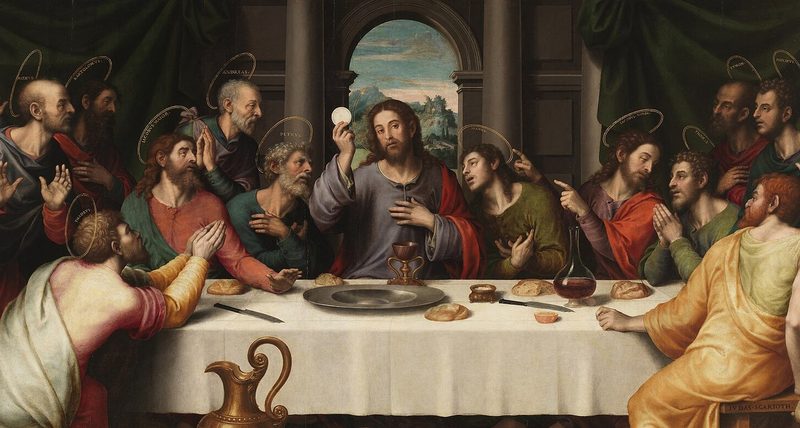
The Church teaches that in the Eucharist Christ is present truly, really and substantially, body and blood, soul and divinity.2
The bread and wine become His body and blood; the Church calls this change transubstantiation.6
Your reading: a memorial meal that points to Christ. The Catholic reading: a memorial that makes His one sacrifice present, with Christ Himself there.7
Is this a late medieval idea?
03The history
What the first Christians wrote
“And on the day called Sunday, all who live in cities or in the country gather together to one place”
Justin goes on to describe bread and wine offered with thanksgiving. The Catechism quotes him as a witness to the Mass from the second century.9
Next: Peter, and the question of a pope.
Your move
Try this, this week
- Read John 6:48-69. Watch who leaves and who stays.
- Read 1 Corinthians 11:23-29.
- Read the Case page on what the first Christians believed.
You’ll need
- A Bible open to John 6.
- Fifteen minutes.
Remember If it were only a symbol, John 6 was the moment to say so.
If this is hard
If you go to a Mass, you’re welcome to come and watch. Communion is for Catholics, so you can stay in your seat or come forward with arms crossed for a blessing.
Only one thing to do
Your one next step
Watch the video, then visit one Mass and watch the moment the priest lifts the Host.
Find a parish near youStep 4 of 8 · Evangelical, Pentecostal or Protestant
Next: Peter.
Step 5: Peter and the popeTake it with you
Printable one-page cardDownload card (A4 PDF)Download card (US Letter PDF)Short link: stoneandincense.com/go/cg4
Your real next step
This page can’t give you the sacraments. A parish can.
We’re just pointing. People walk with you. Find a Catholic parish near you, go to a Mass, or just ask a priest for ten minutes. You don’t need to have it figured out.
Notes
How we know · 9 sources for this page
- John 6:51, World English Bible. read the chapter
- Catechism of the Catholic Church, paragraph 1374. vatican.va
- John 6:52-53 [Douay 6:53-54], World English Bible. read the chapter
- 1 Corinthians 11:24, World English Bible. read the chapter
- 1 Corinthians 11:27, World English Bible. read the chapter
- Catechism of the Catholic Church, paragraph 1376. vatican.va
- Catechism of the Catholic Church, paragraph 1366. vatican.va
- St. Justin Martyr, First Apology 67 (c. 155). Ante-Nicene Fathers vol. 1 (1885). ccel.org
- Catechism of the Catholic Church, paragraph 1345. vatican.va
Excerpts from the English translation of the Catechism of the Catholic Church for use in the United States of America Copyright © 1994, United States Catholic Conference, Inc. – Libreria Editrice Vaticana. Used with Permission. English translation of the Catechism of the Catholic Church: Modifications from the Editio Typica copyright © 1997, United States Conference of Catholic Bishops – Libreria Editrice Vaticana. Scripture: World English Bible, Catholic edition (public domain), modern verse numbers; Douay-Rheims numbers in brackets where they differ. Early Christian writers: Ante-Nicene Fathers (1885, public domain). Video: “Biblical Proof the Eucharist Is NOT Just a Symbol,” Catholic Answers Live, supporting material, not a teaching source.
Scenes marked “Imagine” are an invitation to picture the moment, not a historical record. Stone & Incense restates Church teaching in plain words; our wording is not an official Church text. Report an errorCorrections.