
Home / The saints / St. Clare of Assisi
Assisi, Palm Sunday, 20 March 1212
A young noblewoman leaves her family’s house in secret and walks through the dark to the little church of the Portiuncula.1
There Francis and his brothers cut her hair and give her a rough habit.1
Her father had planned a splendid marriage for her. He came to drag her home by force.
Patron of television2; the eyes3
01St. Clare of Assisi
San Damiano
She refused to go, and about sixteen days later her younger sister Agnes joined her.1
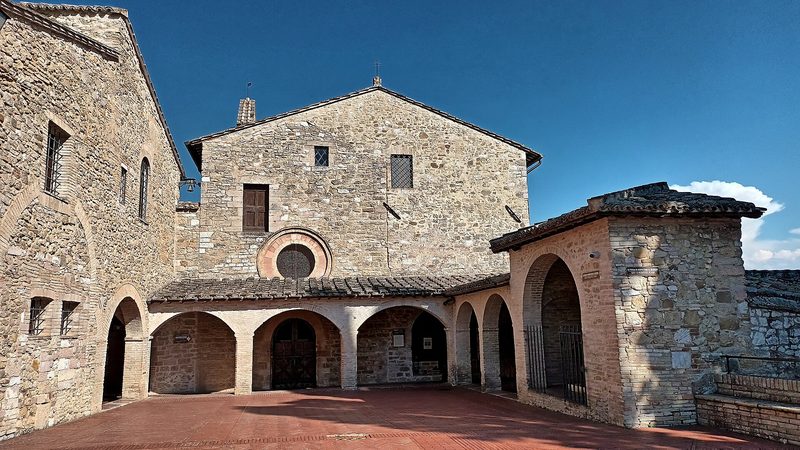
Francis settled them at San Damiano, the chapel he had rebuilt with his own hands, and there Clare lived for over forty years.1
02St. Clare of Assisi
The privilege of poverty
She fought for years for the right of her sisters to own nothing at all, and two days before her death Pope Innocent IV confirmed her rule.1
Most people fight for security. Clare fought, against popes and bishops who meant well, for the freedom to have none.
Live it this week
Unplug one evening
Clare traded a splendid marriage for a quiet convent and called her poverty a privilege. Pick one evening this week and go without screens from dinner to bed. Put the phone in a drawer and give God the first ten minutes of that quiet.
Notes
How we know · 3 sources for this page
- Catholic Encyclopedia (1913), “St. Clare of Assisi”. New Advent edition. newadvent.org
- Vatican News, Saint of the day: “St. Clare of Assisi”. Dicastery for Communication, Holy See. vaticannews.va
- Catholic Encyclopedia (1913), “Patron Saints”. New Advent edition. newadvent.org
The Catholic Encyclopedia (1913) is in the public domain; we quote the New Advent edition. Texts of the Holy See are quoted briefly from vatican.va. Scripture: World English Bible, Catholic edition (public domain); Verse numbers are modern, with Douay-Rheims numbers in brackets where they differ. Photographs: Wikimedia Commons, credited under each image; full list on the photo credits page.
Lines in the narrator’s voice, without a note, are our reflection, not a historical claim. Stone & Incense restates Church teaching in plain words; our wording is not an official Church text. Report an errorCorrections.