
Home / The saints / St. Lawrence
Rome, August 258
The emperor Valerian has ordered that all bishops, priests and deacons be put to death at once.1
On 6 August Pope Sixtus II is arrested in the catacombs and executed.1
Four days later the last of the seven deacons of Rome, Lawrence, follows him.1
The tradition the Church remembers is not about the manner of his death. It is about what he called treasure.
Patron of deacons, chefs and firefighters2
01St. Lawrence
The treasure of the Church
According to the tradition, when Lawrence was asked for the treasures of the Church he brought forward the poor.1
The same tradition says Sixtus comforted Lawrence, who wished to die with him, by telling him he would follow in three days.1
02St. Lawrence
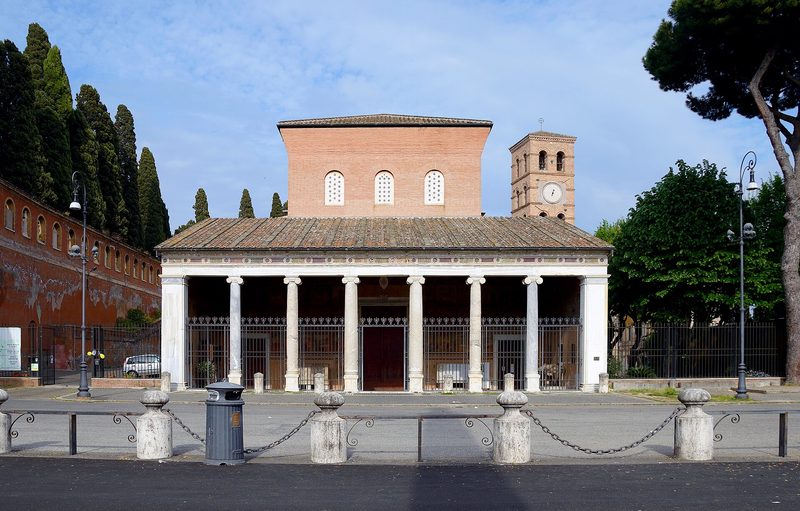
His basilica
Constantine built a little oratory over his grave on the Via Tiburtina, later enlarged into a great basilica.1
Since the 300s, Rome has honored Lawrence as one of its greatest martyrs.1
Live it this week
Find the Church’s treasure
Asked for the Church’s treasure, Lawrence showed up with the poor. Call your parish or a local food pantry this week and ask what they actually need right now. Then bring it.
Notes
How we know · 2 sources for this page
- Catholic Encyclopedia (1913), “St. Lawrence”. New Advent edition. newadvent.org
- Vatican News, Saint of the day: “St. Lawrence”. Dicastery for Communication, Holy See. vaticannews.va
The Catholic Encyclopedia (1913) is in the public domain; we quote the New Advent edition. Texts of the Holy See are quoted briefly from vatican.va. Scripture: World English Bible, Catholic edition (public domain); Verse numbers are modern, with Douay-Rheims numbers in brackets where they differ. Photographs: Wikimedia Commons, credited under each image; full list on the photo credits page.
Lines in the narrator’s voice, without a note, are our reflection, not a historical claim. Stone & Incense restates Church teaching in plain words; our wording is not an official Church text. Report an errorCorrections.