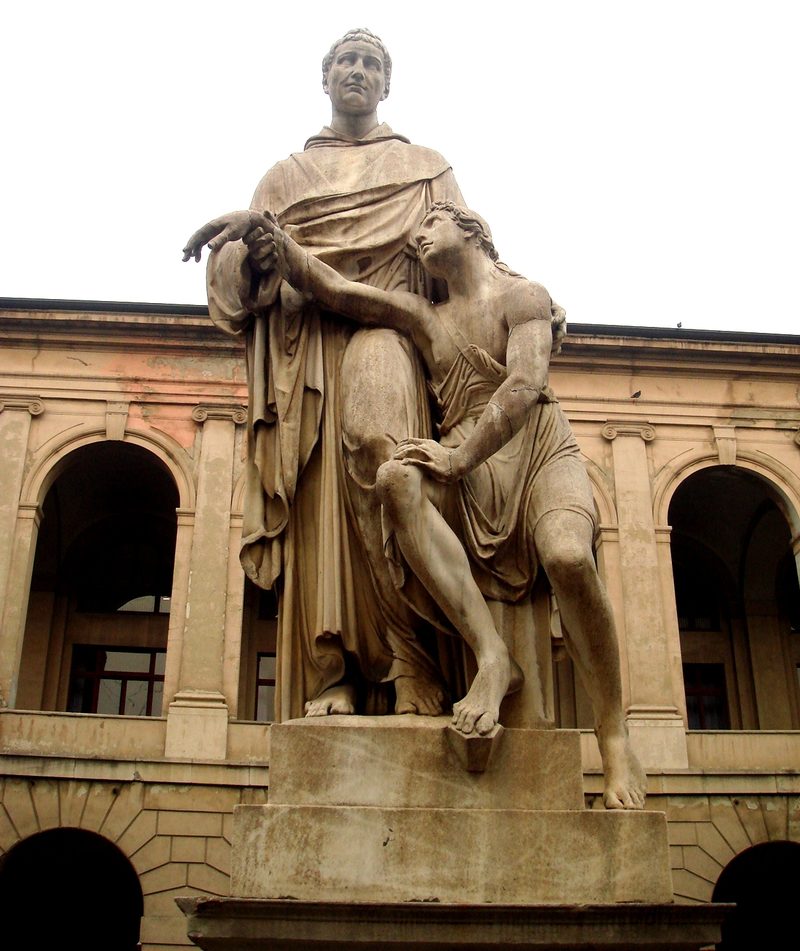
_-_Foto_G._Dall%27Orto,_22-Ott-2008.jpg)
Home / The saints / St. John of God
Granada, Spain, 1537
John was a shepherd, a soldier and a bookseller, and in his forties he still hadn’t found his place.1
Then he heard St. John of Avila preach in Granada and broke down in public, so wildly that he was locked in an asylum.1
There he saw how the mentally ill were beaten and neglected, and he decided to care for the sick himself.
Patron of hospitals and the dying1; the sick, nurses and heart patients1; booksellers and printers1
01St. John of God
A house for the sick
He rented a house and filled it with the sick and poor, begging in the streets to feed them.1
His helpers became the Brothers Hospitallers, and Pope Leo XIII later named him patron of hospitals and the dying.2
02St. John of God
Into the river
He died after jumping into a river to save a drowning boy, on his own birthday.1
Live it this week
Visit someone with mental illness
John saw the mentally ill treated like animals and changed it. This week, reach out to someone who struggles with depression or mental illness: call, sit with them, or bring them food, without trying to fix them.
Notes
How we know · 2 sources for this page
- Franciscan Media, Saint of the Day: “Saint John of God”. franciscanmedia.org. franciscanmedia.org
- Catholic Encyclopedia (1913), “St. John of God”. New Advent edition. newadvent.org
The Catholic Encyclopedia (1913) is in the public domain; we quote the New Advent edition. Texts of the Holy See are quoted briefly from vatican.va. Scripture: World English Bible, Catholic edition (public domain); Verse numbers are modern, with Douay-Rheims numbers in brackets where they differ. Photographs: Wikimedia Commons, credited under each image; full list on the photo credits page.
Lines in the narrator’s voice, without a note, are our reflection, not a historical claim. Stone & Incense restates Church teaching in plain words; our wording is not an official Church text. Report an errorCorrections.