Home / Library / The journey map

The journey map.

A pilgrimage through time: from a house in Nazareth to the balcony of St. Peter’s, and out to the ends of the earth. 77 stops, every one sourced, with photographs of the places as they stand today.

How it works: each stop is one place, one moment, one story, in order from Nazareth to today. Press Next stop and the map flies there.

The map needs JavaScript. Every stop is in the story below.

AD 1775 to today

The modern world

Christ promised that the gates of Hades would not prevail against His Church.24

The modern popesSt. Maximilian KolbeLeo XIV

01Chapter one

The Holy Land

On the evening of the first Easter, two disciples are walking from Jerusalem to a village called Emmaus, talking over all that has happened.1

A stranger draws near and walks with them, and asks: “What are you talking about as you walk, and are sad?”2

At table he takes bread, blesses it and breaks it, and their eyes are opened: they know him.3

Every road on this map begins in that small country between the desert and the sea. Scroll, and the map walks with the story.

Luke 1 · Nazareth, Galilee

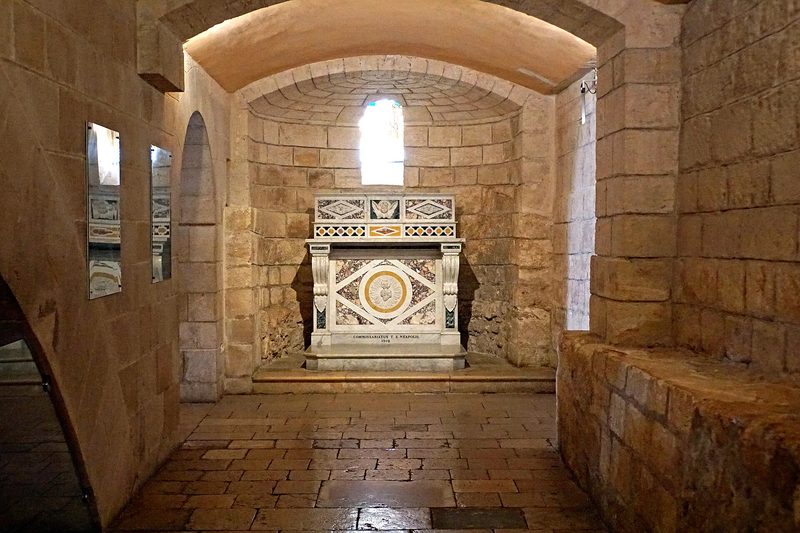
A house in Nazareth

The grotto altar in the Basilica of the Annunciation, Nazareth
The grotto altar in the Basilica of the Annunciation, Nazareth. Dennis G. Jarvis, 2016. Wikimedia Commons, CC BY-SA 2.0.

In a small town of Galilee called Nazareth, the angel Gabriel is sent to a young woman named Mary, promised in marriage to Joseph.4

He greets her: “The Lord is with you,” calling her “highly favored.”5

Her answer changes everything: “Behold, the servant of the Lord; let it be done to me according to your word”.6

The Church teaches that the Annunciation to Mary inaugurates the fullness of time, when God’s promises begin to be fulfilled.7

About 570 a pilgrim from Piacenza saw the dwelling of Mary there, converted into a basilica.8

Luke 2 · Bethlehem, Judea

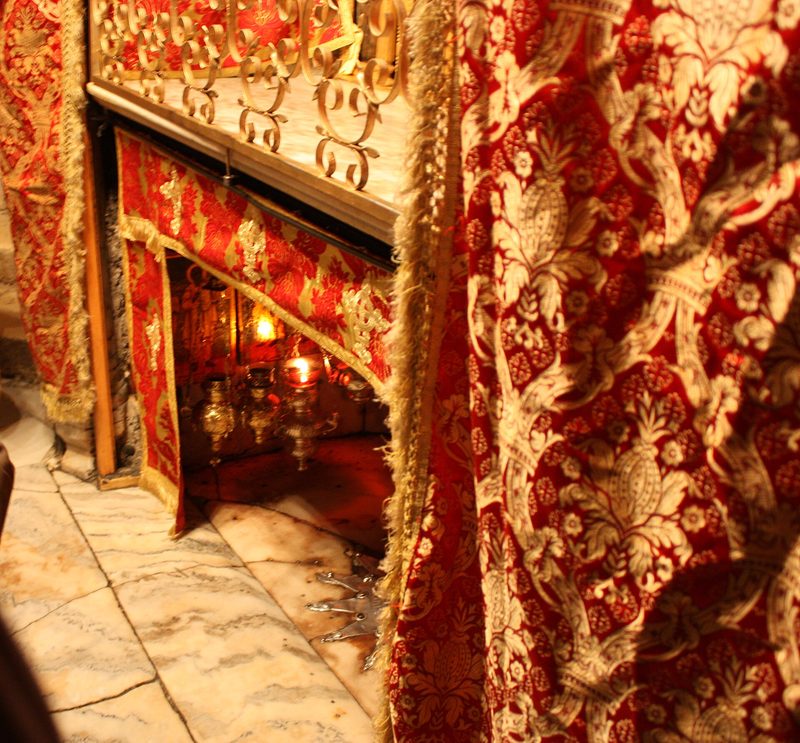
The grotto at Bethlehem

The altar in the Grotto of the Nativity, beneath the basilica in Bethlehem
The altar in the Grotto of the Nativity, beneath the basilica in Bethlehem. Wknight94, 2010. Wikimedia Commons, CC BY-SA 3.0.

Joseph goes up from Nazareth to Bethlehem, the city of David, because he is of the house and family of David.9

There Mary brings forth her firstborn son, wraps him in swaddling clothes and lays him in a manger, because there is no room for them in the inn.10

By the third century the place was well known: Origen wrote that in Bethlehem “the cave is pointed out where He was born”.11

St. Helena, Constantine’s mother, had a church raised in Bethlehem near the Grotto of the Nativity.12

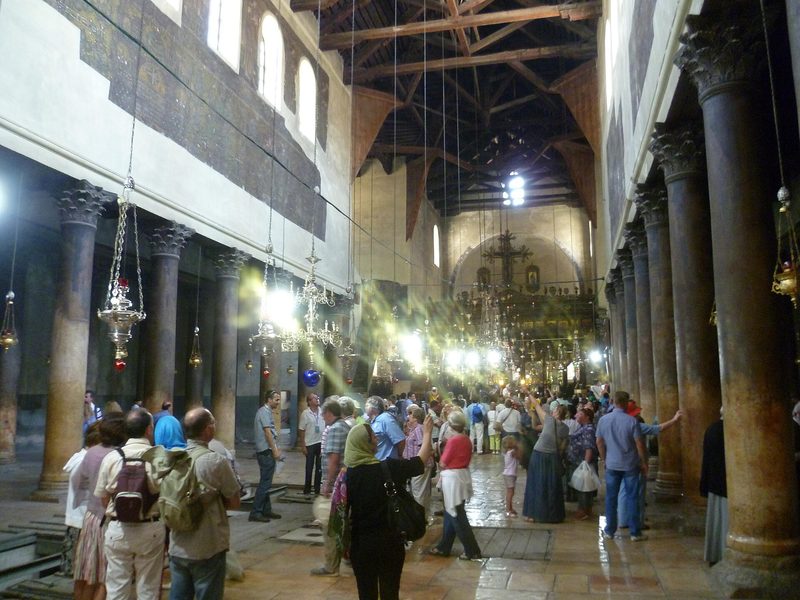
The basilica that stands there now is substantially the work of Constantine, about 330, with changes made under Justinian.11

Underneath is the grotto of the Nativity, and pilgrims have been coming to it for centuries.11

The nave of the Church of the Nativity
The nave of the Church of the Nativity. Radosław Botev, 2013. Wikimedia Commons, CC BY 3.0 pl.

Mark 1 · The river Jordan

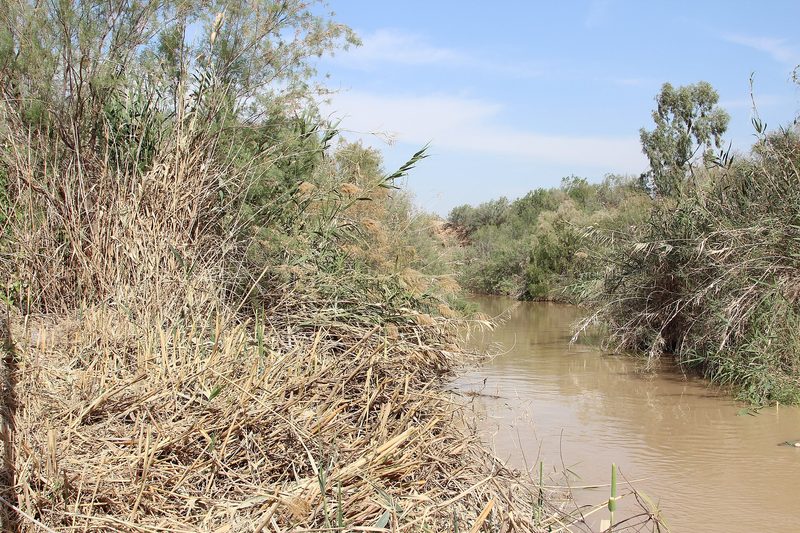
Into the Jordan

The Jordan at Qasr al-Yahud, the traditional place of the baptism
The Jordan at Qasr al-Yahud, the traditional place of the baptism. Fallaner, 2016. Wikimedia Commons, CC BY-SA 4.0.

Jesus comes from Nazareth of Galilee and is baptized by John in the Jordan.13

As he comes out of the water the heavens are opened, the Spirit of God descends like a dove, and a voice says: “This is my beloved Son, with whom I am well pleased”.14

The Church teaches that Jesus’ public life begins with His baptism by John in the Jordan.15

Mark 1 · The Sea of Galilee

Fishers of men

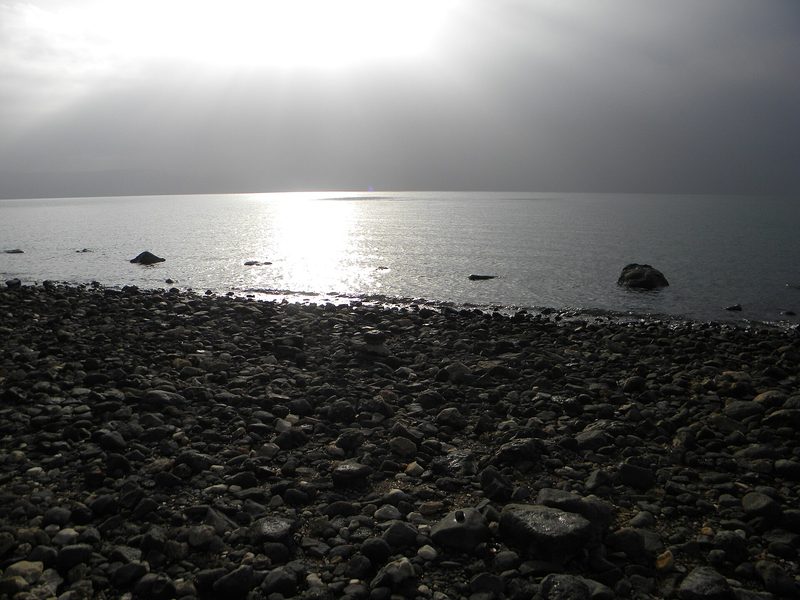
The Sea of Galilee at Tabgha, on the north-west shore
The Sea of Galilee at Tabgha, on the north-west shore. Britchi Mirela, 2014. Wikimedia Commons, CC BY-SA 4.0.

Passing by the Sea of Galilee, Jesus sees two fishermen, Simon and his brother Andrew, casting their nets.16

He says to them: “Come after me, and I will make you into fishers for men”.17

By the same lake he makes the crowd sit on the grass, takes five loaves and two fishes, blesses and breaks them, and feeds the multitude.18

Matthew 4 · Capernaum

His own town

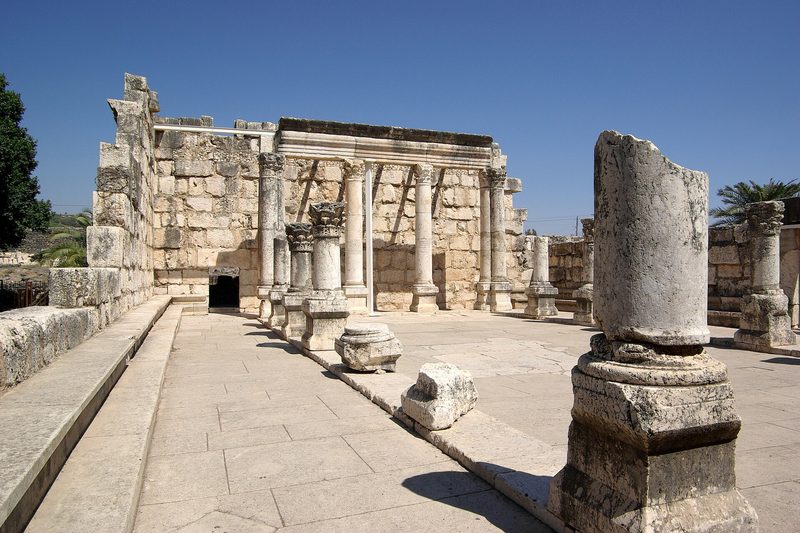
The ruins of the synagogue at Capernaum
The ruins of the synagogue at Capernaum. Berthold Werner, 2010. Wikimedia Commons, Public domain.

Leaving Nazareth, Jesus comes to live in Capharnaum, on the sea coast.19

On the sabbath he goes into the synagogue there and teaches.20

There he chose his first disciples and cured the centurion’s servant, Peter’s mother-in-law and many others.21

The splendid ruins of a magnificent synagogue still stand on the site.21

Matthew 16 · Caesarea Philippi

Who do you say I am?

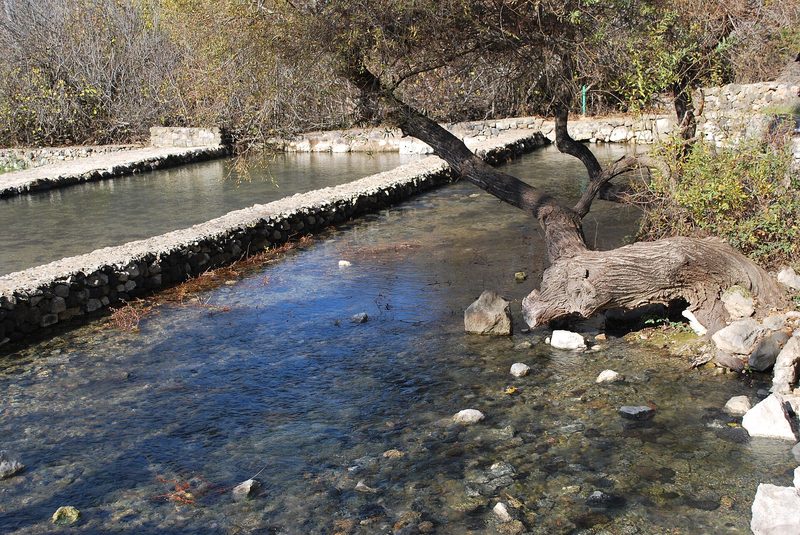
The springs near Banias, the site of Caesarea Philippi, at the foot of Mount Hermon
The springs near Banias, the site of Caesarea Philippi, at the foot of Mount Hermon. Bill Rice from Flat Rock, MI, USA, 2011. Wikimedia Commons, CC BY 2.0.

In the district of Caesarea Philippi Jesus asks His disciples: “Who do men say that I, the Son of Man, am?”22

Simon Peter answers: “You are the Christ, the Son of the living God”.23

Jesus replies: “You are Peter, and on this rock I will build my assembly, and the gates of Hades will not prevail against it” (the Greek word for “assembly,” ekklesia, is the New Testament word for “church”).24

The Church teaches that Christ made Peter the visible foundation of His Church and entrusted him with the keys.25

Read the full story of St. Peter

Mark 14 · Gethsemane, Jerusalem

The olive press

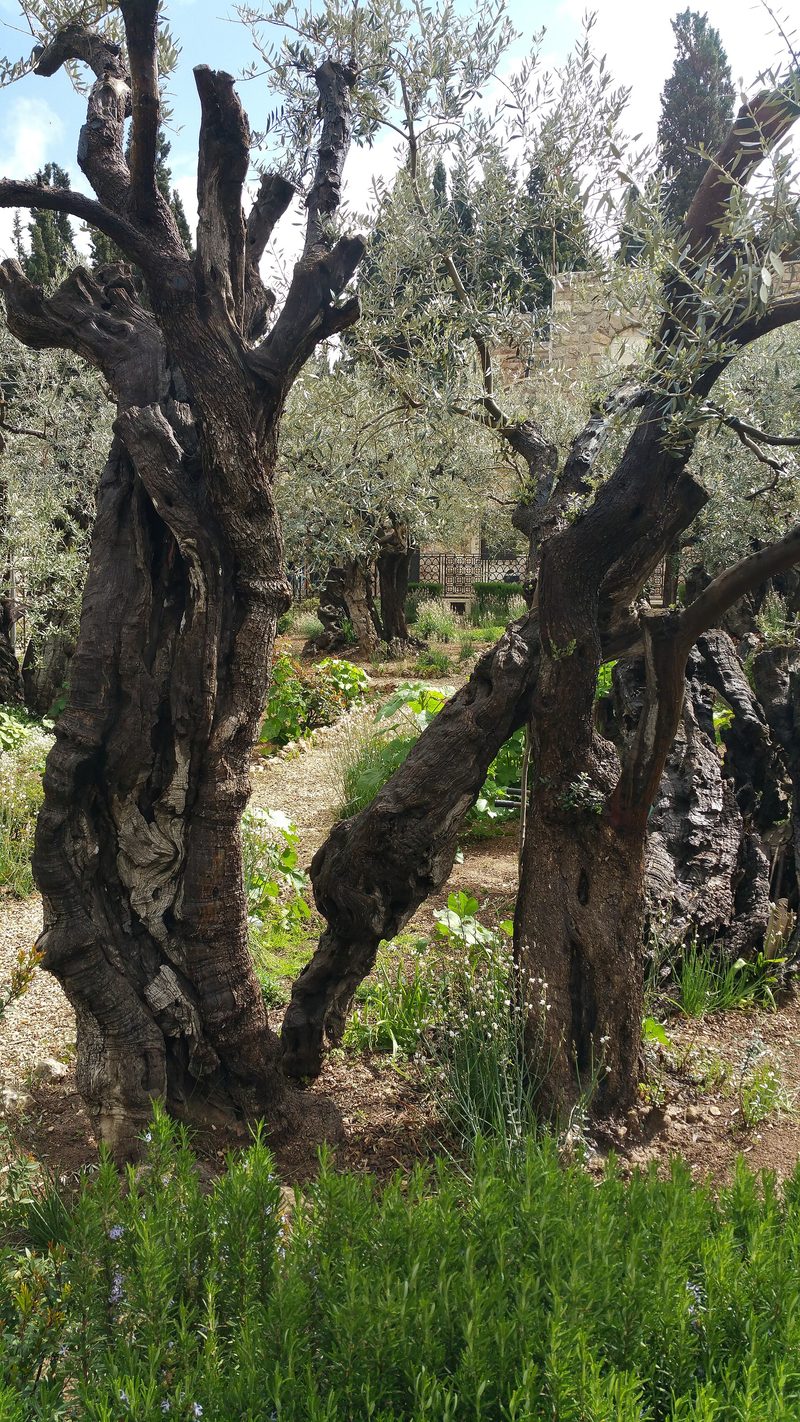
Ancient olive trees in the Garden of Gethsemane
Ancient olive trees in the Garden of Gethsemane. Konrad Summers from Santa Clarita (Valencia) , California, USA, 2016. Wikimedia Commons, CC BY-SA 2.0.

After the supper Jesus goes with His disciples to a place called Gethsemani and says: “Sit here while I pray”.26

He prays: “Father, if you are willing, remove this cup from me; nevertheless, not my will, but yours, be done”.27

The name means oil-press, a sign that the place was planted with olive trees.28

Eusebius says that Gethsemani lay at the foot of the Mount of Olives and that the faithful were accustomed to go there to pray.28

John 19 · Golgotha, Jerusalem

The place of the skull

The chapel of Golgotha inside the Church of the Holy Sepulchre
The chapel of Golgotha inside the Church of the Holy Sepulchre. Wknight94, 2010. Wikimedia Commons, CC BY-SA 3.0.

Carrying His own cross, Jesus goes out to the place called Calvary, in Hebrew Golgotha, and there they crucify Him between two others.29

He says that it is consummated, bows his head and gives up the ghost.30

The Church teaches that Christ’s death is the sacrifice that accomplishes the definitive redemption of men.31

John 20 · The tomb, Jerusalem

The empty tomb

The Stone of the Anointing, near the entrance of the Church of the Holy Sepulchre
The Stone of the Anointing, near the entrance of the Church of the Holy Sepulchre. Beko, 2018. Wikimedia Commons, CC BY-SA 4.0.

In the place where He was crucified there is a garden with a new tomb, and there they lay Jesus.32

Early on the first day of the week, while it is still dark, Mary Magdalen comes and sees the stone taken away.33

The angel tells the women: “He is not here, for he has risen, just like he said”.34

Acts 1 · The Mount of Olives

Witnesses to the ends of the earth

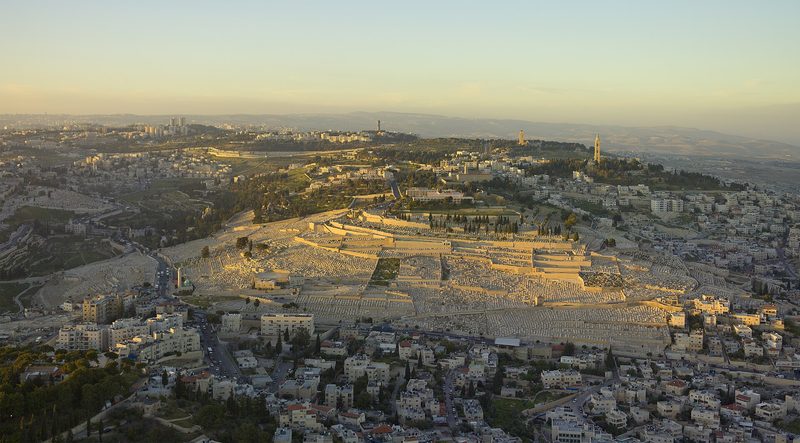
The Mount of Olives seen from the air
The Mount of Olives seen from the air. Godot13, 2013. Wikimedia Commons, CC BY-SA 4.0.

Jesus tells the apostles that they will receive the power of the Holy Spirit and be His witnesses to the uttermost part of the earth.35

While they look on he is raised up, and a cloud receives him out of their sight.36

They return to Jerusalem from the mount called Olivet.37

St. Helena later had a church raised on the Mount of the Ascension, near Jerusalem.12

Acts 2 · Jerusalem

Pentecost

On the day of Pentecost the disciples are all together in one place, and they are all filled with the Holy Spirit.38

Peter stands up with the eleven and preaches, and about three thousand souls are baptized that day.3940

The Church teaches that she was made manifest to the world on the day of Pentecost by the outpouring of the Holy Spirit.41

Acts 7 · Jerusalem

The first martyr

Stephen, a man full of faith and of the Holy Spirit, is one of the seven chosen to serve the community.42

They stone him, and he prays: “Lord Jesus, receive my spirit”.43

Falling on his knees he cries out, “Lord, don’t hold this sin against them!”, while a young man named Saul consents to his death.4445

Acts 9 · Damascus

The road to Damascus

The Street called Straight in the old city of Damascus
The Street called Straight in the old city of Damascus. Dosseman, 2009. Wikimedia Commons, CC BY-SA 4.0.

Saul is near Damascus when suddenly a light from heaven shines round about him.46

He falls to the ground and hears a voice: “Saul, Saul, why do you persecute me?”47

The Lord sends a disciple named Ananias to “the street which is called Straight”, where Saul is praying.48

The persecutor becomes the apostle of the Gentiles.49

Acts 11 · Antioch, Syria

First called Christians

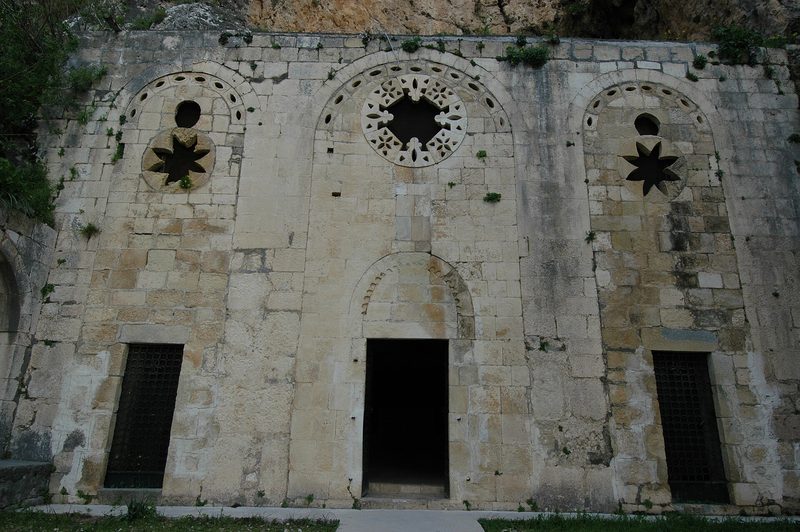
The cave church of St. Peter at Antakya, ancient Antioch
The cave church of St. Peter at Antakya, ancient Antioch. Dosseman, 2019. Wikimedia Commons, CC BY-SA 4.0.

At Antioch the disciples are first named Christians.50

Peter himself came to Antioch and lived there for some time.5152

By the early 300s, Antioch was seen as pretty much a Christian city.52

Its bishop Ignatius was later taken to Rome in chains, to be given to wild beasts.53

Read the full story of St. Ignatius of Antioch

Acts 15 · Jerusalem

The council at Jerusalem

Some teach that Gentile converts cannot be saved unless they are circumcised after the manner of Moses, and Paul and Barnabas go up to the apostles in Jerusalem about the question.54

The apostles and elders assemble, and their letter says: “it seemed good to the Holy Spirit, and to us”.5556

The Church teaches that the college of bishops exercises power over the universal Church in a solemn manner in an ecumenical council.57

326 to 336 · The Holy Sepulchre, Jerusalem

The tomb is found again

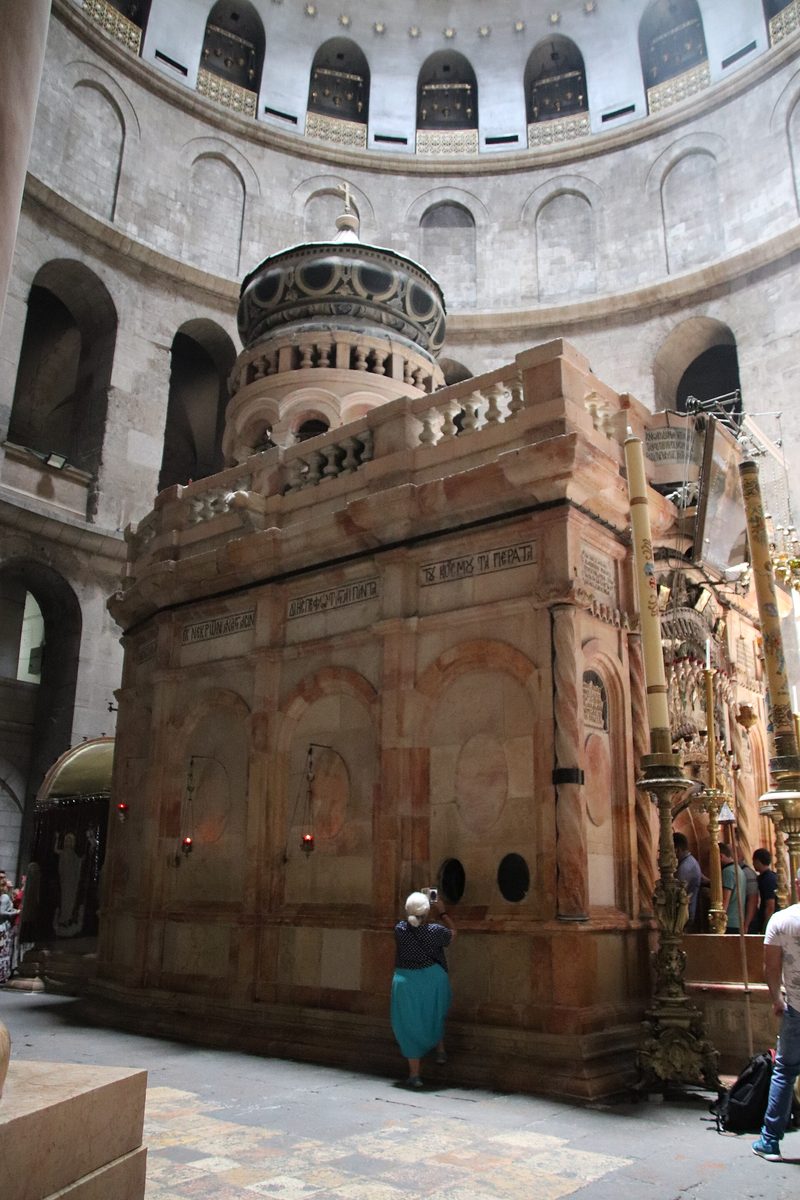
Church of the Holy Sepulchre The Aedicule, Which Contains the Holy Sepulchre Itself
The Aedicule over the tomb, inside the Church of the Holy Sepulchre. Gary Todd from Xinzheng, China, 2018. Wikimedia Commons, CC0.

Constantine sent his mother Helena to Jerusalem with letters and money for Macarius, the Bishop of Jerusalem.58

Helena and Macarius turned to the place of the Passion and Resurrection, then covered by a temple of Venus built by the Romans.58

“beyond the hopes of all, the most holy monument of Our Lord’s Resurrection shone forth”

Eusebius, Life of Constantine, quoted in the Catholic Encyclopedia58

Constantine marked the site by building a basilica over the Tomb of Christ, dedicated in 336.58

The church of the Holy Sepulchre stands there today.58

386 to 420 · Bethlehem

A scholar in the caves

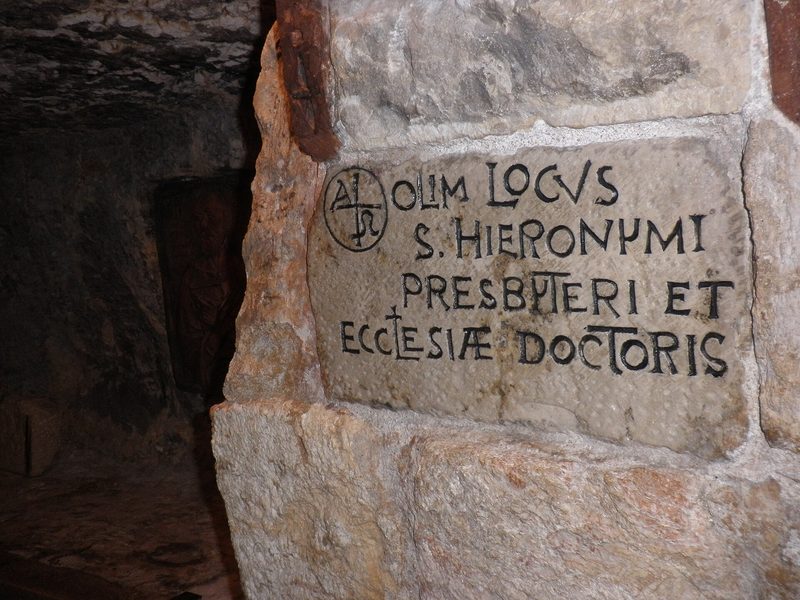
An old Latin inscription cut into the rock at the grave of St. Jerome, beneath the Church of the Nativity in Bethlehem.
Inscription at the grave of St. Jerome, in the caves beneath the Church of the Nativity. Qasinka, 2013. Wikimedia Commons, CC BY-SA 3.0.

After the death of Pope Damasus, Jerome leaves Rome and by way of Antioch and Alexandria reaches Bethlehem in 386.59

In Bethlehem he translates the Old Testament from the Hebrew.59

The Catechism quotes him: ignorance of the Scriptures is ignorance of Christ.60

He died at Bethlehem on 30 September 420.59

Read the full story of St. Jerome

02Chapter two

Rome

A prisoner in chains is brought up the road towards Rome, and Christians from the city walk out as far as Appii Forum to meet him.6162

When Paul sees them, he gives thanks to God and takes courage.61

Within a few years he and Peter will both die as martyrs in the city, in the reign of Nero.63

Nineteen and a half centuries of the Church’s story run through this one city, from two graves outside the walls to the balcony of St. Peter’s.

Acts 28 · The road into Rome

A prisoner comes to Rome

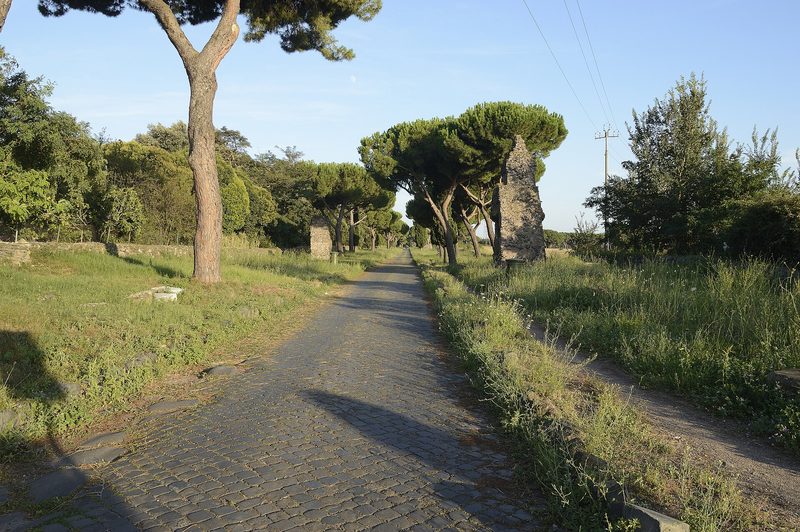
The old Appian Way, the road from the south into Rome
The old Appian Way, the road from the south into Rome. Livioandronico2013, 2014. Wikimedia Commons, CC BY-SA 4.0.

Paul had already written to “all who are in Rome, beloved of God, called to be saints”.64

He thanked God that their “faith is proclaimed throughout the whole world”.65

Now he arrives as a prisoner, and the brethren come out as far as Appii Forum to meet him.61

For two whole years he lives in his own hired lodging with a soldier guarding him, preaching the kingdom of God to all who come.6667

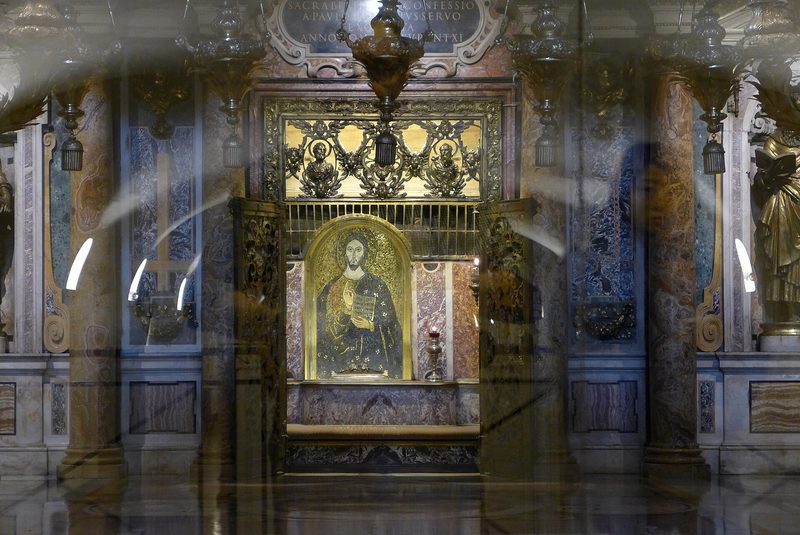
Between 64 and 68 · The Vatican Hill

The rock on the Vatican Hill

The Niche of the Pallia in the Vatican Grottoes, directly above the place venerated as Peter’s grave: a gold mosaic of Christ behind a bronze grille.
The tomb of St. Peter beneath the high altar of St. Peter’s Basilica. Dnalor 01, 2015. Wikimedia Commons, CC BY-SA 3.0 at.

Ancient writers agree that Peter died a martyr in Rome under the emperor Nero.63

“Peter was crucified at Rome with his head downwards, as he himself had desired to suffer”

Catholic Encyclopedia (1913), on the ancient witnesses63

Around the year 200 a Roman Christian named Gaius said he could point to the apostles’ monuments on the Vatican Hill and on the road to Ostia.68

“But I can show the trophies of the apostles”

Gaius of Rome, in Eusebius, Church History II.2568

The Catholic Church holds that the pope, the Bishop of Rome, is Peter’s successor and the perpetual, visible source of the unity of the bishops and of the faithful.69

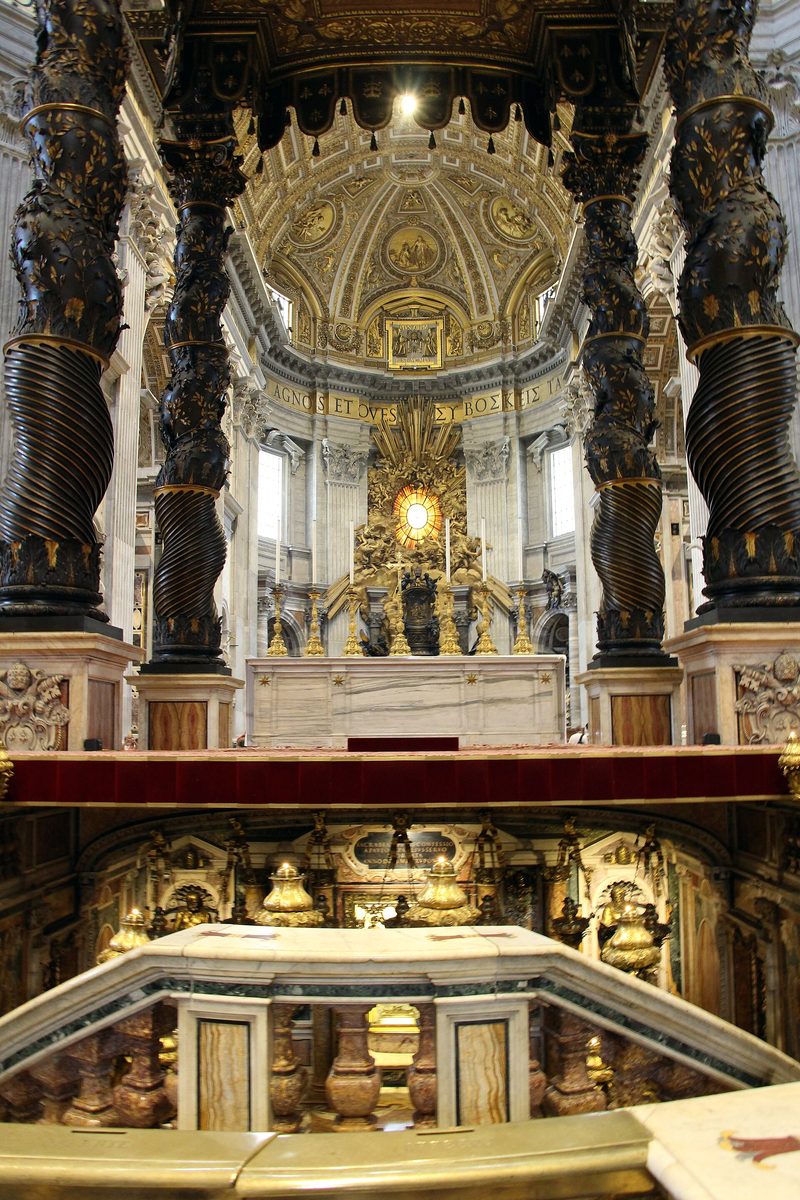
Vaticano - Basilica di San Pietro
The Confessio in front of the high altar, above the tomb. Fred Romero from Paris, France, 2018. Wikimedia Commons, CC BY 2.0.

Read the full story of St. Peter

Under Nero · The road to Ostia

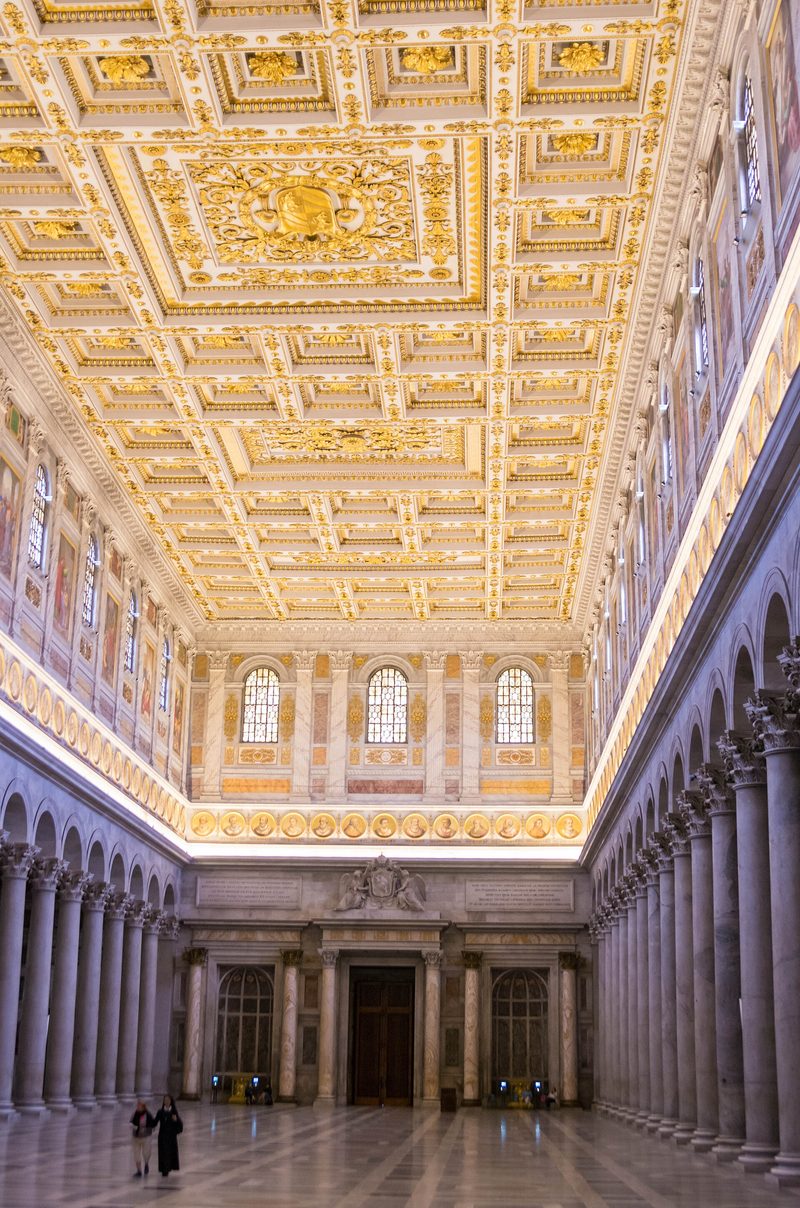
The road to Ostia

The nave of the Basilica of St. Paul Outside the Walls, on the road to Ostia
The nave of the Basilica of St. Paul Outside the Walls, on the road to Ostia. Antoine Taveneaux, 2014. Wikimedia Commons, CC BY-SA 3.0.

In his last letter Paul writes: “I am already being offered, and the time of my departure has come”.70

The Chronicle of Eusebius gives the thirteenth or fourteenth year of Nero, 67 to 68, for the deaths of Peter and Paul, a date accepted by St. Jerome.63

Gaius named the road to Ostia as the place of Paul’s monument, as the Vatican Hill was Peter’s.68

Late first century · Rome

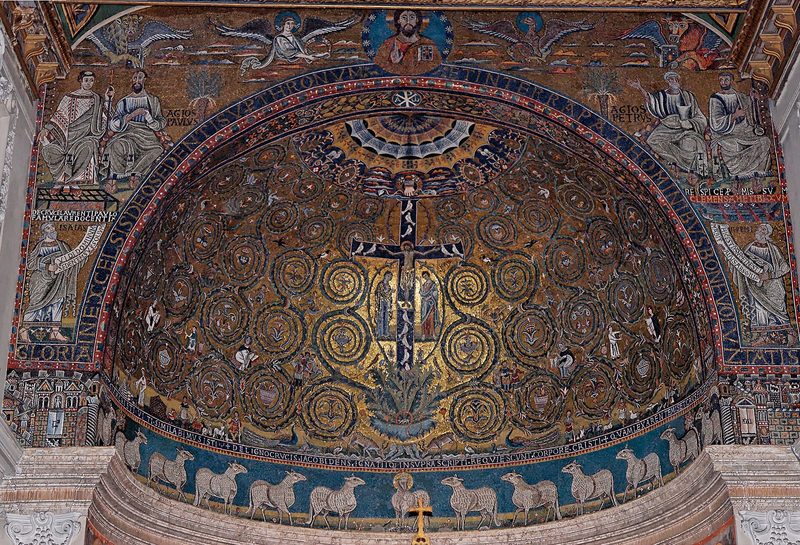
A letter from Rome

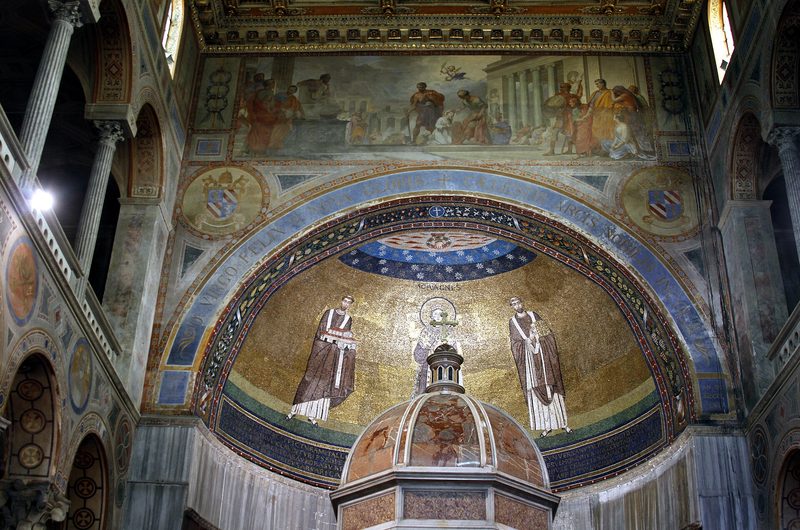
The apse mosaic of the Basilica of San Clemente, Rome: a golden vine spreads from the cross across the vault.
The apse mosaic of San Clemente, Rome. Jastrow, 2006. Wikimedia Commons, Public domain.

In Corinth a few young members of the church have pushed out their own presbyters.71

Clement, bishop of Rome, writes to them in a letter that is his one genuine surviving work.71

He calls the Corinthians back to peace and to the order the apostles themselves set up.72

Read the full story of St. Clement I

Between 98 and 117 · Rome

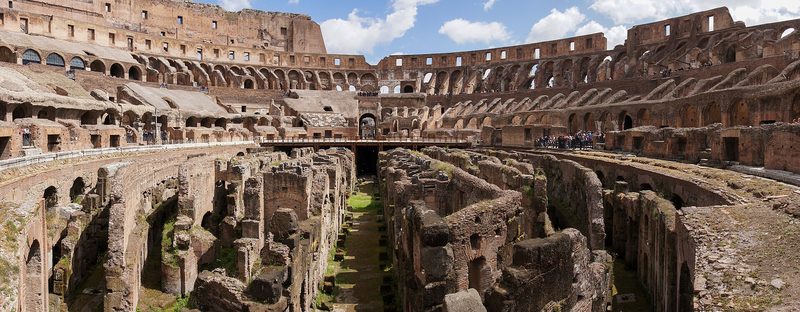
Wheat of Christ

The interior of the Colosseum in Rome, its tiers of broken arches open to the sky.
The Colosseum, Rome. Colin, 2012. Wikimedia Commons, CC BY-SA 3.0.

The bishop of Antioch is taken to Rome in chains, to be given to wild beasts as a spectacle for the people.53

“From Syria even to Rome I fight with wild beasts, by land and sea, by night and by day, being bound amidst ten leopards, even a company of soldiers”

St. Ignatius of Antioch, Letter to the Romans53

From Smyrna and Troas he writes to the churches on his way, urging them to obey their bishops.53

He died at Rome between 98 and 117.53

Read the full story of St. Ignatius of Antioch

Under Pope Zephyrinus · The Appian Way

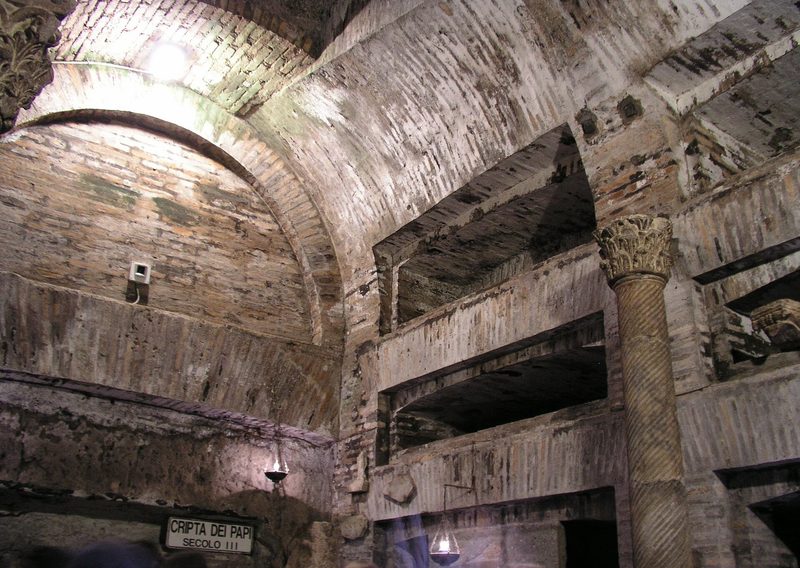
The Church’s own cemetery

The Crypt of the Popes in the Catacomb of St. Callixtus, Rome: a vaulted chamber where third-century popes were buried.
The Crypt of the Popes in the Catacomb of Callistus. Dnalor 01, 2007. Wikimedia Commons, CC BY-SA 3.0.

When Zephyrinus became pope, a former slave named Callistus was set over the cemetery belonging to the Church, which has borne his name ever since.73

In that catacomb, beside the crypt of the popes, the archaeologist De Rossi located the grave of the martyr Cecilia.74

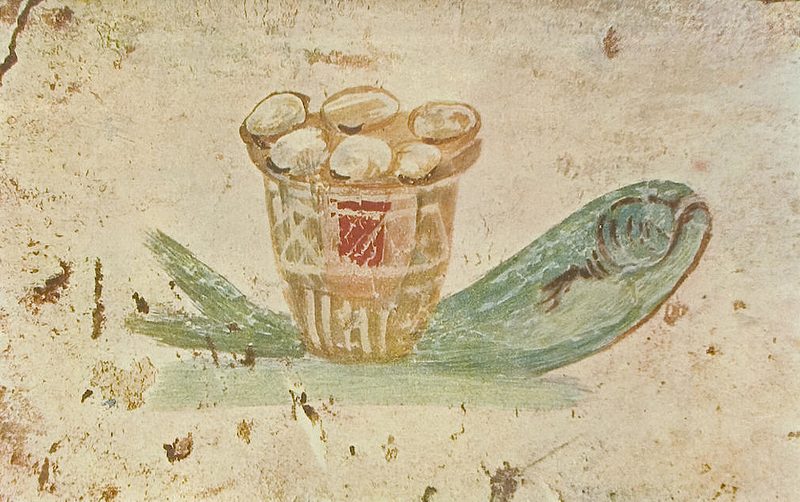
In the catacomb paintings, bread and fish, the food with which Christ fed the multitude, were an allusion to the Eucharistic meal.75

From the third century on the fish appears as the symbol of Christ.75

Loaves and fish, painted in the Crypt of Lucina in the same catacomb, early second century
Loaves and fish, painted in the Crypt of Lucina in the same catacomb, early second century. Unknown painter, 2nd century; photograph published by Joseph Wilpert, 1903. Wikimedia Commons, Public domain.

Read the full story of St. Callistus I

10 August 258 · The Via Tiburtina

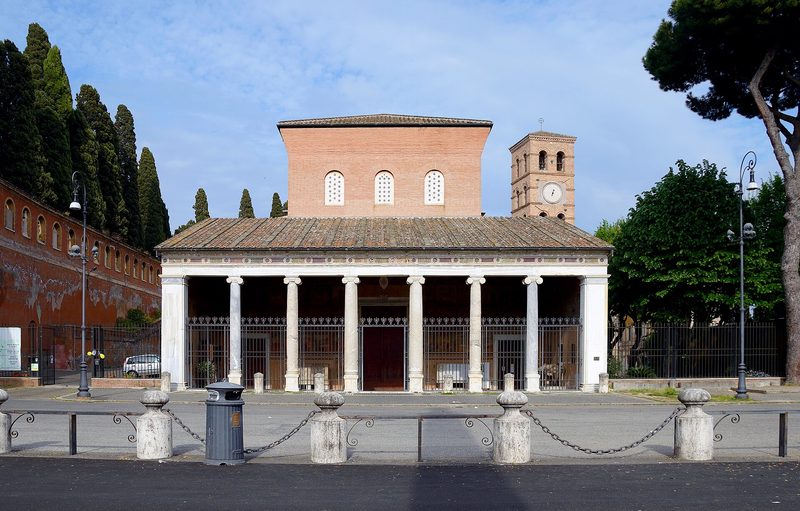
The treasures of the Church

The Basilica of San Lorenzo fuori le Mura, Rome: a simple portico of columns beneath a medieval bell tower.
The Basilica of San Lorenzo outside the Walls. Livioandronico2013, 2015. Wikimedia Commons, CC BY-SA 4.0.

The emperor Valerian orders that all bishops, priests and deacons be put to death at once.76

On 6 August Pope Sixtus II is arrested in the catacombs and executed, and four days later the deacon Lawrence follows him.76

According to the tradition, when Lawrence was asked for the treasures of the Church he brought forward the poor.76

Constantine built a little oratory over his grave, later enlarged into a great basilica.76

Read the full story of St. Lawrence

Died about 304 · The Via Nomentana

A girl the city remembers

The apse of Sant’Agnese fuori le Mura, Rome: a golden mosaic above the altar, framed by a great arch.
The apse of Sant’Agnese fuori le mura. José Luiz, 2016. Wikimedia Commons, CC BY-SA 4.0.

On the road out of Rome called the Via Nomentana lies the grave of a girl the whole city remembers.77

St. Ambrose gives her age as twelve, St. Augustine as thirteen.77

Of all the young women martyred in Rome, none was honored by the early Church more than Agnes.77

Read the full story of St. Agnes

28 October 312 · The Milvian Bridge

The bridge over the Tiber

In the spring of 312 Constantine marches rapidly into Italy against Maxentius, with an army far smaller than his rival’s.78

They meet near the bridge over the Tiber called the Milvian Bridge, and on 28 October Maxentius is defeated and loses his life in the river.78

The victor at once showed his gratitude to the God of the Christians: early in 313 the Edict of Milan tolerated Christian worship throughout the empire.78

Pope 314 to 335 · The Lateran

A cathedral for the bishop of Rome

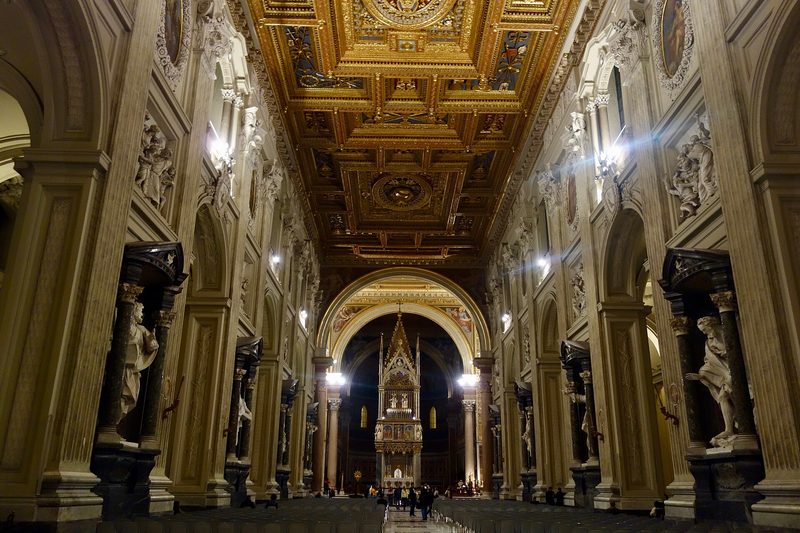
Nave, Basilica San Giovanni in Laterano
The nave of St. John Lateran, the cathedral of Rome. Sonse, 2018. Wikimedia Commons, CC BY 2.0.

A few years earlier Christians were being hunted in Rome.79

Now the emperor favors the Church, and a priest named Sylvester becomes bishop of the city.79

In his time the great basilicas of Rome began to rise, among them the Lateran, the cathedral of the popes.79

Read the full story of St. Sylvester I

384 · Rome

A pope, a scholar and the martyrs

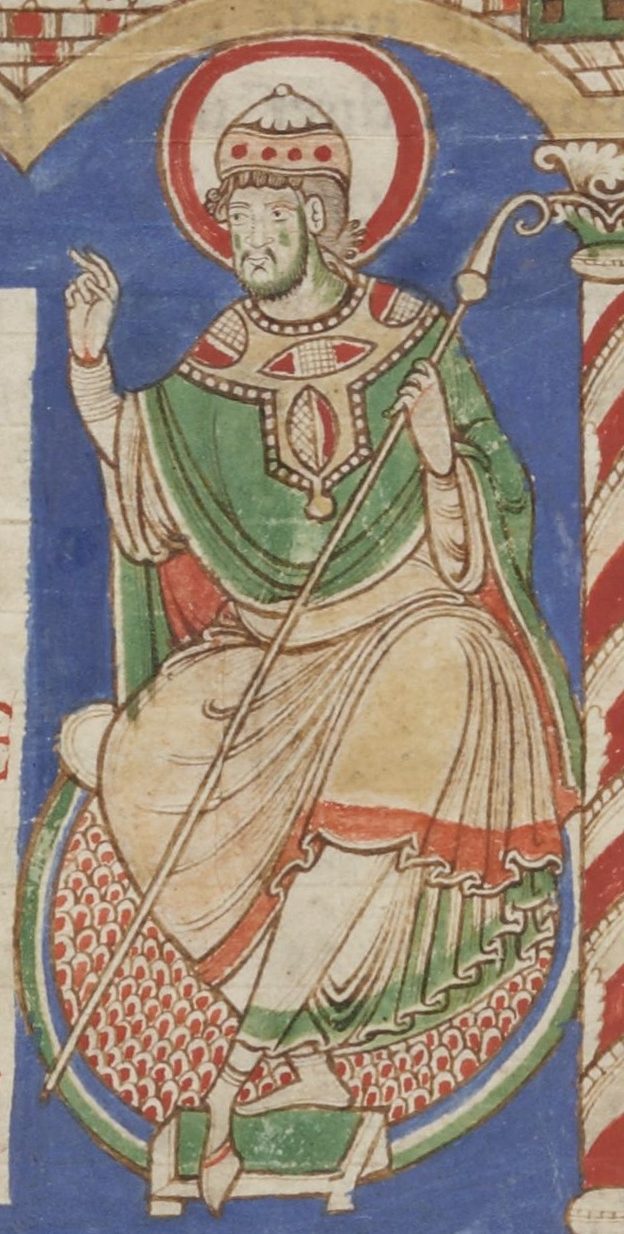
An eleventh-century manuscript painting of Pope Damasus enthroned, holding a book.
Pope Damasus, from a medieval Bible of St. Martial of Limoges. Unknown author. Wikimedia Commons, Public domain.

Pope Damasus persuaded St. Jerome to revise the earlier Latin versions of the Bible, the work that became the Vulgate.80

In Rome, under Damasus, Jerome corrected the Latin version of the Four Gospels in 384.59

Damasus restored the catacombs and wrote verse epitaphs for the martyrs.80

Read the full story of St. Damasus I

452 · By the Mincio, near Mantua

An unarmed bishop meets Attila

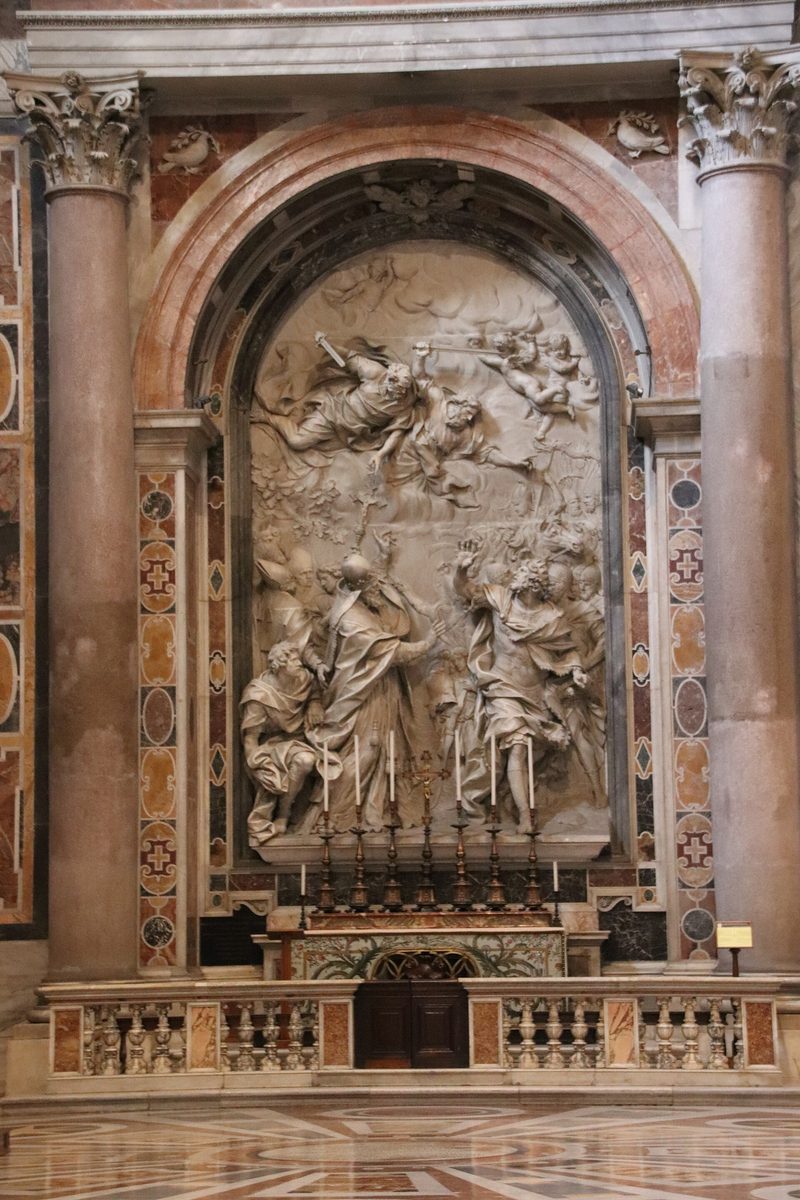
Alessandro Algardi’s marble relief in St. Peter’s Basilica: Pope Leo meets Attila, with Peter and Paul in the sky above.
Algardi’s marble relief of Leo meeting Attila, on the altar of St. Leo in St. Peter’s Basilica. Gary Todd from Xinzheng, China, 2019. Wikimedia Commons, Public domain.

Attila’s army has torn through northern Italy, and Rome is next.81

Leo goes out with two Roman officials to meet Attila near Mantua, and obtains his promise to withdraw from Italy.81

In 455, when the Vandals captured Rome, Leo’s intercession won a promise that the city’s people would be spared.81

Read the full story of St. Leo I (the Great)

590 · Rome

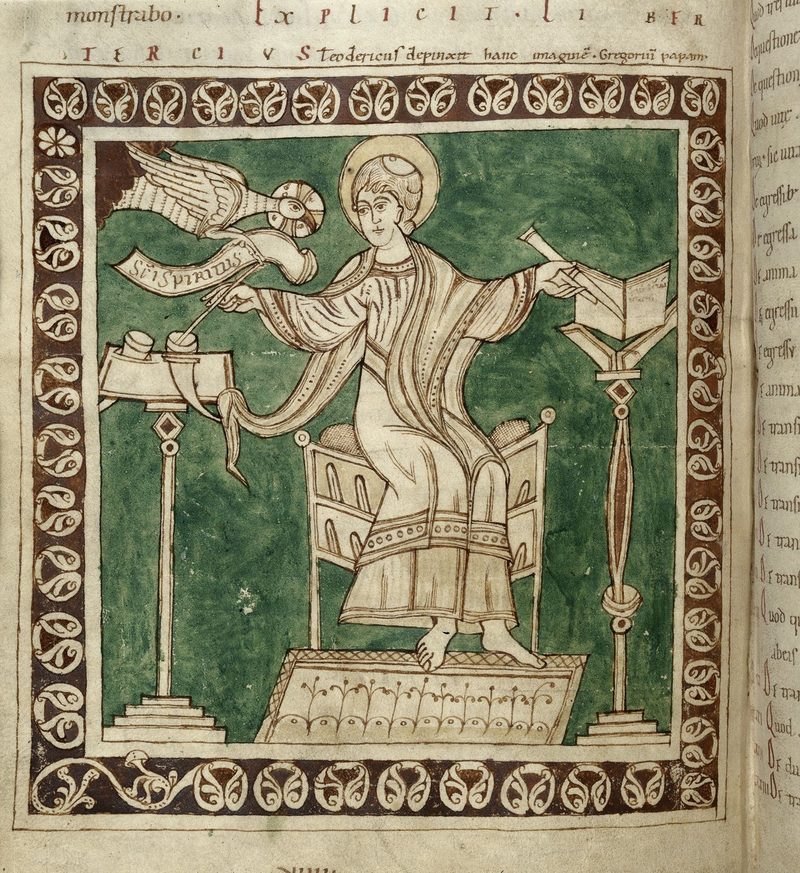
A monk leads the city in prayer

A medieval manuscript page: Pope Gregory writes at a desk while the Holy Spirit, as a dove, speaks into his ear.
St. Gregory the Great with the Holy Spirit as a dove. British Library. Wikimedia Commons, CC0.

Plague is killing Rome, and it has just killed the pope.82

Gregory called the people to a sevenfold procession, starting from the seven regions of the city and meeting at the Basilica of the Blessed Virgin, praying for the plague to end.82

As pope he sent the monk Augustine and his companions to the English.82

Read the full story of St. Gregory I (the Great)

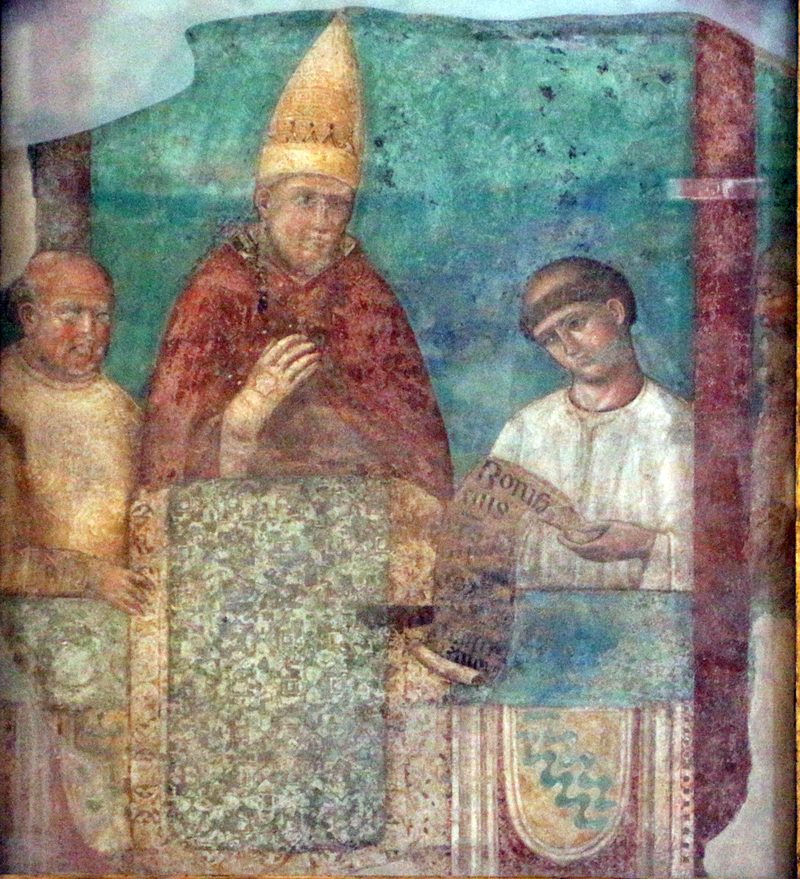
1300 · St. Peter’s, Rome

The first Holy Year

A fresco fragment attributed to Giotto: Pope Boniface VIII in a tall mitre proclaims the Jubilee from a balcony.
Boniface VIII proclaims the Jubilee of 1300: a fresco fragment attributed to Giotto. Giotto, 1300. Wikimedia Commons, Public domain.

Pilgrims are pouring into Rome in their thousands.83

Pope Boniface VIII has proclaimed the first Holy Year, promising a special pardon to those who come to the tombs of the apostles.83

Read the full story of Boniface VIII

1309 to 1377 · Avignon and Rome

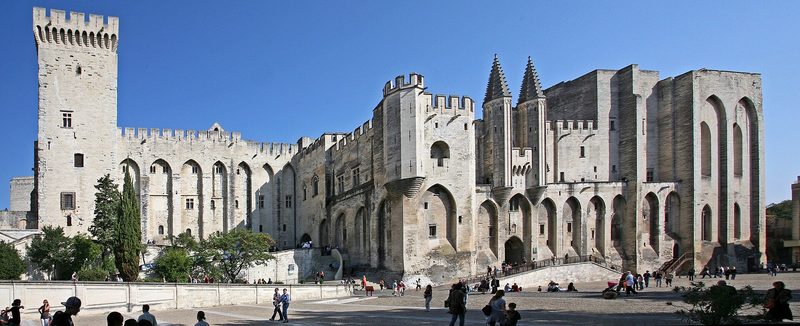
The popes come home

The Palais des Papes in Avignon: massive Gothic towers and walls in pale stone under a blue sky.
The Palace of the Popes, Avignon. Jean-Marc Rosier, 2008. Wikimedia Commons, CC BY-SA 3.0.

Clement V settles at Avignon in 1309, and for nearly seventy years his successors stay.84

Among those who urge the pope to return is Catherine of Siena, who goes to Avignon in person.85

Gregory XI finally brought the papacy back to Rome in 1377.86

Read the full story of Gregory XI

7 October 1571 · Rome

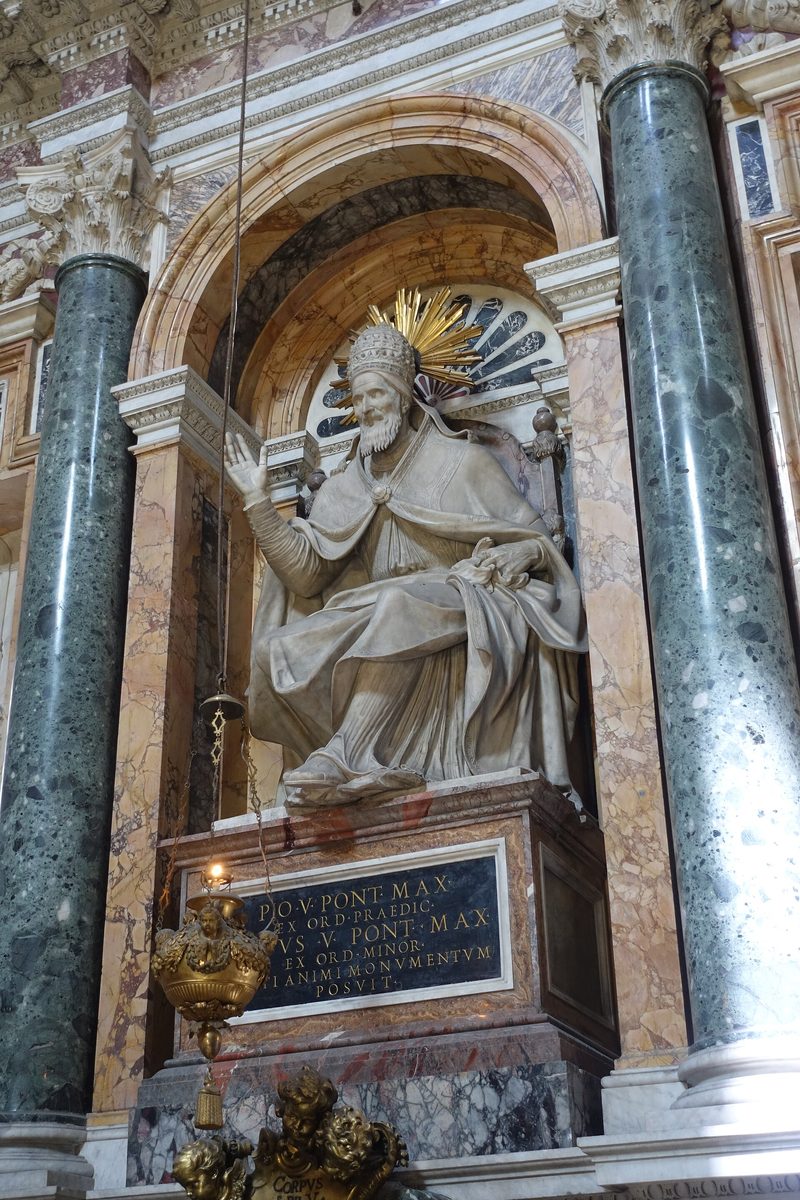
A friar pope and the Rosary

The marble monument of Pope St. Pius V in the Sistine Chapel of Santa Maria Maggiore, Rome: a seated statue of the pope blessing.
The tomb of St. Pius V in Santa Maria Maggiore. Joseolgon, 2024. Wikimedia Commons, CC BY 4.0.

Pius formed the Holy League, whose fleet defeated the Ottoman navy at Lepanto on 7 October 1571.87

“A truce to business; our great task at present is to thank God for the victory which He has just given the Christian army”

St. Pius V, as the story is told87

In memory of the victory he instituted the feast of the Rosary and added “Help of Christians” to the Litany of Loreto.87

Read the full story of St. Pius V

1869 to 1870 · St. Peter’s, Rome

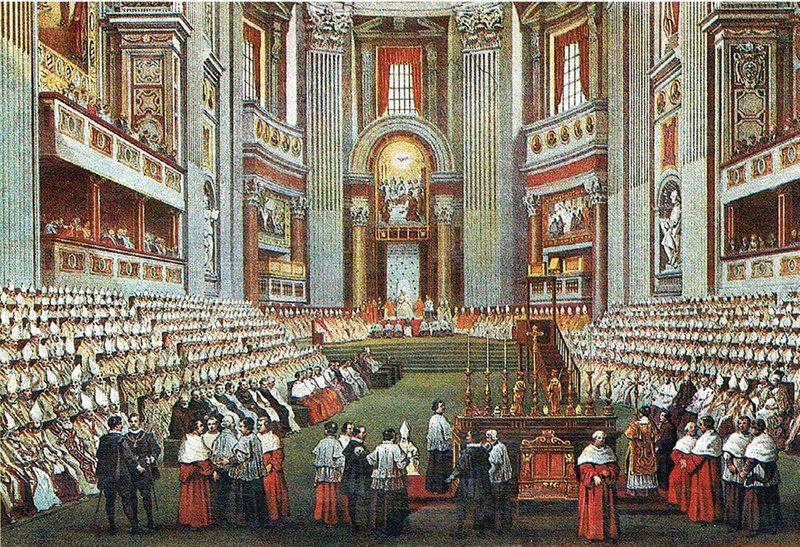
The First Vatican Council

Painting of the First Vatican Council in session: rows of bishops in white miters filling St. Peter’s Basilica.
The First Vatican Council in session in St. Peter’s. Unknown author, 1870. Wikimedia Commons, Public domain.

In 1869 Pius IX opened the First Vatican Council, which defined the infallibility of the pope when he teaches solemnly on faith and morals.88

The Church teaches that this infallibility is a charism for the faithful guarding of revelation, not a personal gift of sinlessness.89

When Rome fell in 1870, Pius considered himself a prisoner in the Vatican.88

Read the full story of Blessed Pius IX

11 October 1962 · St. Peter’s, Rome

The Second Vatican Council

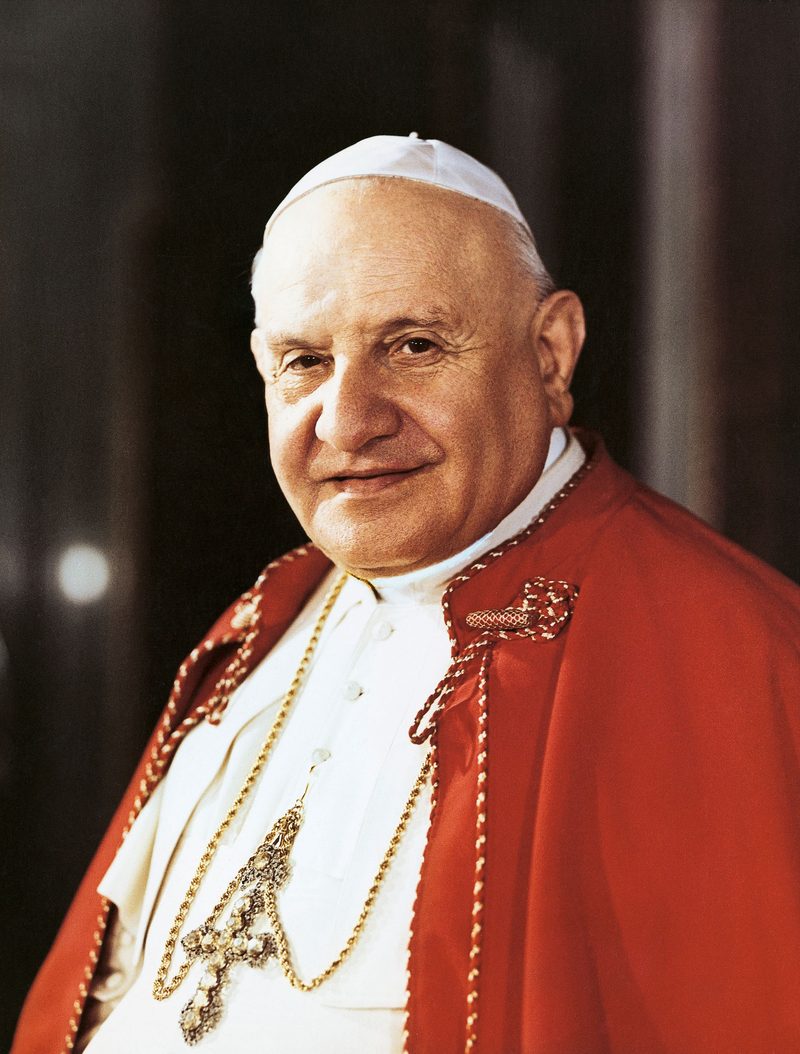
A color photograph of Pope St. John XXIII smiling, in red mozzetta and stole.
St. John XXIII. De Agostini Editore, 1958. Wikimedia Commons, Public domain.

Within three months of his election, Angelo Roncalli, now John XXIII, announces an ecumenical council.90

He opened the Second Vatican Council on 11 October 1962.90

He died on 3 June 1963, before the council ended.90

Read the full story of St. John XXIII

1978 to 2005 · St. Peter’s Square, Rome

A pope from Kraków

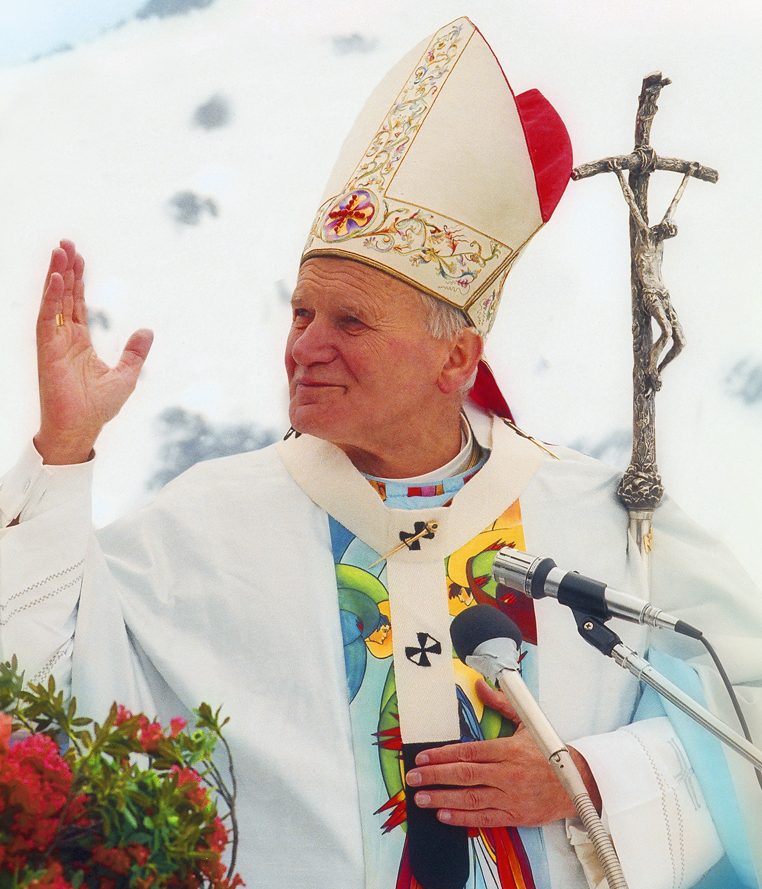
Pope St. John Paul II in white vestments and mitre, arms raised in greeting at an outdoor Mass.
St. John Paul II. Gregorini Demetrio, 1988. Wikimedia Commons, CC BY-SA 3.0.

White smoke, and the first non-Italian pope in four and a half centuries steps onto the balcony.91

As pope he made 104 international journeys and promulgated the Catechism of the Catholic Church.91

He survived an attempt on his life in St. Peter’s Square in 1981, and forgave the man who shot him.91

Read the full story of St. John Paul II

2025 · St. Peter’s, Rome

Leo XIV

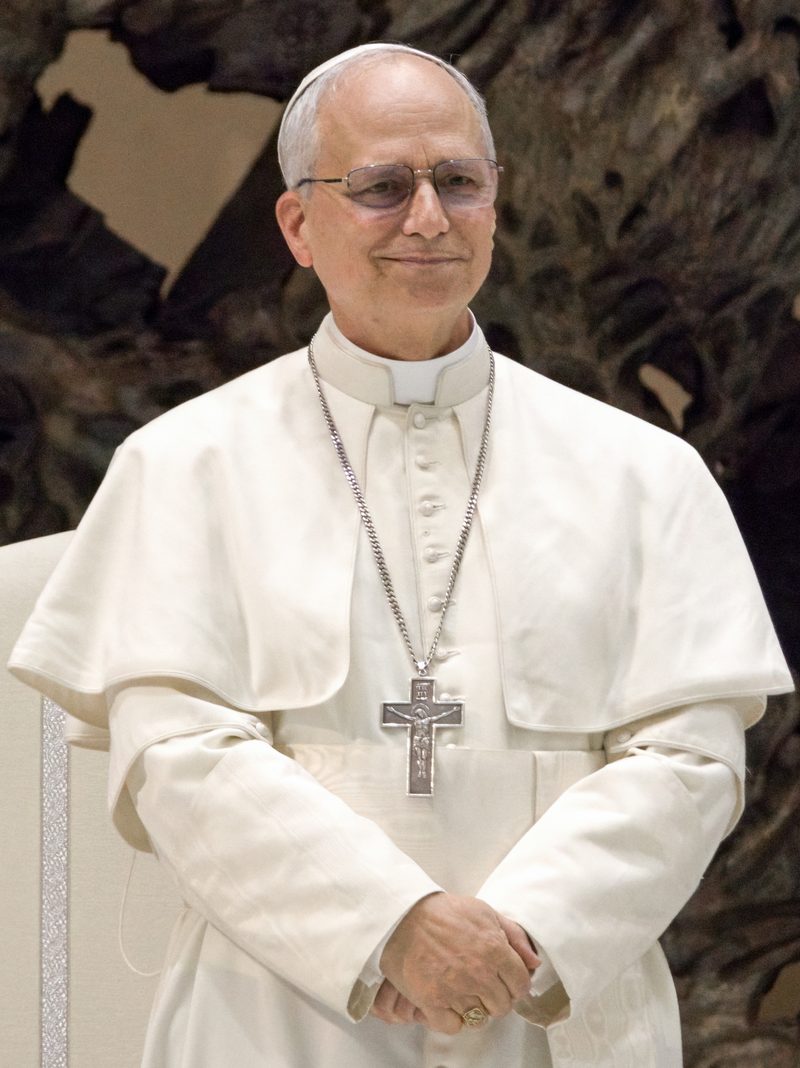
Pope Leo XIV in white, smiling, outdoors.
Pope Leo XIV. Edgar Beltrán, The Pillar, 2025. Wikimedia Commons, CC BY-SA 4.0.

On the second day of the conclave, Cardinal Robert Francis Prevost is elected pope and chooses the name Leo XIV.92

He was born in Chicago on 14 September 1955 and served for years as a missionary in Peru.92

He celebrated the inauguration of his Petrine ministry on 18 May 2025.92

Read the full story of Leo XIV

03Chapter three

To the ends of the earth

On a mountain in Galilee, the risen Jesus sends out the eleven: “Go and make disciples of all nations”.9394

Here the journey goes out with them, one saint at a time: Asia Minor and Africa, the monasteries of Europe, the Americas, Asia and the death camps of the last century.

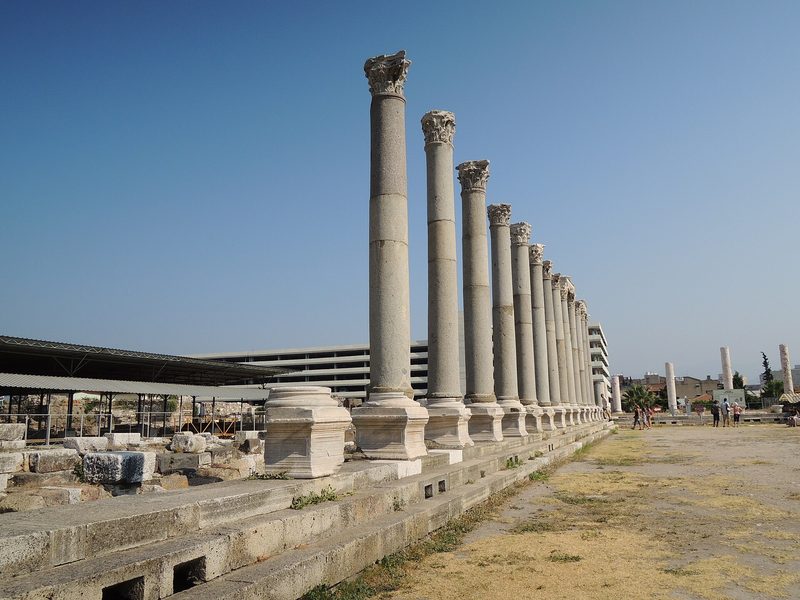
The ruins of the ancient agora of Smyrna in Izmir, Turkey: a row of standing columns and arches.

about 69 to about 155 · Smyrna, Asia Minor

St. Polycarp

An old bishop walks into the stadium at Smyrna, where a great crowd is waiting.95

The proconsul urges him to curse Christ and go free.95

Read the story

31774, 2012. Wikimedia Commons, CC0.

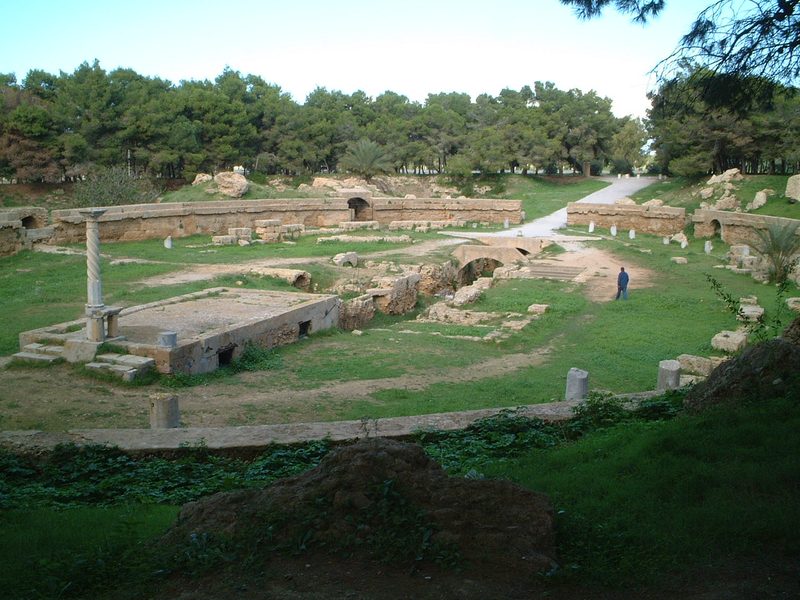
The ruined amphitheatre of Carthage, Tunisia: grassy terraces and stone arches around an oval arena.

died 7 March 203 · Carthage, North Africa

Sts. Perpetua and Felicity

The prison is dark, and the air is hard to breathe.96

A young mother named Perpetua is terrified, above all for her baby son.96

Read the story

Neil Rickards, 2003. Wikimedia Commons, CC BY 2.0.

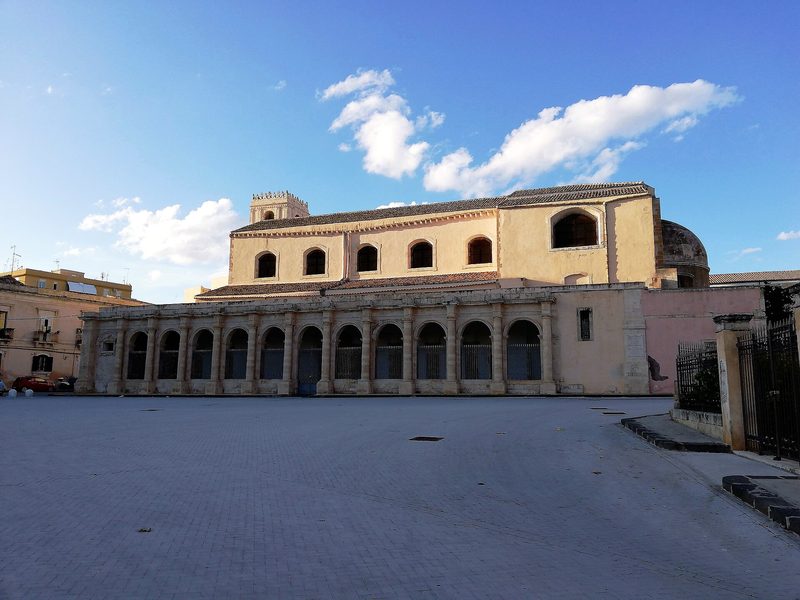
The church and arcaded buildings of Santa Lucia al Sepolcro in Syracuse, Sicily, under a blue sky.

died 303 or 304 · Syracuse, Sicily

St. Lucy

A young woman of Syracuse has persuaded her mother to give a great part of their riches to the poor.97

The young man to whom she was unwillingly betrothed denounces her to the governor of Sicily.97

Read the story

Effems, 2019. Wikimedia Commons, CC BY-SA 4.0.

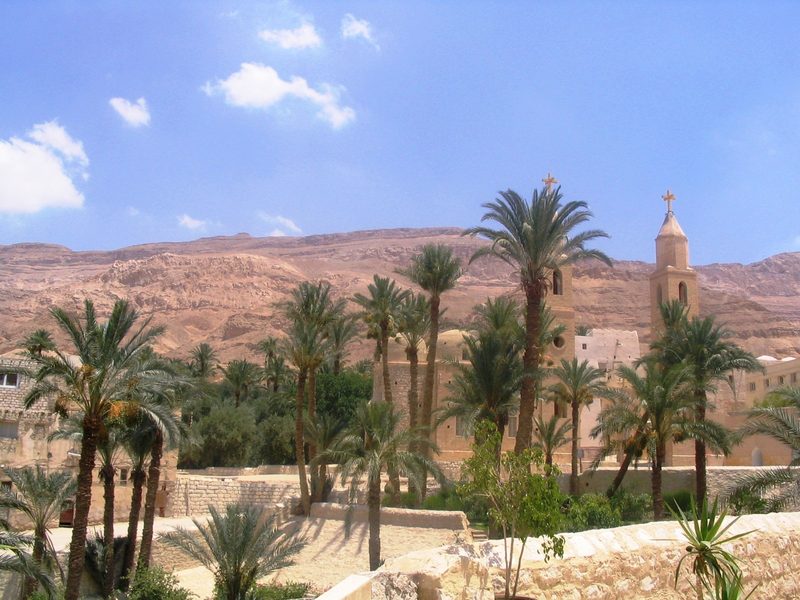
The Monastery of St. Anthony in the Egyptian desert: palm trees and pale buildings at the foot of bare red mountains.
about 251 to 356 · Egypt

St. Anthony of Egypt

A young Egyptian is standing in church when the Gospel is read: “If thou wilt be perfect, go and sell all thou hast”.98

He receives the words as spoken to himself, gives away all his property, and devotes himself to prayer.98

Read the story

Tentoila, 2006. Wikimedia Commons, Public domain.

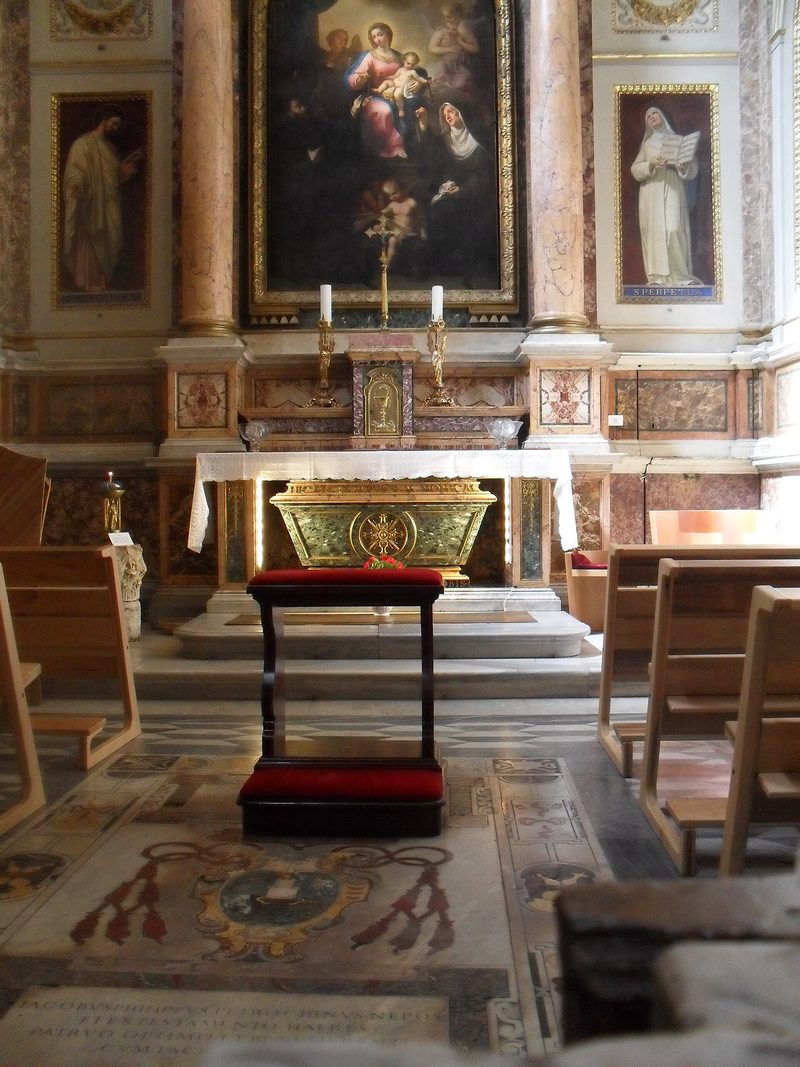
The chapel of St. Monica in the church of Sant’Agostino, Rome: a marble altar beneath a painting, with her tomb below.

333 to 387 · Thagaste, North Africa, and Ostia, Italy

St. Monica

A mother goes to a bishop in tears about her son, who has abandoned the faith.99

When Augustine left for Rome in secret, Monica followed him, only to find he had moved on to Milan; she followed him there too.99

Read the story

Quodvultdeus, 2014. Wikimedia Commons, CC BY-SA 4.0.

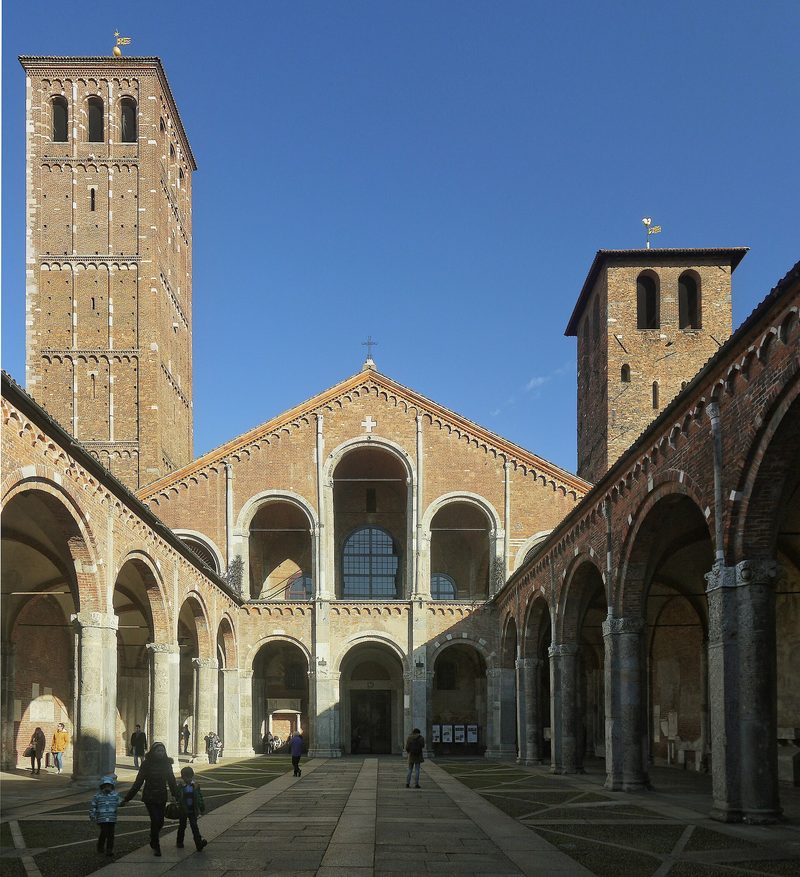
The atrium of the Basilica of Sant’Ambrogio in Milan: a Romanesque brick courtyard with arcades and two bell towers.
about 340 to 397 · Milan, Italy

St. Ambrose
The clergy and people of Milan are bitterly divided over who will be their bishop.100

The consular governor of the province, a young lawyer named Ambrose, comes to the basilica and begins a speech appealing for peace and moderation.100

Read the story

Óðinn, 2015. Wikimedia Commons, CC BY-SA 2.5 ca.

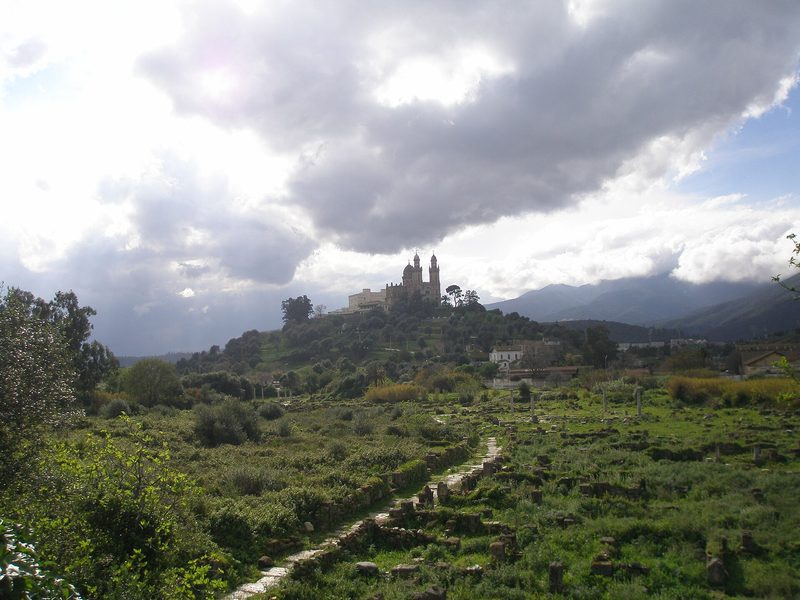
The ruins of ancient Hippo Regius near Annaba, Algeria, among green trees, with the Basilica of St. Augustine on the hill beyond.

354 to 430 · Thagaste and Hippo, North Africa

St. Augustine of Hippo

A famous teacher of rhetoric is in a garden in Milan, at the end of years of searching.101

He is thirty-one (born in November 354), and grace is about to strike him to the ground.101

Read the story

Oris. Wikimedia Commons, CC BY-SA 3.0.

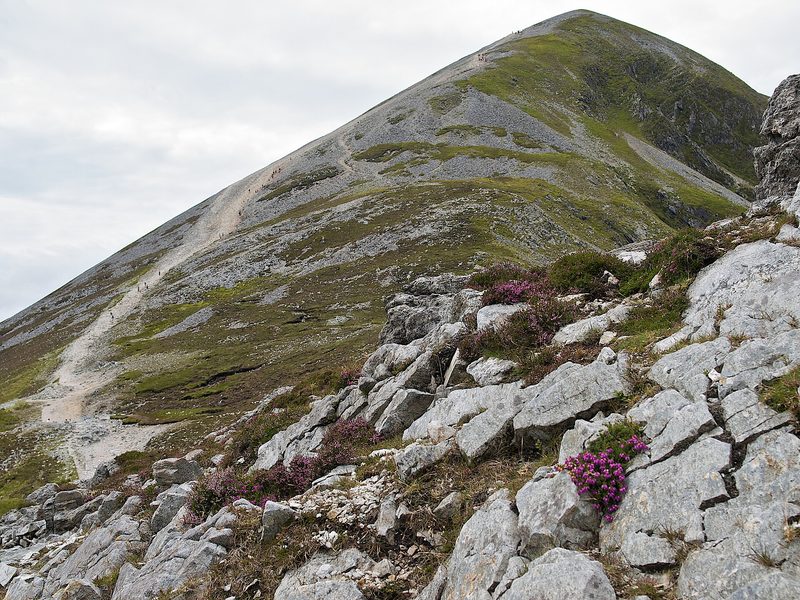
The bare, stony slope of Croagh Patrick, the holy mountain of County Mayo, Ireland, under a gray sky.

5th century · Britain and Ireland

St. Patrick

A sixteen-year-old boy from Britain is seized by raiders and carried off to Ireland as a slave.102

For six years he tends flocks on a lonely hillside, and there he learns to pray.102

Read the story

Dale Simonson, 2010. Wikimedia Commons, CC BY-SA 2.0.

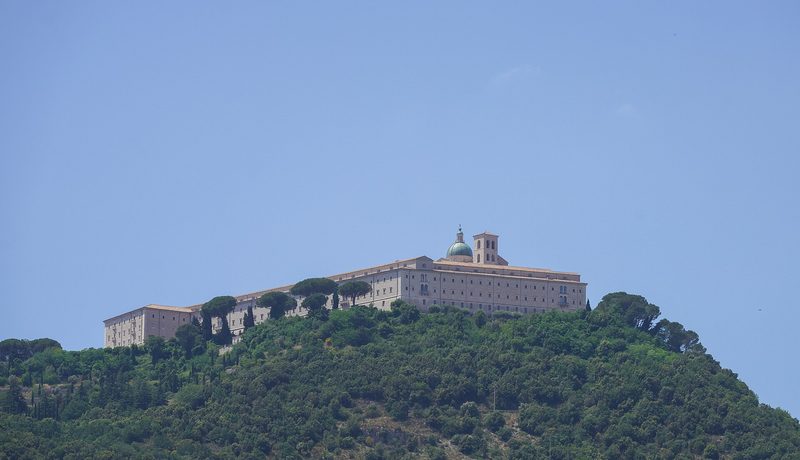
The Abbey of Monte Cassino seen from below, across a green valley.

died about 543 · Monte Cassino, Italy

St. Scholastica

Once a year, Benedict comes down from his monastery to visit his sister Scholastica.103

This evening she begs him to stay and talk through the night, and he refuses.103

Read the story

Ludmiła Pilecka, 2007. Wikimedia Commons, CC BY 3.0.

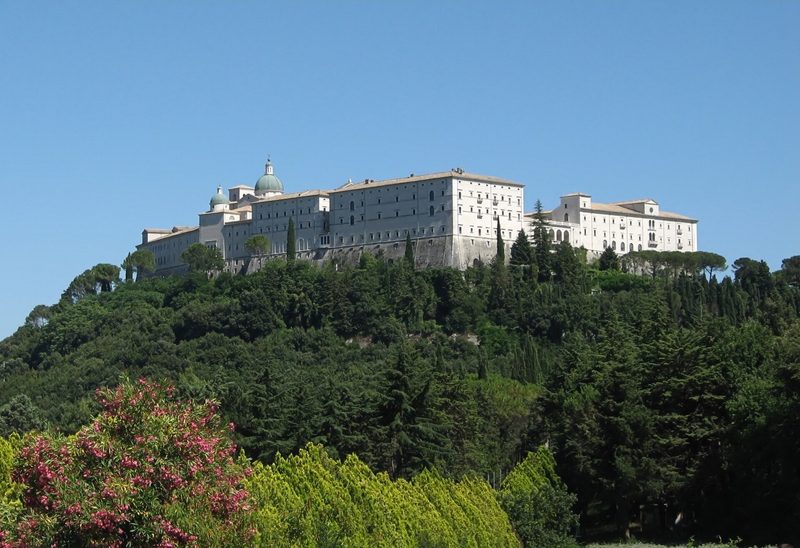
The Abbey of Monte Cassino on its mountain top, white against a blue sky.

about 480 to 547 · Nursia, Subiaco and Monte Cassino, Italy

St. Benedict

A young man leaves Rome in secret for a wild place called Subiaco, almost forty miles away.103

He lives in a narrow cave, and for three years no one knows he is there except a monk named Romanus.103

Read the story

ThePhotografer, 2022. Wikimedia Commons, CC BY-SA 4.0.

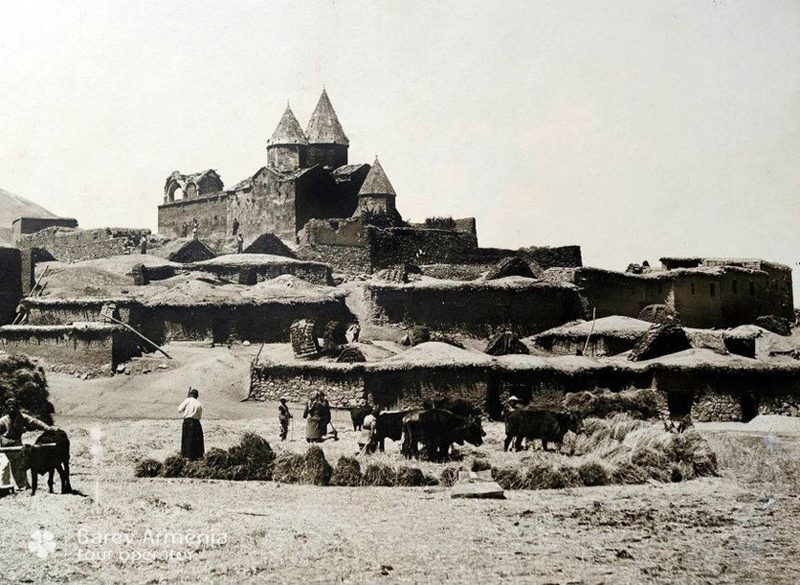
A photograph of the monastery of Narek in 1911: old stone buildings and a domed church on a hillside.

10th century · Narek, Armenia

St. Gregory of Narek

In a monastery in Armenia, a monk of the tenth century is writing prayers.104

Pope Francis said he knew how to express the sentiments of his people more than anyone.104

Read the story

Eruand Lalayean (died 1931), 1911. Wikimedia Commons, Public domain.

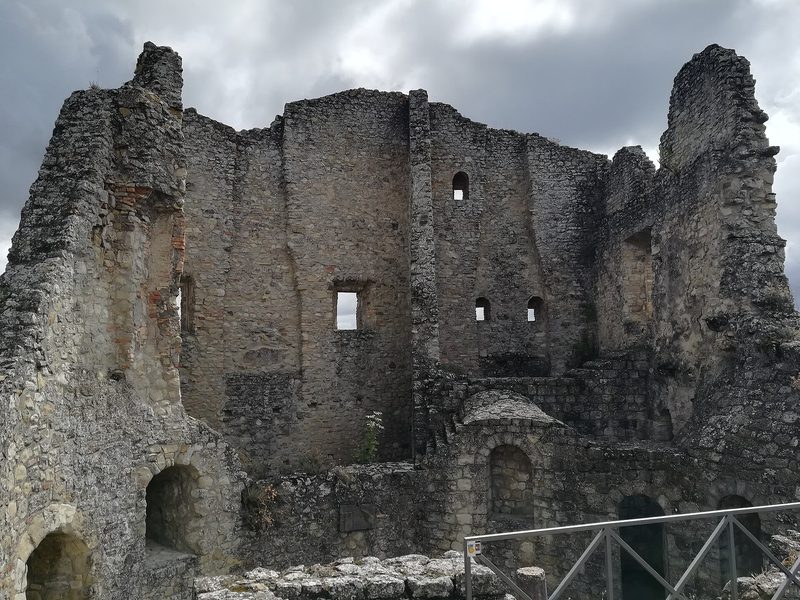
The ruined stone walls of the castle of Canossa in the Apennines.

1077 · Canossa, Italy

Snow at Canossa

Outside a mountain castle, the most powerful ruler in Europe stands in the snow.105

Stripped of his royal robes and dressed as a penitent, King Henry IV asks to be let in to see the pope.105

Read the story

SIG SG 510, 2018. Wikimedia Commons, CC0.

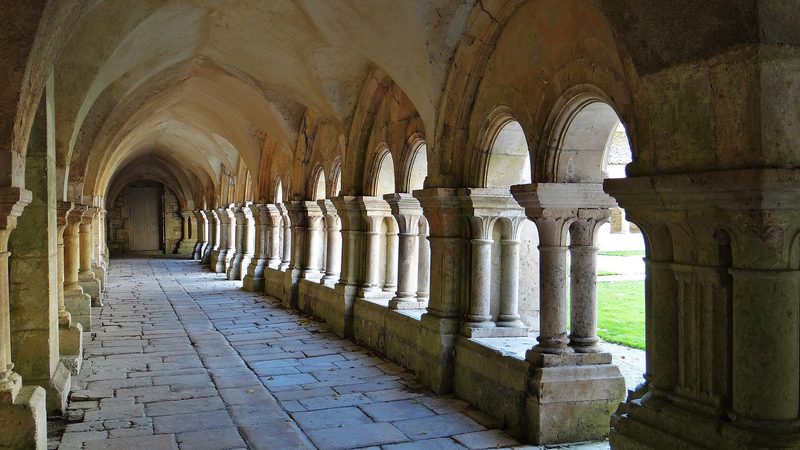
The Romanesque cloister of Fontenay Abbey in Burgundy: rounded arches and twin columns around a green garden.

1090 to 1153 · Burgundy and Clairvaux, France

St. Bernard of Clairvaux

The monastery of Cîteaux is small, poor and strict.106

One day a young man named Bernard arrives with thirty young noblemen of Burgundy and asks to be admitted.106

Read the story

Ibex73, 2020. Wikimedia Commons, CC BY-SA 4.0.

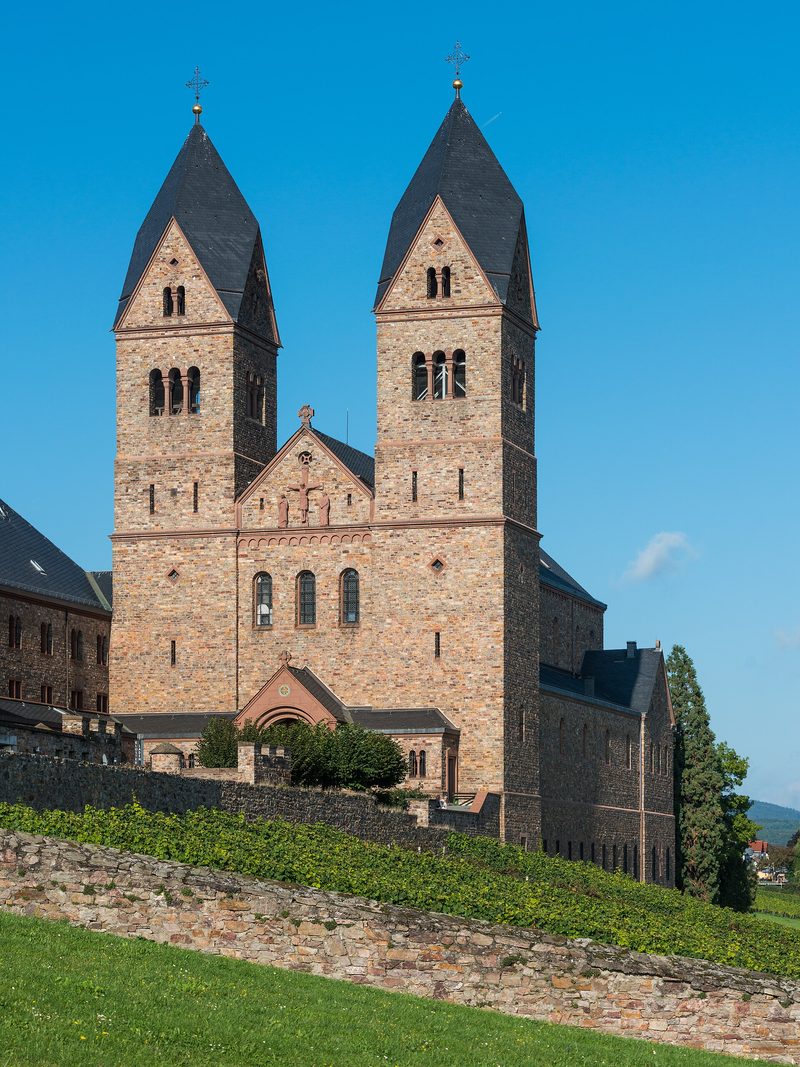
The Abbey of St. Hildegard above Rüdesheim: a red sandstone church with two square towers over vineyards.

1098 to 1179 · Rhineland, Germany

St. Hildegard of Bingen

A noble family brings their eight-year-old daughter to a Benedictine abbey.107

Since childhood she has been seeing visions, and she will one day dictate them to a monk.107

Read the story

DXR, 2014. Wikimedia Commons, CC BY-SA 3.0 de.

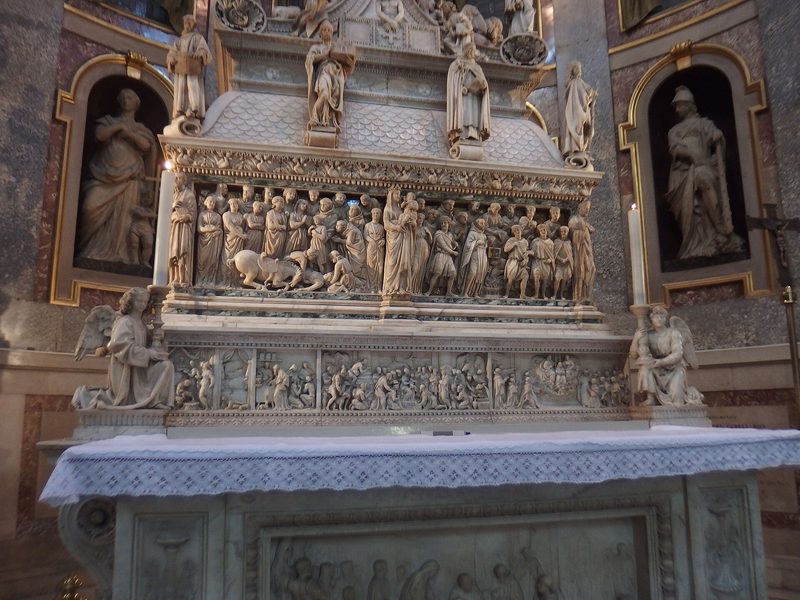
The Arca di San Domenico in Bologna: a white marble tomb carved with scenes from the saint’s life.

about 1170 to 1221 · Caleruega, Spain, and Bologna, Italy

St. Dominic

Two Spanish churchmen, a bishop named Diego and his prior Dominic, are riding through Toulouse.108

They behold with amazement and sorrow the spiritual ruin wrought by the Albigensian heresy.108

Read the story

Palickap, 2016. Wikimedia Commons, CC BY-SA 4.0.

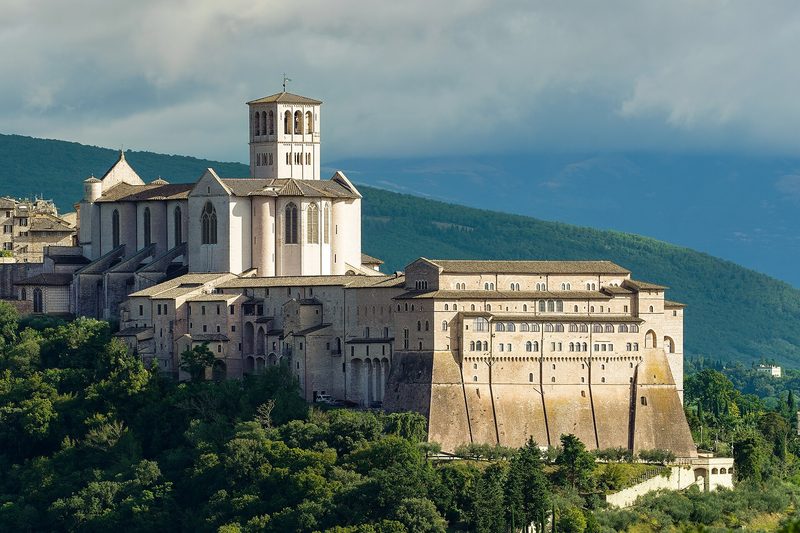
The Basilica of San Francesco in Assisi, seen from the hillside: two stacked churches and a long arcade above the Umbrian plain.

about 1181 to 1226 · Assisi, Italy

St. Francis of Assisi

A young man kneels in a crumbling chapel outside Assisi and hears a voice from the crucifix.109

Francis was the son of a wealthy cloth merchant, and dreamed of glory as a knight.109

Read the story

Timothy A. Gonsalves, 2023. Wikimedia Commons, CC BY-SA 4.0.

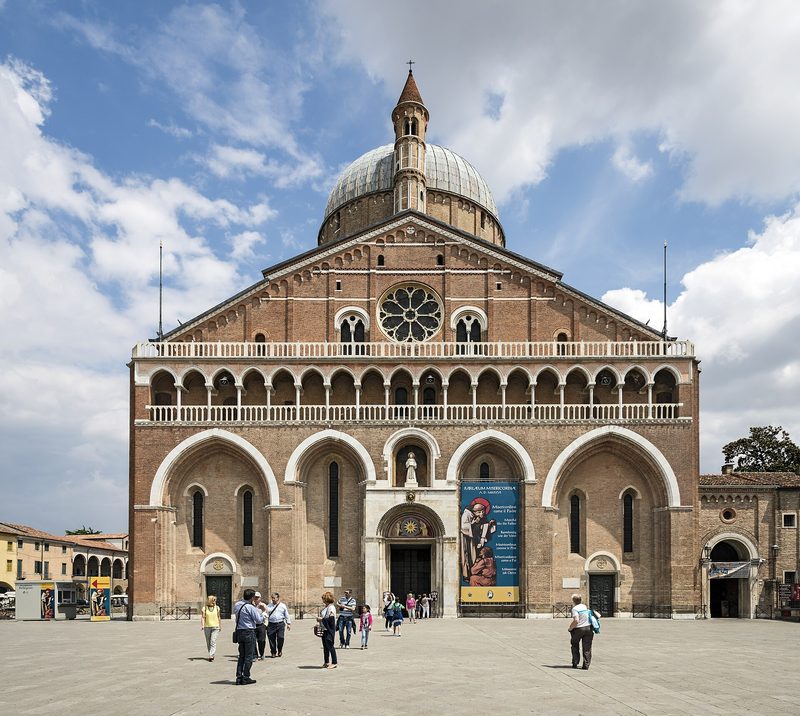
The Basilica of St. Anthony in Padua: a brick façade crowned with domes and slender towers.

1195 to 1231 · Lisbon, Portugal, and Padua, Italy

St. Anthony of Padua

At an ordination in Forlì, no one has been chosen to preach.110

A quiet Portuguese friar is ordered to speak; he begins slowly and timidly, then opens the Scriptures with such learning that all are struck with astonishment.110

Read the story

Didier Descouens, 2016. Wikimedia Commons, CC BY-SA 4.0.

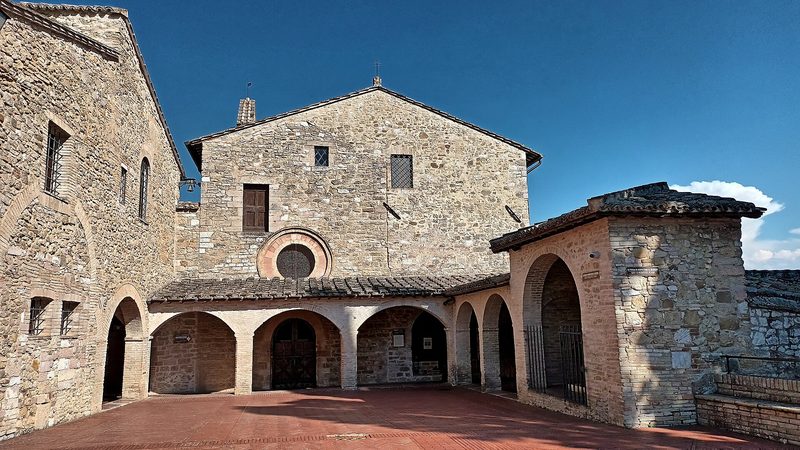
The small stone church and convent of San Damiano near Assisi, with a brick arcade and a little bell tower.

1194 to 1253 · Assisi, Italy

St. Clare of Assisi

A young noblewoman leaves her family’s house in secret and walks through the dark to the little church of the Portiuncula.111

There Francis and his brothers cut her hair and give her a rough habit.111

Read the story

Fczarnowski, 2022. Wikimedia Commons, CC BY-SA 4.0.

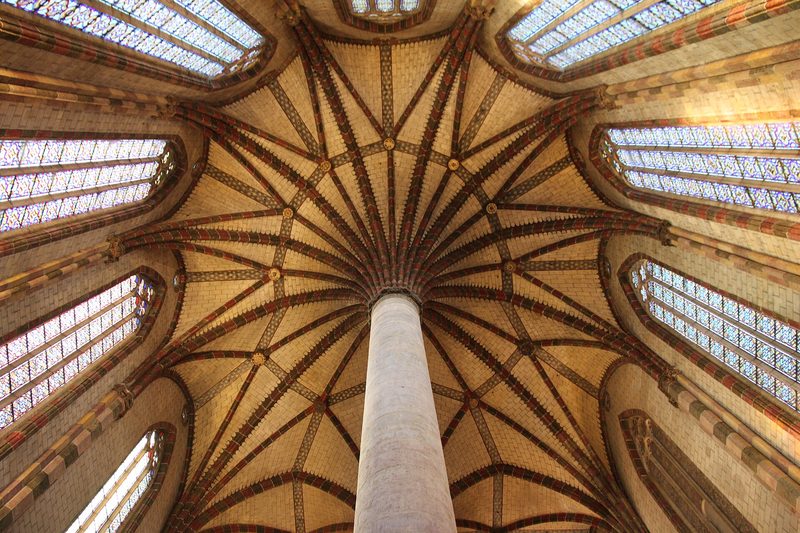
The palm-tree vault of the Jacobins church in Toulouse: ribs spread like fronds from a single slender column.

about 1225 to 1274 · Roccasecca, Italy, and Paris, France

St. Thomas Aquinas

A young nobleman has joined the friars of St. Dominic, and his family is furious.112

His brothers, soldiers of the Emperor, seize him on the road near Aquapendente and lock him in the family fortress at Roccasecca.112

Read the story

Frédéric Neupont, 2014. Wikimedia Commons, CC BY-SA 4.0.

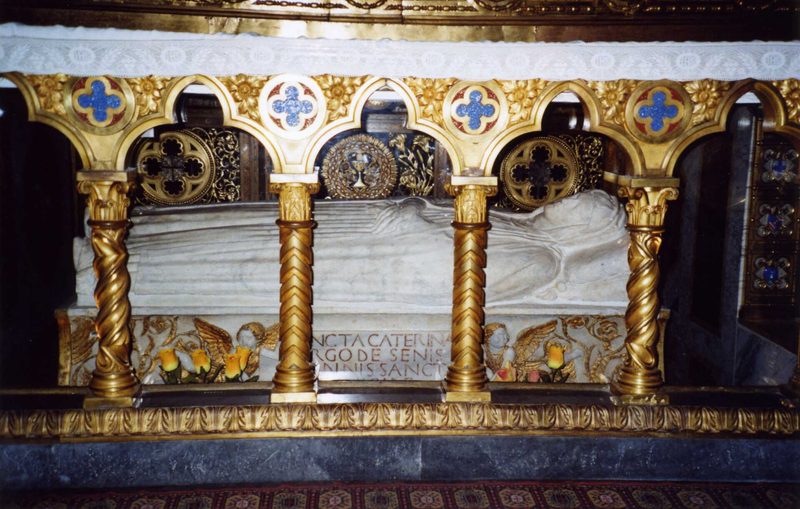
The tomb of St. Catherine of Siena beneath the high altar of Santa Maria sopra Minerva, Rome, behind a gilded grille.

1347 to 1380 · Siena and Rome, Italy

St. Catherine of Siena

A young woman from Siena arrives at the papal court in Avignon.85

She has been imploring the pope to leave Avignon, reform the clergy and return to Rome.85

Read the story

Lovio, 2009. Wikimedia Commons, CC BY-SA 3.0.

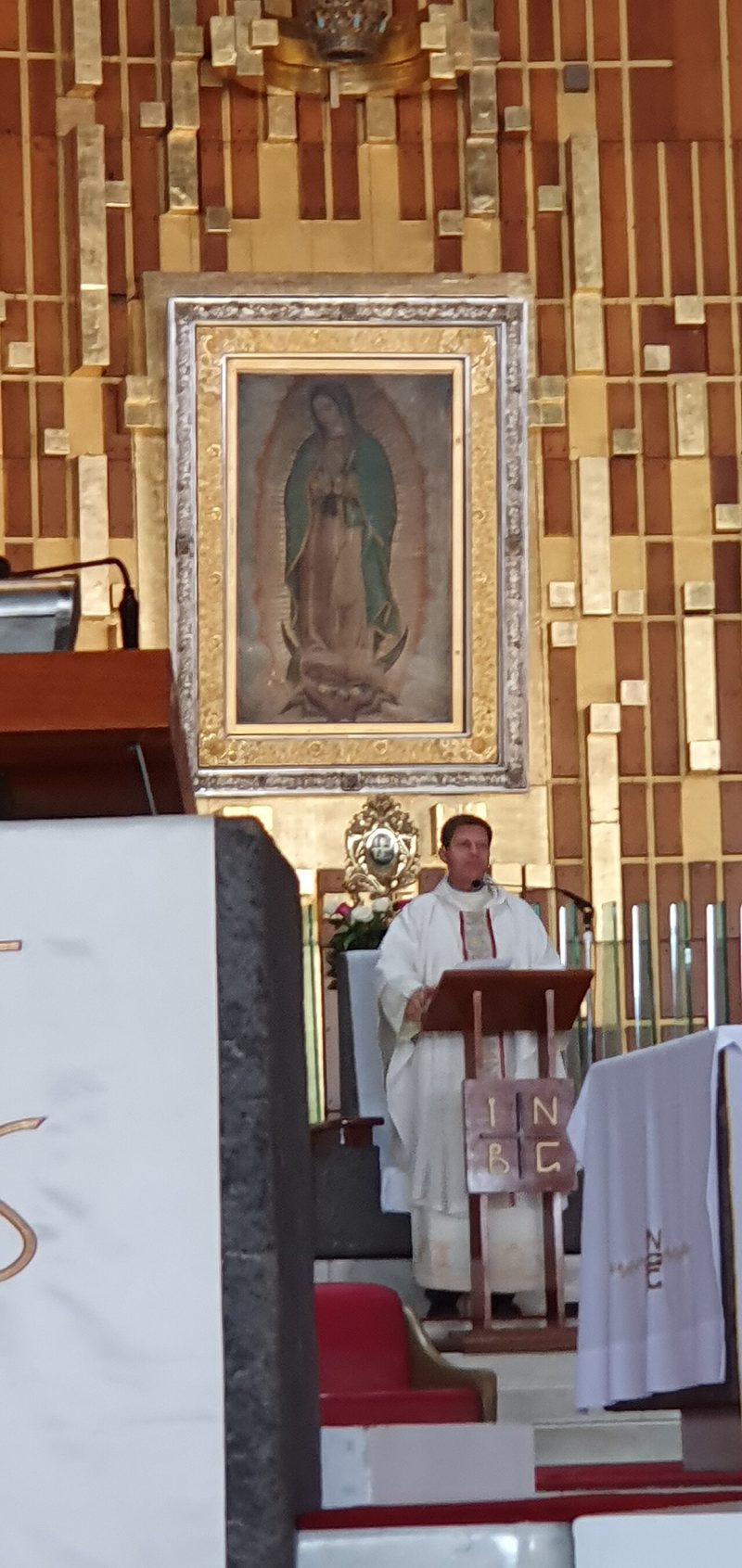
The main altar of the Basilica of Our Lady of Guadalupe in Mexico City, with the image on the tilma framed in gold.

16th century · Tepeyac, Mexico

St. Juan Diego

A fifty-five-year-old convert is hurrying down Tepeyac hill to hear Mass in Mexico City.113

The Blessed Virgin appears to him and sends him to the bishop, asking for a church where she stands.113

Read the story

José Luiz, 2024. Wikimedia Commons, CC BY-SA 4.0.

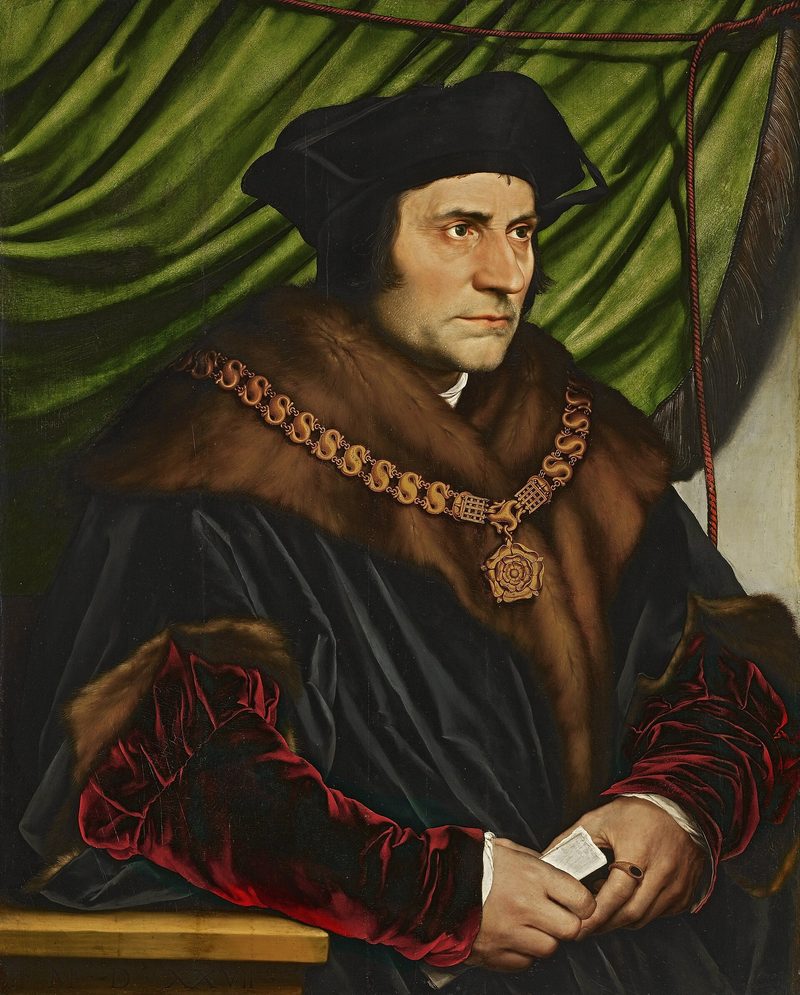
Hans Holbein the Younger’s portrait of Sir Thomas More, painted in 1527: a man in a dark fur-trimmed robe and the gold chain of royal service.

both died 1535 · London, England

Sts. Thomas More and John Fisher

In 1534 Parliament passes the Act of Succession, and everyone called upon must swear the oath.114

Bishop John Fisher of Rochester refuses and is sent to the Tower on 26 April.115

Read the story

Hans Holbein the Younger, 1527. Wikimedia Commons, Public domain.

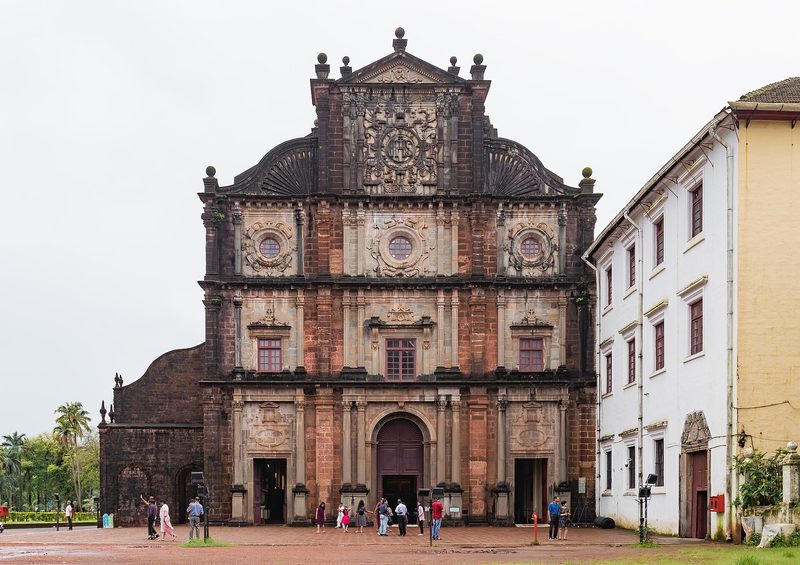
The red laterite façade of the Basilica of Bom Jesus in Old Goa, India.

1506 to 1552 · Navarre, Spain, to Goa, Japan and China

St. Francis Xavier

After a long and dangerous voyage, a Spanish priest lands at Goa.116

He goes through the streets ringing a little bell, inviting the children to come and hear the word of God.116

Read the story

iMahesh, 2024. Wikimedia Commons, CC BY-SA 4.0.

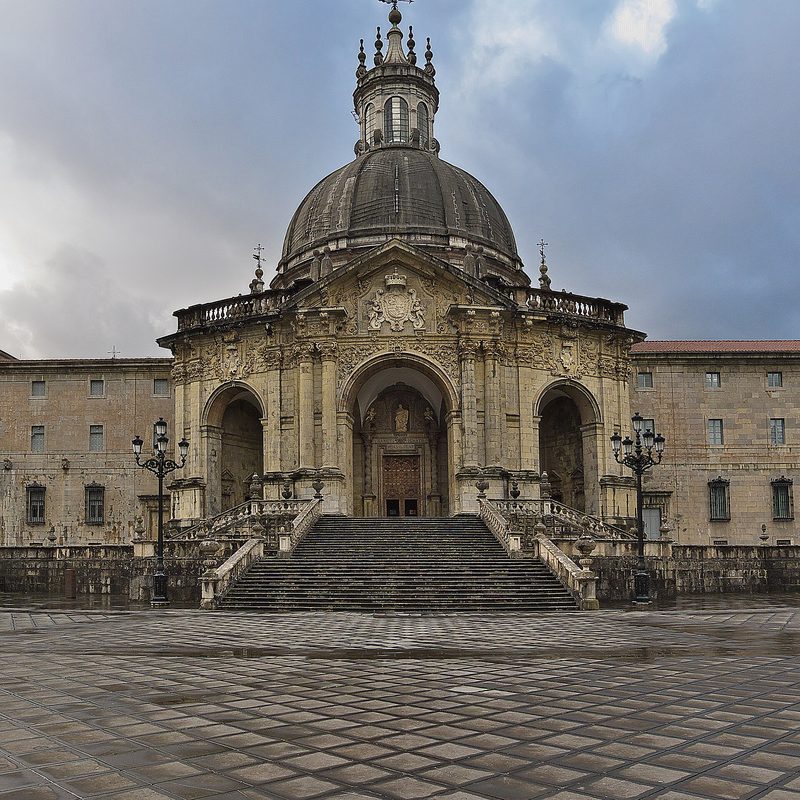
The Sanctuary of Loyola in the Basque Country: a domed baroque basilica with a broad stone stairway.

1491 to 1556 · Loyola, Spain, and Rome, Italy

St. Ignatius of Loyola

The French are besieging the citadel of Pamplona.117

A cannonball passes between the legs of a young Basque officer, wounding one leg and breaking the other.117

Read the story

Jose Luis Filpo Cabana, 2013. Wikimedia Commons, CC BY 3.0.

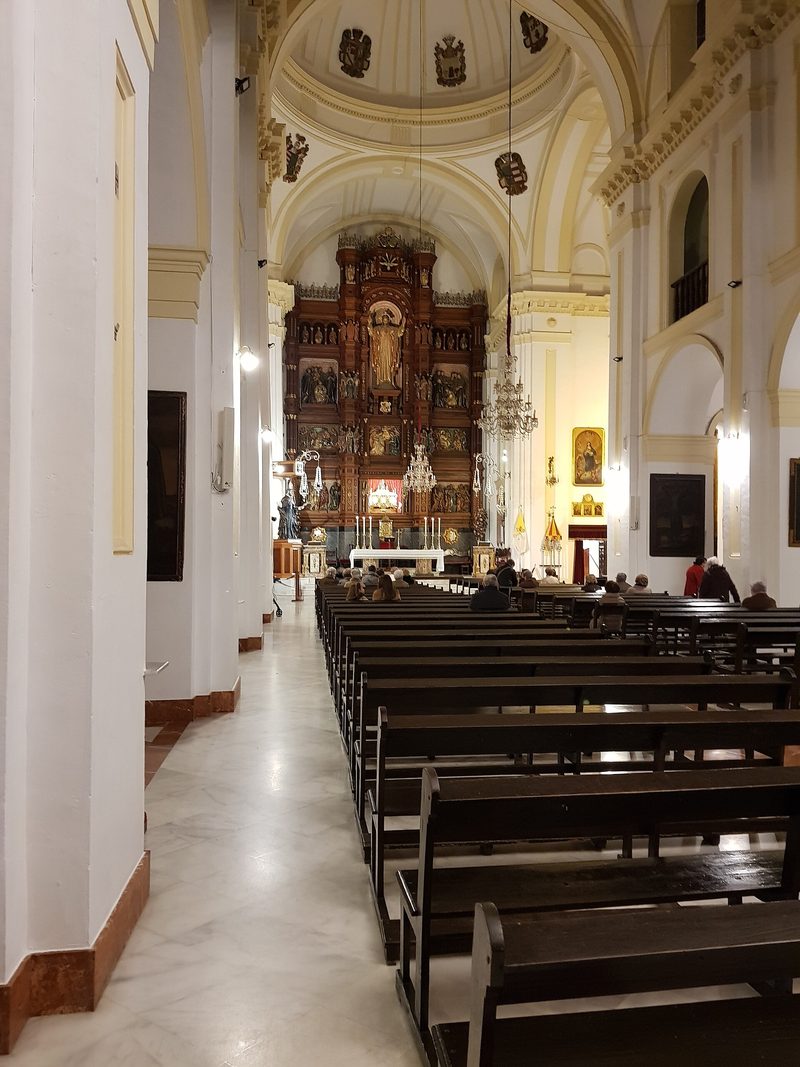
Inside the Basilica of St. John of Avila at Montilla: white walls, rows of pews and a gilded altarpiece.

1499 or 1500 to 1569 · Andalusia, Spain

St. John of Avila

A young Spanish priest is in Seville, waiting for a ship to the New World.118

A celebrated catechist, impressed by his preaching, persuades the Archbishop of Seville to keep him in Andalusia.118

Read the story

Tyk, 2025. Wikimedia Commons, CC BY-SA 4.0.

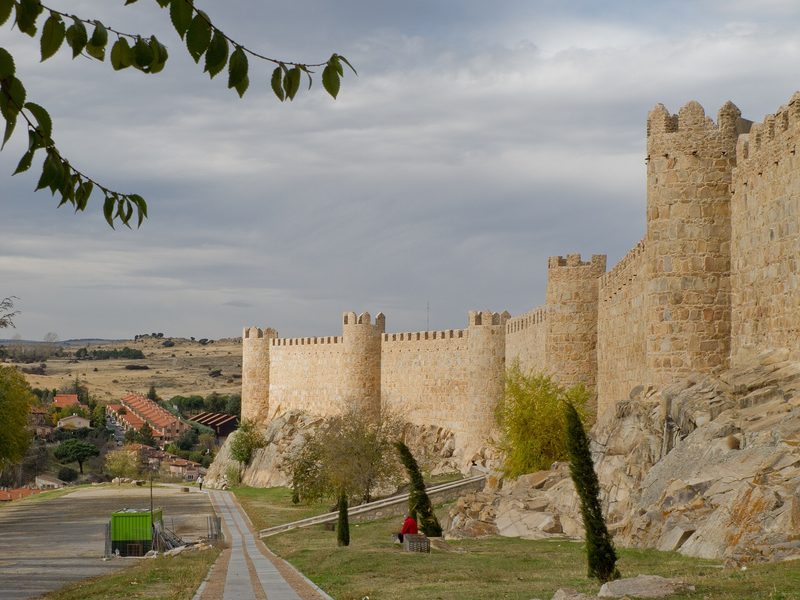
The medieval walls of Avila, Spain: golden stone ramparts with round towers under a blue sky.

1515 to 1582 · Avila, Spain

St. Teresa of Avila

A young woman leaves her father’s house without his knowledge.119

She goes to the Carmelite convent of the Incarnation at Avila, which already counts 140 nuns.119

Read the story

Carlos Delgado, 2011. Wikimedia Commons, CC BY-SA 3.0.

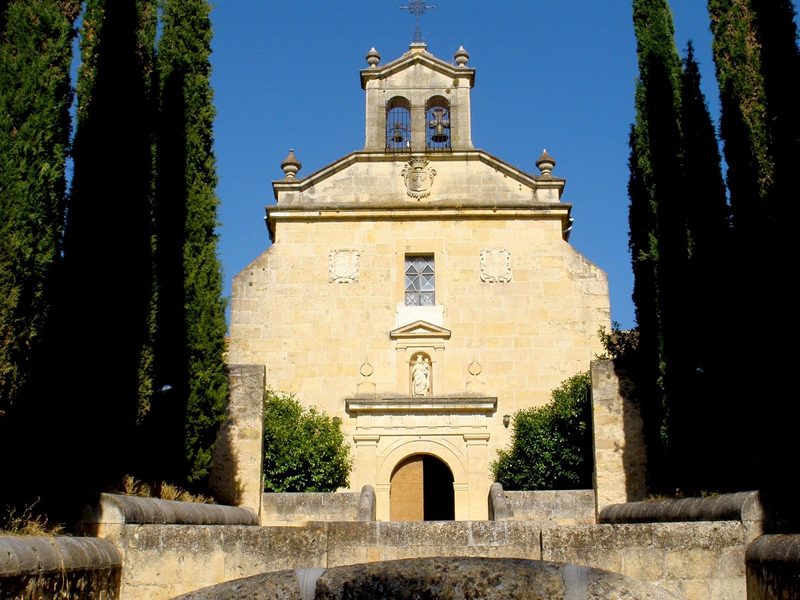
The Carmelite friary of Segovia: a pale stone church façade behind tall cypress trees.

1542 to 1591 · Fontiveros and Segovia, Spain

St. John of the Cross

On the night of 3 December 1577, friars of his own order take John prisoner and carry him off to Toledo.120

For more than nine months he is kept in a narrow, stifling cell.120

Read the story

Zarateman, 2009. Wikimedia Commons, CC0.

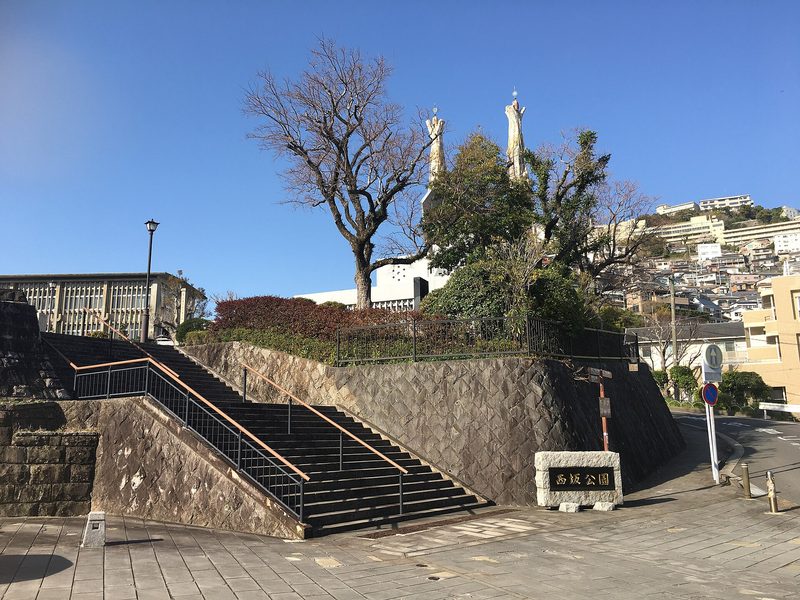
The Twenty-Six Martyrs Monument on Nishizaka Hill in Nagasaki: a stone stairway and garden beneath the memorial.

died 5 February 1597 · Nagasaki, Japan

Sts. Paul Miki and Companions

The first bloody persecution of Christians in Japan begins in 1597.121

On 5 February, twenty-six Christians, six of them Franciscan missionaries, are crucified at Nagasaki.121

Read the story

Nesnad, 2022. Wikimedia Commons, CC BY 4.0.

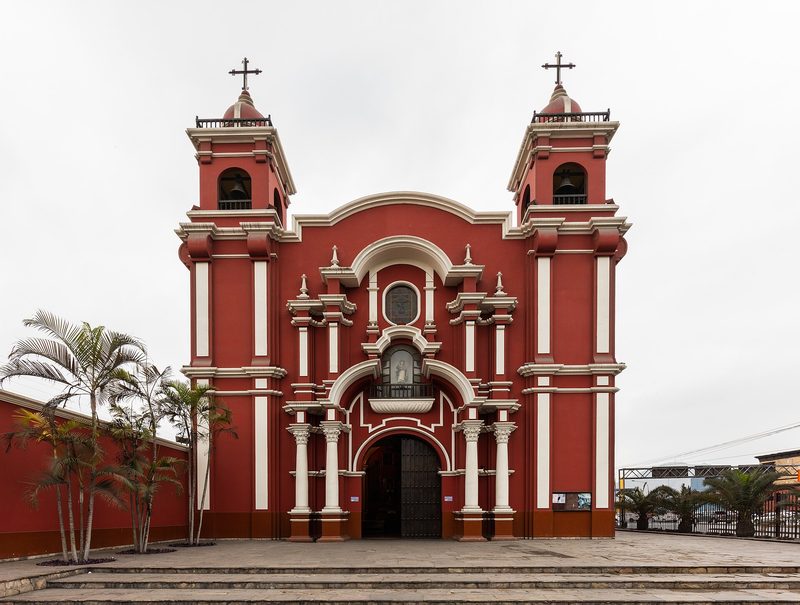
The Church of Santa Rosa in Lima, Peru: a red and white façade between two bell towers, with palm trees.

1586 to 1617 · Lima, Peru

St. Rose of Lima

In a small garden in Lima, a young woman has built herself a tiny grotto with her brother’s help.122

When her work allows, she spends her nights there in solitude and prayer.122

Read the story

Diego Delso, 2015. Wikimedia Commons, CC BY-SA 4.0.

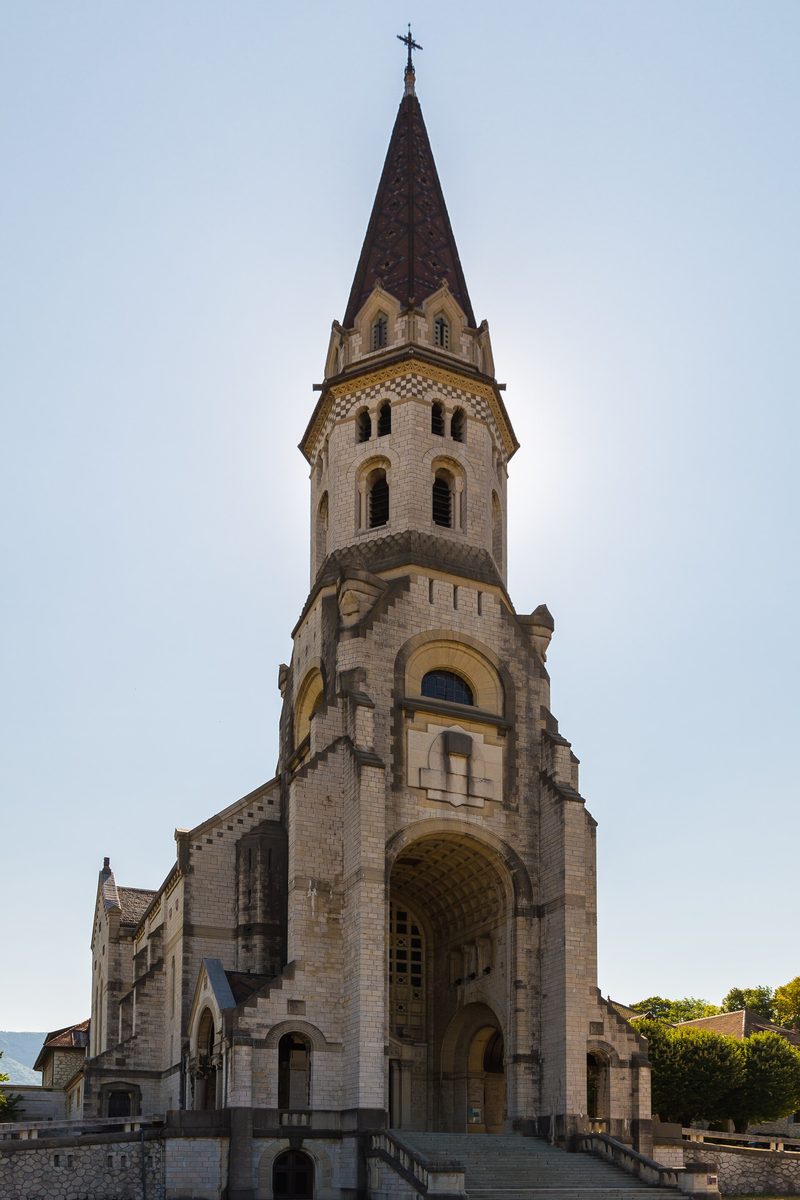
The Basilica of the Visitation at Annecy: a pale stone church with a tall pointed spire against a blue sky.

1567 to 1622 · Savoy and Annecy

St. Francis de Sales

The territory of Le Chablais, south of Lake Geneva, has had the Reformed faith imposed on it by Geneva.123

A young priest with a doctorate in law volunteers to go there.123

Read the story

Medium69 (William Crochot), 2015. Wikimedia Commons, CC BY-SA 4.0.

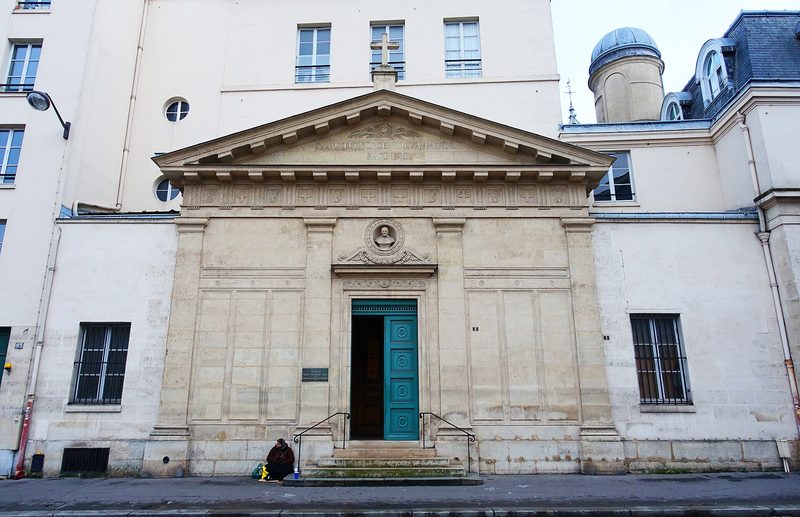
The Chapel of St. Vincent de Paul in Paris: a pale neoclassical façade with columns and a pediment on a city street.

1580 to 1660 · Gascony and Paris, France

St. Vincent de Paul

A young French priest is sailing home from Marseilles.124

Turkish pirates capture the ship and carry him to Tunis, where he is sold as a slave.124

Read the story

Guilhem Vellut from Paris, France, 2017. Wikimedia Commons, CC BY 2.0.

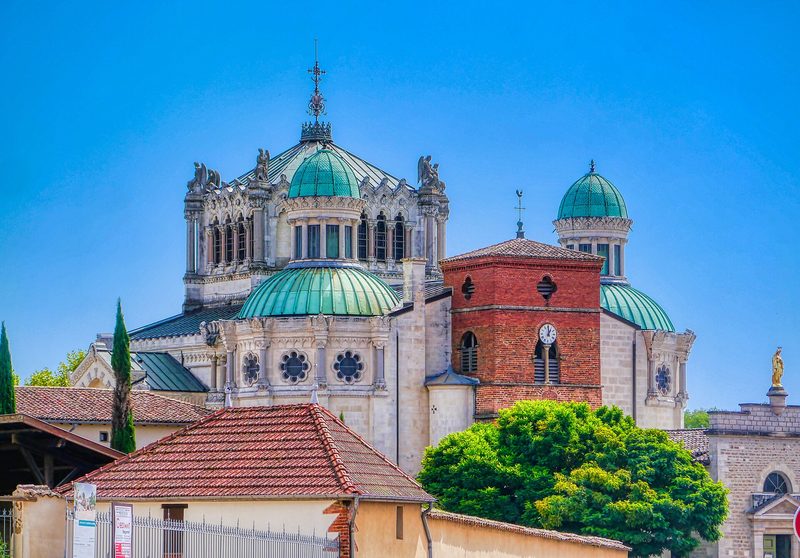
The Basilica of Ars-sur-Formans: a modern dome and an older bell tower above red tiled roofs.

1786 to 1859 · Dardilly and Ars, France

St. John Vianney

A young man from Dardilly, near Lyons, is struggling at the seminary.125

He is so deficient in Latin that he has to follow the philosophy course in French.125

Read the story

Zairon, 2020. Wikimedia Commons, CC BY-SA 4.0.

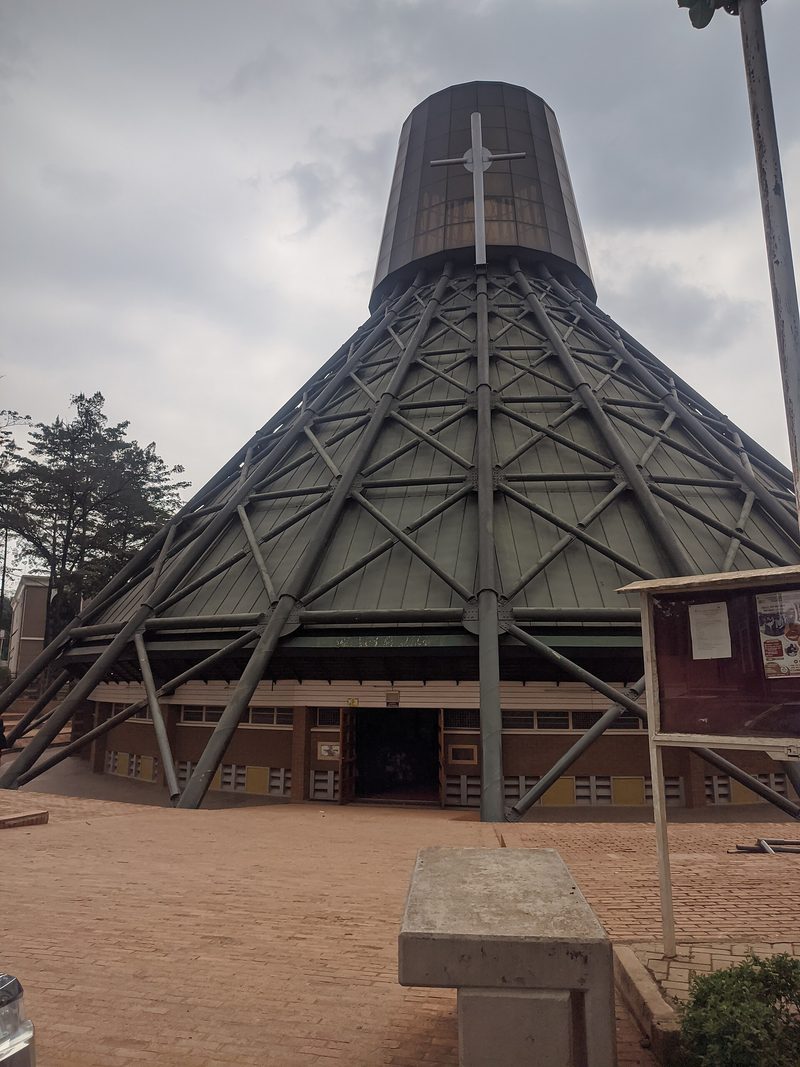
The Basilica of the Uganda Martyrs at Namugongo: a tall cone of steel struts, shaped like a traditional African hut.

19th century · Namugongo, Uganda

Sts. Charles Lwanga and Companions

In Uganda, young Christians gave their lives rather than give up Christ.126

Pope Francis, at their shrine in 2015, said they gave testimony of their faith even at the cost of their lives, many at such a young age.126

Read the story

Lebu Ayiga, 2024. Wikimedia Commons, CC0.

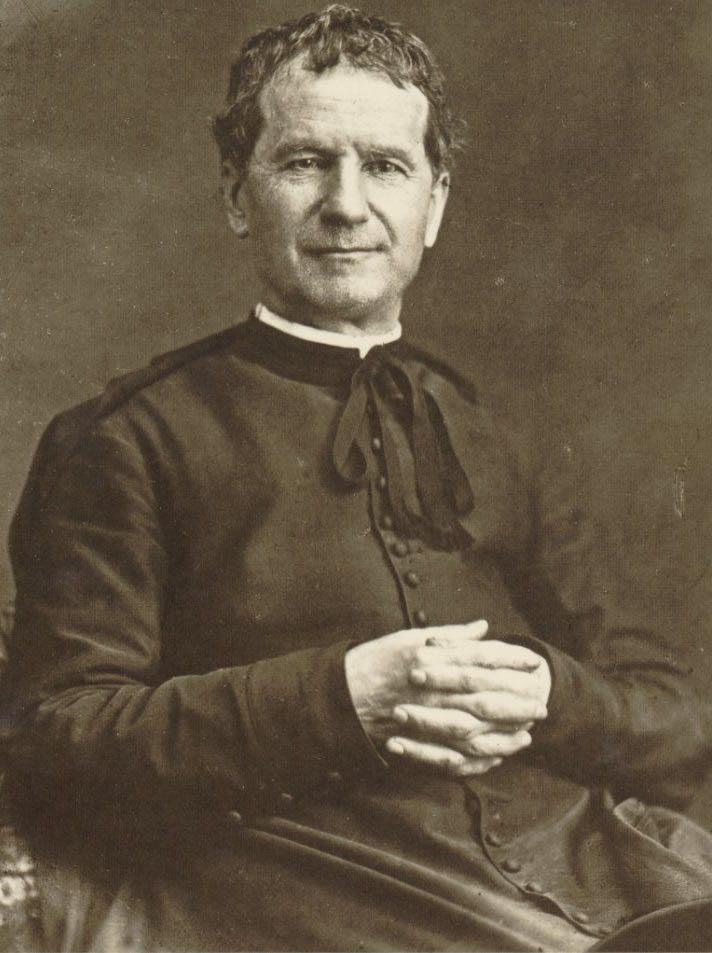
A photograph of Don Bosco in Turin in 1880: an elderly priest in a cassock, seated, with a gentle face.

1815 to 1888 · Becchi and Turin, Italy

St. John Bosco

It is the feast of the Immaculate Conception, and a young priest is vesting for Mass.127

The sacristan is driving a ragged boy out of the church because he refuses to serve Mass.127

Read the story

Attributed to Carlo Felice Deasti, 1880. Wikimedia Commons, Public domain.

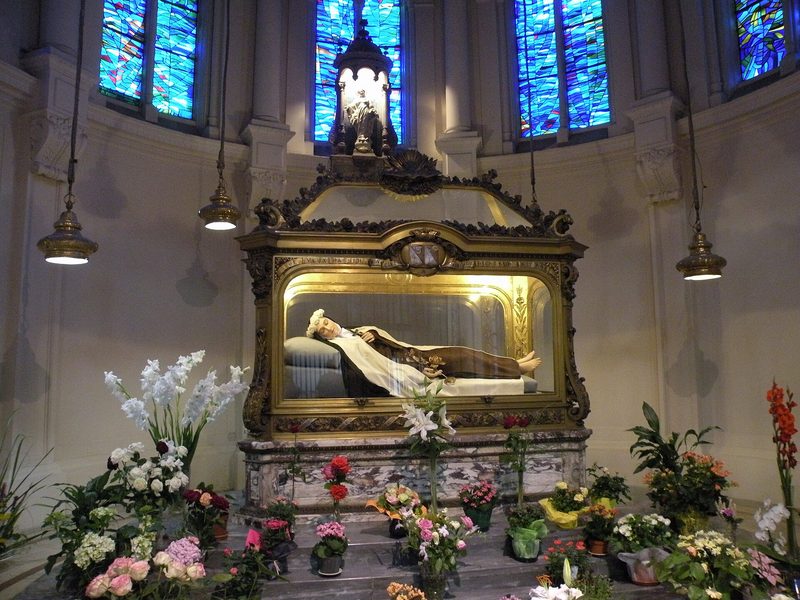
The chapel of the Carmel of Lisieux: a statue of St. Thérèse lies in a shrine surrounded by flowers and candles.

1873 to 1897 · Lisieux, France

St. Thérèse of Lisieux

In the last years of her short life, a young Carmelite nun writes three manuscripts about her soul.128

A year after her death they are published as Story of a Soul, and the world begins to read them.128

Read the story

Chatsam, 2014. Wikimedia Commons, CC BY-SA 4.0.

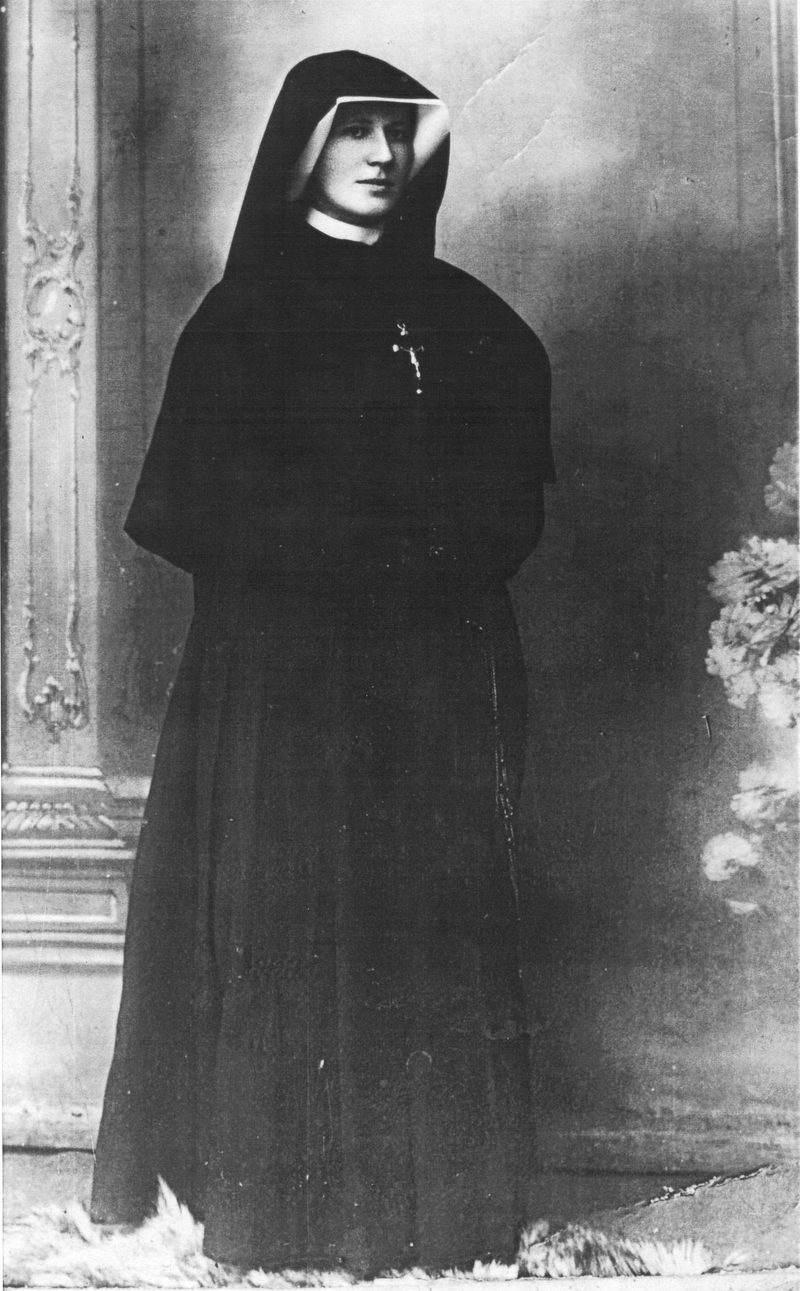
A black and white photograph of Sr Faustina Kowalska in 1931, in the habit of her congregation.

1905 to 1938 · Kraków, Poland

St. Faustina Kowalska

Hidden in a convent in Kraków, a young nun writes down what Jesus has told her.129

She sees two rays of light shining from his heart, and he explains that they represent blood and water.129

Read the story

Unknown author, 1931. Wikimedia Commons, Public domain.

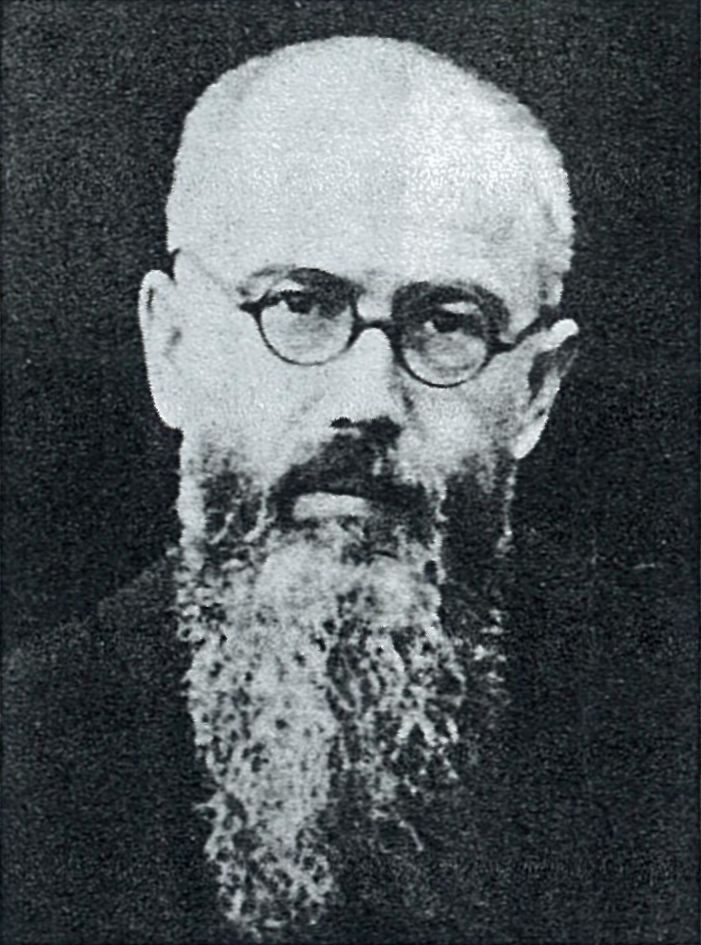
A photograph of Fr Maximilian Kolbe in 1936: a Franciscan priest with round glasses and a long beard.

1894 to 1941 · Poland and Auschwitz

St. Maximilian Kolbe

Auschwitz: the place John Paul II called a site of terrible slaughter.130

The Nazis murdered about 1.1 million people there, about one million of them Jews.131

Read the story

Unknown author, 1936. Wikimedia Commons, Public domain.

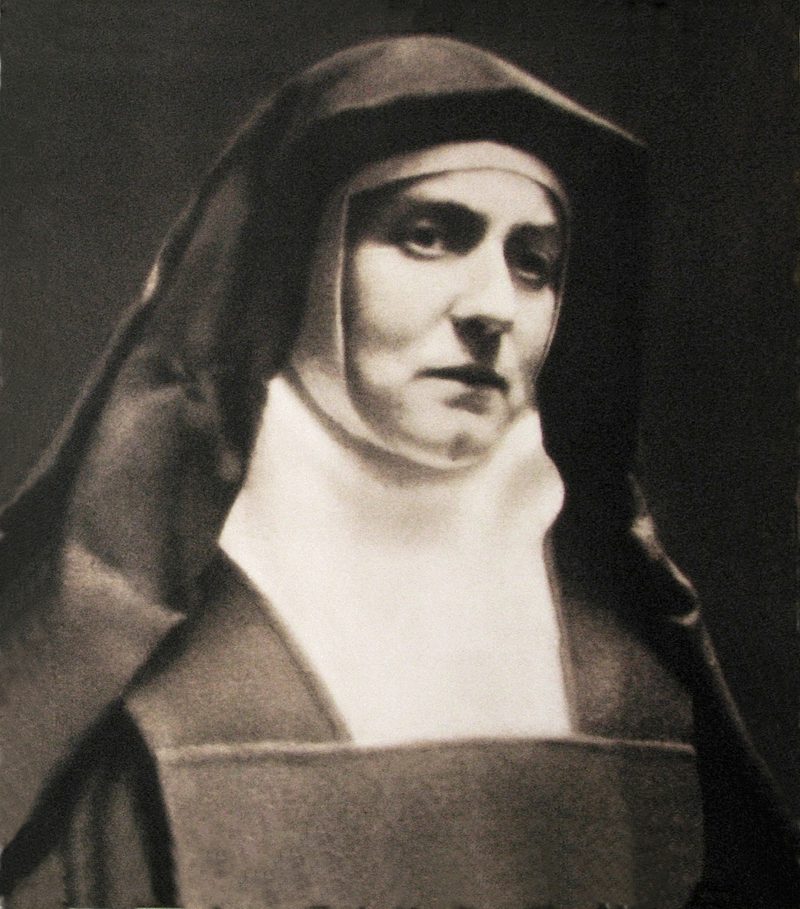
A photograph of Edith Stein as a Carmelite nun, about 1938: a woman in a dark veil and white wimple, looking calmly at the camera.

1891 to 1942 · Breslau, Cologne and Auschwitz

St. Teresa Benedicta of the Cross (Edith Stein)

A young Jewish woman from Breslau is studying philosophy with passionate enthusiasm.132

She is in search of the truth, and she will not stop until she finds it.132

Read the story

Unknown author, 1938. Wikimedia Commons, Public domain.

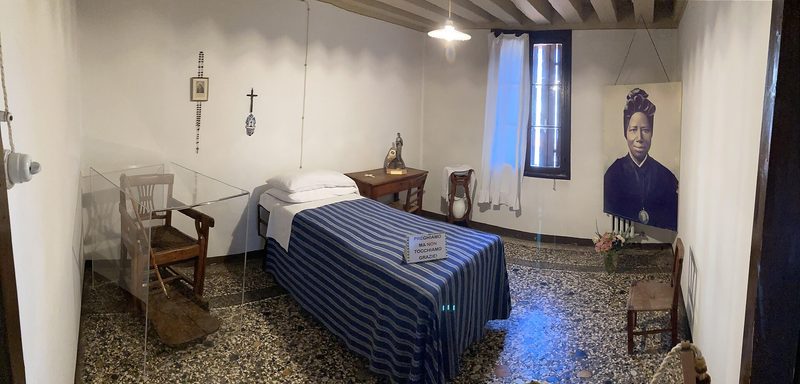
The simple room of St. Josephine Bakhita at Schio: a narrow bed with a blue cover, a chair and a crucifix.

about 1869 to 1947 · Darfur, Sudan, and Schio, Italy

St. Josephine Bakhita

A little girl in Darfur, about nine years old, is seized by slave traders.133

She is sold five times in the slave markets of Sudan, and will carry the scars of her beatings all her life.133

Read the story

Xavier Hemmer, 2022. Wikimedia Commons, CC BY-SA 4.0.

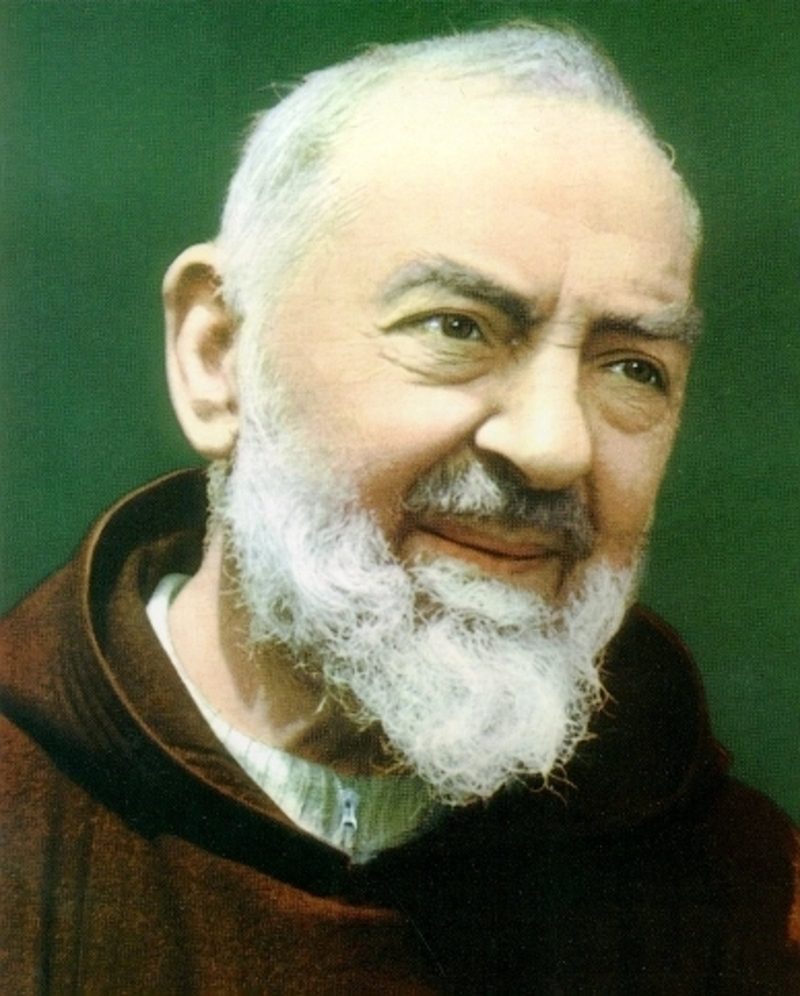
A color portrait of Padre Pio: an elderly Capuchin friar with a white beard and a warm, steady gaze.

1887 to 1968 · Pietrelcina and San Giovanni Rotondo, Italy

St. Pio of Pietrelcina

On a mountain spur in southern Italy, crowds are gathering outside a small Capuchin friary.134

They have come for one thing: to make their confession to Padre Pio.134

Read the story

Manfredonia (Italian Wikipedia), derivative work by MisterNox, 1947. Wikimedia Commons, Public domain.

Notes

How we know · 135 sources for this page
  1. Luke 24:13-14, World English Bible. read the chapter
  2. Luke 24:15-17, World English Bible. read the chapter
  3. Luke 24:30-31, World English Bible. read the chapter
  4. Luke 1:26-27, World English Bible. read the chapter
  5. Luke 1:28, World English Bible. read the chapter
  6. Luke 1:38, World English Bible. read the chapter
  7. Catechism of the Catholic Church, paragraph 484. vatican.va
  8. Catholic Encyclopedia (1913), “Nazareth”. New Advent edition. newadvent.org
  9. Luke 2:4, World English Bible. read the chapter
  10. Luke 2:7, World English Bible. read the chapter
  11. Catholic Encyclopedia (1913), “Bethlehem”. New Advent edition. newadvent.org
  12. Catholic Encyclopedia (1913), “St. Helena”. New Advent edition. newadvent.org
  13. Mark 1:9, World English Bible. read the chapter
  14. Matthew 3:16-17, World English Bible. read the chapter
  15. Catechism of the Catholic Church, paragraph 535. vatican.va
  16. Mark 1:16, World English Bible. read the chapter
  17. Mark 1:17, World English Bible. read the chapter
  18. Matthew 14:19, World English Bible. read the chapter
  19. Matthew 4:13, World English Bible. read the chapter
  20. Mark 1:21, World English Bible. read the chapter
  21. Catholic Encyclopedia (1913), “Capharnaum”. New Advent edition. newadvent.org
  22. Matthew 16:13, World English Bible. read the chapter
  23. Matthew 16:16, World English Bible. read the chapter
  24. Matthew 16:18, World English Bible. read the chapter
  25. Catechism of the Catholic Church, paragraph 881. vatican.va
  26. Mark 14:32, World English Bible. read the chapter
  27. Luke 22:42, World English Bible. read the chapter
  28. Catholic Encyclopedia (1913), “Gethsemani”. New Advent edition. newadvent.org
  29. John 19:17-18, World English Bible. read the chapter
  30. John 19:30, World English Bible. read the chapter
  31. Catechism of the Catholic Church, paragraph 613. vatican.va
  32. John 19:41-42, World English Bible. read the chapter
  33. John 20:1, World English Bible. read the chapter
  34. Matthew 28:5-6, World English Bible. read the chapter
  35. Acts 1:8, World English Bible. read the chapter
  36. Acts 1:9, World English Bible. read the chapter
  37. Acts 1:12, World English Bible. read the chapter
  38. Acts 2:1-4, World English Bible. read the chapter
  39. Acts 2:14, World English Bible. read the chapter
  40. Acts 2:41, World English Bible. read the chapter
  41. Catechism of the Catholic Church, paragraph 1076. vatican.va
  42. Acts 6:3-5, World English Bible. read the chapter
  43. Acts 7:59 [Douay 7:58], World English Bible. read the chapter
  44. Acts 7:60 [Douay 7:59], World English Bible. read the chapter
  45. Acts 8:1, World English Bible. read the chapter
  46. Acts 9:3, World English Bible. read the chapter
  47. Acts 9:4, World English Bible. read the chapter
  48. Acts 9:10-11, World English Bible. read the chapter
  49. Romans 11:13, World English Bible. read the chapter
  50. Acts 11:26, World English Bible. read the chapter
  51. Galatians 2:11, World English Bible. read the chapter
  52. Catholic Encyclopedia (1913), “Church of Antioch”. New Advent edition. newadvent.org
  53. Catholic Encyclopedia (1913), “St. Ignatius of Antioch”. New Advent edition. newadvent.org
  54. Acts 15:1-2, World English Bible. read the chapter
  55. Acts 15:6, World English Bible. read the chapter
  56. Acts 15:28, World English Bible. read the chapter
  57. Catechism of the Catholic Church, paragraph 884. vatican.va
  58. Catholic Encyclopedia (1913), “Holy Sepulchre”. New Advent edition. newadvent.org
  59. Catholic Encyclopedia (1913), “St. Jerome”. New Advent edition. newadvent.org
  60. Catechism of the Catholic Church, paragraph 133. vatican.va
  61. Acts 28:15, World English Bible. read the chapter
  62. Acts 28:20, World English Bible. read the chapter
  63. Catholic Encyclopedia (1913), “St. Peter, Prince of the Apostles”. New Advent edition. newadvent.org
  64. Romans 1:7, World English Bible. read the chapter
  65. Romans 1:8, World English Bible. read the chapter
  66. Acts 28:16, World English Bible. read the chapter
  67. Acts 28:30-31, World English Bible. read the chapter
  68. Eusebius, Church History, Book II (c. 325). Nicene and Post-Nicene Fathers, Second Series, vol. 1 (1890). newadvent.org
  69. Catechism of the Catholic Church, paragraph 882. vatican.va
  70. 2 Timothy 4:6, World English Bible. read the chapter
  71. Catholic Encyclopedia (1913), “Pope St. Clement I”. New Advent edition. newadvent.org
  72. St. Clement of Rome, Letter to the Corinthians 42 (c. 96). Ante-Nicene Fathers vol. 1 (1885). ccel.org
  73. Catholic Encyclopedia (1913), “Pope Callistus I”. New Advent edition. newadvent.org
  74. Catholic Encyclopedia (1913), “St. Cecilia”. New Advent edition. newadvent.org
  75. Catholic Encyclopedia (1913), “Roman Catacombs”. New Advent edition. newadvent.org
  76. Catholic Encyclopedia (1913), “St. Lawrence”. New Advent edition. newadvent.org
  77. Catholic Encyclopedia (1913), “St. Agnes of Rome”. New Advent edition. newadvent.org
  78. Catholic Encyclopedia (1913), “Constantine the Great”. New Advent edition. newadvent.org
  79. Catholic Encyclopedia (1913), “Pope Sylvester I”. New Advent edition. newadvent.org
  80. Catholic Encyclopedia (1913), “Pope St. Damasus I”. New Advent edition. newadvent.org
  81. Catholic Encyclopedia (1913), “Pope St. Leo I (The Great)”. New Advent edition. newadvent.org
  82. Catholic Encyclopedia (1913), “St. Gregory the Great”. New Advent edition. newadvent.org
  83. Catholic Encyclopedia (1913), “Pope Boniface VIII”. New Advent edition. newadvent.org
  84. Catholic Encyclopedia (1913), “Pope Clement V”. New Advent edition. newadvent.org
  85. Catholic Encyclopedia (1913), “St. Catherine of Siena”. New Advent edition. newadvent.org
  86. Catholic Encyclopedia (1913), “Pope Gregory XI”. New Advent edition. newadvent.org
  87. Catholic Encyclopedia (1913), “Pope St. Pius V”. New Advent edition. newadvent.org
  88. Catholic Encyclopedia (1913), “Pope Pius IX”. New Advent edition. newadvent.org
  89. Catechism of the Catholic Church, paragraph 891. vatican.va
  90. Biography of Pope St. John XXIII. Holy See, official English text. vatican.va
  91. Biography of Pope St. John Paul II. Holy See, official English text. vatican.va
  92. Biography of Pope Leo XIV. Holy See, official English text. vatican.va
  93. Matthew 28:16, World English Bible. read the chapter
  94. Matthew 28:19, World English Bible. read the chapter
  95. Catholic Encyclopedia (1913), “St. Polycarp”. New Advent edition. newadvent.org
  96. Catholic Encyclopedia (1913), “Sts. Felicitas and Perpetua”. New Advent edition. newadvent.org
  97. Catholic Encyclopedia (1913), “St. Lucy”. New Advent edition. newadvent.org
  98. Catholic Encyclopedia (1913), “St. Anthony”. New Advent edition. newadvent.org
  99. Catholic Encyclopedia (1913), “Saint Monica”. New Advent edition. newadvent.org
  100. Catholic Encyclopedia (1913), “St. Ambrose”. New Advent edition. newadvent.org
  101. Catholic Encyclopedia (1913), “St. Augustine of Hippo”. New Advent edition. newadvent.org
  102. Catholic Encyclopedia (1913), “St. Patrick”. New Advent edition. newadvent.org
  103. St. Gregory the Great, Dialogues, Book II: the Life of St. Benedict (c. 593). 1608 translation, revised by E. G. Gardner (1911). tertullian.org
  104. Pope Francis, Message to the Armenian people, 12 April 2015. Holy See, official English text. vatican.va
  105. Catholic Encyclopedia (1913), “Pope St. Gregory VII”. New Advent edition. newadvent.org
  106. Catholic Encyclopedia (1913), “St. Bernard of Clairvaux”. New Advent edition. newadvent.org
  107. Pope Benedict XVI, Apostolic Letter proclaiming St. Hildegard of Bingen a Doctor of the Church, 7 October 2012. Holy See, official English text. vatican.va
  108. Catholic Encyclopedia (1913), “St. Dominic”. New Advent edition. newadvent.org
  109. Catholic Encyclopedia (1913), “St. Francis of Assisi”. New Advent edition. newadvent.org
  110. Catholic Encyclopedia (1913), “St. Anthony of Padua”. New Advent edition. newadvent.org
  111. Catholic Encyclopedia (1913), “St. Clare of Assisi”. New Advent edition. newadvent.org
  112. Catholic Encyclopedia (1913), “St. Thomas Aquinas”. New Advent edition. newadvent.org
  113. Catholic Encyclopedia (1913), “Shrine of Guadalupe”. New Advent edition. newadvent.org
  114. Catholic Encyclopedia (1913), “St. Thomas More”. New Advent edition. newadvent.org
  115. Catholic Encyclopedia (1913), “St. John Fisher”. New Advent edition. newadvent.org
  116. Catholic Encyclopedia (1913), “St. Francis Xavier”. New Advent edition. newadvent.org
  117. Catholic Encyclopedia (1913), “St. Ignatius Loyola”. New Advent edition. newadvent.org
  118. Pope Benedict XVI, Apostolic Letter proclaiming St. John of Avila a Doctor of the Church, 7 October 2012. Holy See, official English text. vatican.va
  119. Catholic Encyclopedia (1913), “St. Teresa of Jesus (Teresa of Avila)”. New Advent edition. newadvent.org
  120. Catholic Encyclopedia (1913), “St. John of the Cross”. New Advent edition. newadvent.org
  121. Catholic Encyclopedia (1913), “Japanese Martyrs”. New Advent edition. newadvent.org
  122. Catholic Encyclopedia (1913), “St. Rose of Lima”. New Advent edition. newadvent.org
  123. Catholic Encyclopedia (1913), “St. Francis de Sales”. New Advent edition. newadvent.org
  124. Catholic Encyclopedia (1913), “St. Vincent de Paul”. New Advent edition. newadvent.org
  125. Catholic Encyclopedia (1913), “St. John Vianney”. New Advent edition. newadvent.org
  126. Pope Francis, Homily at the Shrine of the Uganda Martyrs, Namugongo, 28 November 2015. Holy See, official English text. vatican.va
  127. Catholic Encyclopedia (1913), “St. John Bosco (Don Bosco)”. New Advent edition. newadvent.org
  128. Pope St. John Paul II, Apostolic Letter Divini Amoris Scientia, 19 October 1997. Holy See, official English text. vatican.va
  129. Pope St. John Paul II, Homily for the canonization of Faustina Kowalska, 30 April 2000. Holy See, official English text. vatican.va
  130. Pope St. John Paul II, Homily at the Auschwitz-Birkenau concentration camp, 7 June 1979. Holy See, official English text. vatican.va
  131. encyclopedia.ushmm.org: “Auschwitz”. encyclopedia.ushmm.org. encyclopedia.ushmm.org
  132. Pope St. John Paul II, Homily for the canonization of Edith Stein, 11 October 1998. Holy See, official English text. vatican.va
  133. Pope Benedict XVI, Encyclical Spe Salvi, 30 November 2007. Holy See, official English text. vatican.va
  134. Pope St. John Paul II, Homily for the canonization of Padre Pio, 16 June 2002. Holy See, official English text. vatican.va
  135. Catechism of the Catholic Church, paragraph 2473. vatican.va

Map data © OpenStreetMap contributors, under the Open Database Licence; map tiles from openstreetmap.org. Map library: Leaflet (BSD license). The Gospel and Acts events carry no calendar dates in Scripture, so they sit at the start of the time slider and show their chapter reference instead of a year. Saints are placed at the year of their death. Points mark the place named in the story; several are approximate.

The Catholic Encyclopedia (1913) is in the public domain; we quote the New Advent edition. Texts of the Holy See are quoted briefly from vatican.va. Scripture: World English Bible, Catholic edition (public domain); Verse numbers are modern, with Douay-Rheims numbers in brackets where they differ. Photographs: Wikimedia Commons, credited under each image; full list on the photo credits page. Report an errorCorrections.